
Youth Creative Dialogue: Spreading Awareness Between Police and Colleges in Madhya Pradesh
Madhya Pradesh Police and Higher Education Department launch 'Jan Suraksha Yuva Srijan Samvad' to foster responsible citizenship among youth.
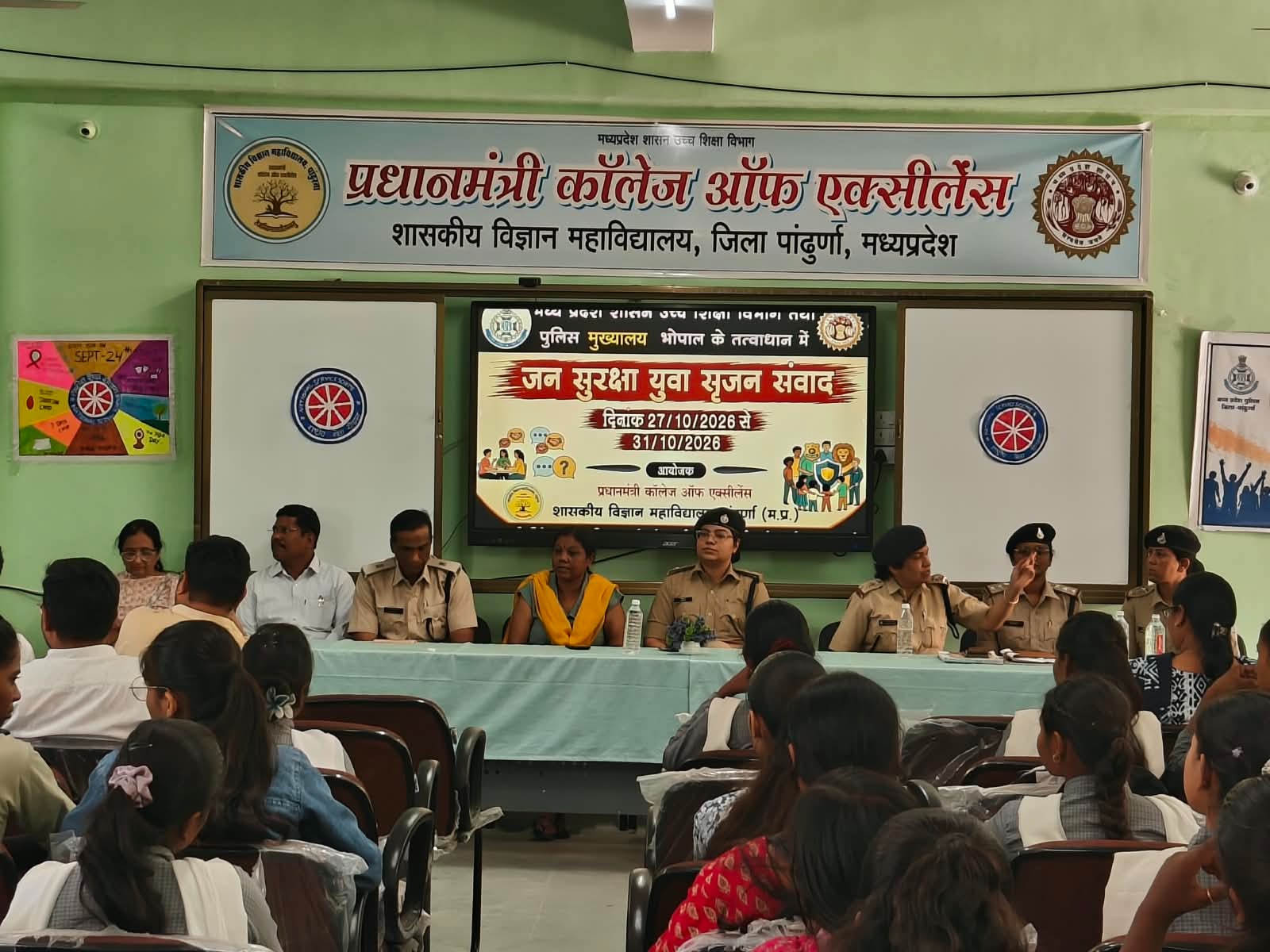
पाण्डुर्ना | आशीष नेमा
Madhya Pradesh Police and Higher Education Department Launch Initiative
The Madhya Pradesh Police and the Department of Higher Education have jointly launched a unique initiative named 'Jan Suraksha Yuva Srijan Samvad' (Public Security Youth Creative Dialogue). The primary objective of this program is to sensitize the youth across the state about the Constitution, law, civil rights, and duties, enabling them to contribute as responsible and aware citizens.
These activities, organized on the eve of National Unity Day, have already seen active participation from over 60,000 students. This initiative is a result of a formal Memorandum of Understanding (MoU) between the Police Department and the Higher Education Department, aiming to establish a strong and institutional dialogue between colleges and the police system.
Operating under the aegis of the Community Policing branch, this program is providing practical knowledge to students on contemporary and critical topics such as cybersecurity, mental health, social harmony, and new criminal justice legislation. The dialogue not only informs students about the legal framework but also encourages their active and conscious participation in society.
Workshops Conducted by Trained Professors
To make the program effective, the Police Headquarters organized a state-level trainer training program on October 10, 2026. This program provided intensive training to 136 professors from 66 government colleges across the state. These professors were selected due to their direct interaction with students in their respective academic institutions and their better understanding of student issues and queries.
These trained professors are now playing a crucial role in raising awareness among students on various law and public security-related issues within their institutions, thereby disseminating knowledge more effectively. A two-day format has been set for this program.
On the first day of the program, special workshops are organized in colleges, where expert police officers and trained professors provide detailed information to the youth on various security-related topics. These workshops emphasize subjects like the safe use of digital media, online fraud, protection from social media misuse, and identity theft, which are highly relevant in today's digital age.
Additionally, students are made aware of the importance of mental health and stress management techniques, which are essential for their overall well-being.
Understanding Police Functioning Through Police Station Visits
On the second day of the program, students visit local police stations. This visit provides them with an opportunity to closely understand the daily functioning of the police, investigation procedures, grievance redressal mechanisms, citizen assistance services, and the overall security system. During these visits, they directly observe the process of filing an FIR, actions taken for traffic violations, and the police's role in investigating various crimes.
Direct interaction with officers resolves students' various queries and fosters a sense of responsibility towards security in their minds. This experience makes them more aware of respecting the law and their role in societal security. This initiative strengthens the principle of community policing, building a strong bridge of trust between the police and the general public.
When the younger generation understands the realities of policing, respect and cooperation develop in their minds, replacing fear. This is a very important step towards developing educational institutions as centers for public awareness and civic education. The enthusiastic and widespread participation of students demonstrates that the youth are ready to play an active role in respecting the law and maintaining social harmony.
This is not only benefiting the current generation but also laying the foundation for a safer and more responsible society for the future.
New Criminal Justice Legislation and Citizen Rights
A significant aspect of the 'Jan Suraksha Yuva Srijan Samvad' program is educating about the new criminal justice legislation. Students are being informed about new laws such as the Bharatiya Nyaya Sanhita (Indian Penal Code), Bharatiya Nagarik Suraksha Sanhita (Code of Criminal Procedure), and Bharatiya Sakshya Adhiniyam (Indian Evidence Act).
Trained professors and police officers explain the provisions of these new laws, their objectives, and their impact on ordinary citizens in simple language. This information makes students more aware of their rights and responsibilities and helps them better understand the functioning of the justice system. Alongside this, civil rights and duties are also discussed in detail.
Students are informed about the fundamental rights enshrined in the Indian Constitution, such as the right to freedom, the right to equality, and the right to life. They are also taught the importance of their duties towards the nation, such as voting, obeying the law, and protecting national property. This session awakens civic consciousness among students and inspires them to contribute to society as responsible citizens.
Future Direction and Scope
The administration believes that the continuity of this program and a detailed assessment of its impact will be undertaken in the future, based on which the activities will be made more comprehensive and effective. There are plans to include youth and colleges from rural areas as well, so that the message of public security and awareness reaches every corner of the state.
Training programs will be updated to align with contemporary issues and challenges. Currently, this effort is proving highly successful in molding the youth of the state into responsible, law-abiding citizens who contribute to nation-building. This initiative is not only educating the youth but also inspiring them to become active participants in societal security, a significant step towards building a safe and prosperous future.