
Supreme Court Orders End to Delhi Protest Detentions
The Supreme Court has directed authorities to halt illegal detentions and ensure normal metro and railway operations during peaceful gatherings in Delhi.
The Cliff News | 11 October 2026
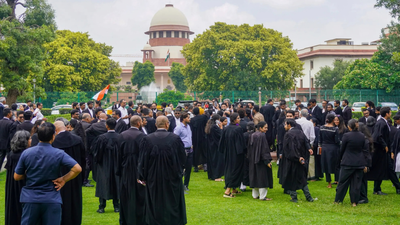
The Supreme Court convened for an urgent Sunday hearing, issuing a significant directive to authorities to cease the illegal detention of individuals gathering peacefully. The court's intervention came amidst a widespread crackdown on a proposed protest in Delhi, with specific instructions to ensure the normal functioning of metro and railway services across the capital.
This directive follows a day after the central government implemented a significant security sweep, thwarting a planned demonstration by CJP (Citizens for Justice and Peace) at Delhi's Jantar Mantar. The court's swift action addresses urgent applications alleging a breach of its prior orders concerning transport restrictions during protests, as well as claims of unlawful detentions on October 10, 2026.
Allegations of Flgrant Violations
A bench comprising Justices Joymalya Bagchi and V Mohana acknowledged submissions from senior counsels detailing what they described as a "flagrant violation" of previous court orders. These violations reportedly included the disruption of metro railway services, the closure of New Delhi and Nizamuddin railway stations, a lack of traffic advisories, and the "undue harassment and illegal detention" of a substantial number of individuals. These detentions allegedly extended beyond the areas covered by prohibitory orders under Section 163 of the Bharatiya Nagarik Suraksha Sanhita (BNSS), 2023.
In response to these serious allegations, the Supreme Court specifically directed Solicitor General Tushar Mehta to ensure that the Delhi Metro operates according to its normal schedule. Furthermore, the court mandated that internet services should not be disrupted, while acknowledging that these measures are subject to prevailing law and order conditions. A crucial point of emphasis was placed on ensuring that lawyers, journalists, and other professionals are not impeded in the discharge of their duties.
Contempt Plea and Centre's Defense
The court issued a formal notice to the Centre concerning a plea seeking contempt proceedings against authorities for allegedly disregarding its earlier directions. This contempt petition, filed by advocate Shailendra Mani Tripathi, names Union Home Secretary Govind Mohan, Delhi Police Commissioner Anurag Kumar, and Delhi Metro Rail Corporation Chairperson D Thara as respondents.
The plea specifically references the Supreme Court's October 9, 2026, order, which was issued during the hearing of a separate petition challenging the closure of 57 metro stations and the cancellation of trains to Delhi in anticipation of a proposed protest. The applicants in the current proceedings contend that the restrictions and detentions implemented on October 10 directly contravened the court's established directives.
Solicitor General Tushar Mehta, representing the Centre, defended the authorities' actions. He informed the court that entry and exit had been restricted at only 45 out of the 303 stations across the Delhi Metro network on October 10, asserting a degree of controlled response rather than a complete shutdown.
Habeas Corpus Petition and Broader Impact
The Supreme Court's agenda also included a habeas corpus petition, filed by senior advocate Menaka Guruswamy, which addresses the detention of political leaders. The court affirmed its commitment to granting a hearing to all legal representatives involved in the matter, signaling a comprehensive approach to addressing the various concerns raised.
The current situation stems from a call for mass mobilization at Jantar Mantar, organized by CJP alongside student groups. Their intention was to demand action against Chief Election Commissioner Gyanesh Kumar, citing alleged irregularities in the Election Commission's functioning. However, the planned demonstration was effectively thwarted by an extensive security crackdown across the national capital.
Mass Detentions Reported
Reports indicate that more than 7,000 protesters were detained during the crackdown. Among those detained were CJP leader Abhijit Dipke, several opposition leaders, and the prominent YouTuber Dhruv Rathee. The scale of these detentions highlights the government's assertive measures to prevent the convergence of demonstrators.
The Supreme Court's intervention underscores the judiciary's role in safeguarding fundamental rights, particularly the right to peaceful assembly and the freedom of movement. By directing the resumption of normal metro operations and prohibiting illegal detentions, the court aims to strike a balance between maintaining public order and upholding civil liberties.
Key Directives from the Supreme Court
- No illegal detention: Authorities are mandated to ensure that individuals gathering peacefully are not subjected to unlawful detention.
- Normal metro operations: The Centre has been instructed to guarantee that Delhi Metro services resume their regular schedules.
- Internet services: Disruption to internet services is to be avoided, contingent on law and order conditions.
- Professional duties: Lawyers, journalists, and other professionals must not face obstacles in carrying out their work.
- Contempt proceedings: The Centre has been issued notice on a plea alleging violations of prior court orders.