
Imtiaz Ali's 'Main Vaapas Aaunga' Offers Redemption & Memorial on Partition Trauma
Imtiaz Ali's 'Main Vaapas Aaunga' explores Partition trauma through dual love stories, earning 3 stars for its noble intentions and powerful performances.
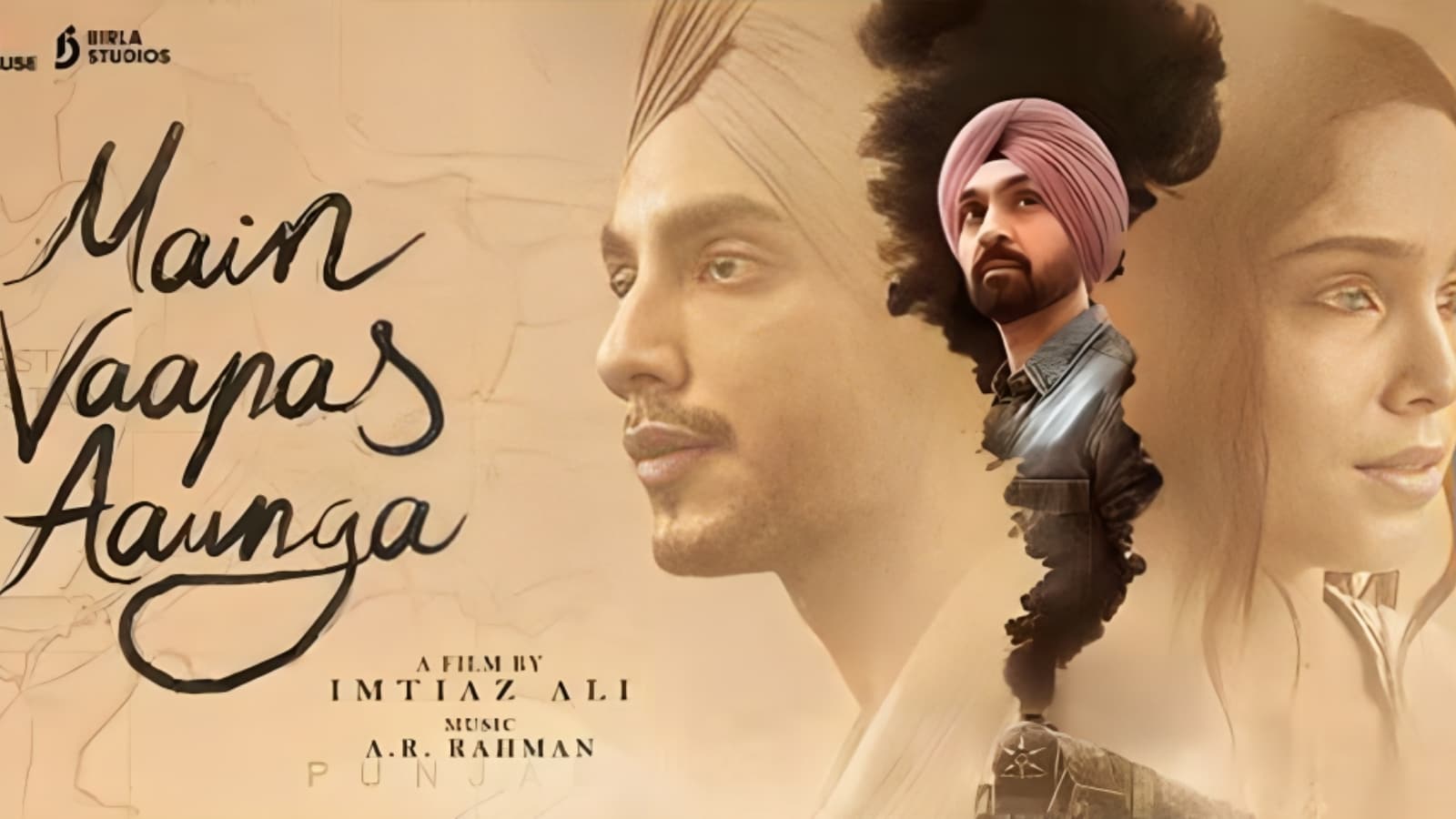
Top Summary
- What happened: Imtiaz Ali's latest film, 'Main Vaapas Aaunga,' has premiered, delving into the enduring trauma of the 1947 Partition through intertwined narratives from different eras.
- Why it matters: The movie boldly addresses unresolved generational trauma and communal complicity in Partition violence, positioning itself as a significant cinematic memorial and a plea for pacifism amid contemporary societal divisions.
- What changes: Audiences are encouraged to confront the difficult memories of Partition, potentially discovering paths to understanding, forgiveness, and a reduction of anger, as the film suggests healing through shared remembrance.
- Who is affected: The film resonates with those impacted by Partition's legacy, including generations grappling with its profound trauma, and viewers seeking cinema that engages with complex historical wounds and advocates for communal harmony.
A Return to Love and Loss Across Eras
Filmmaker Imtiaz Ali's signature style of presenting two love stories spanning different eras is once again evident in his latest offering, 'Main Vaapas Aaunga'. This new film juxtaposes a pre-Partition "for ever-and-ever" romance against the backdrop of a modern, commitment-phobic couple navigating their own uncertain relationship.
The movie also marks Ali's reunion with lead actor Diljit Dosanjh, following their successful collaboration on 'Chamkila'. Co-written by Ali and Nayanika Mahtani, and produced by Applause Entertainment, the narrative centers on a poignant quest for home.
The story opens with 95-year-old Ishar Singh Grewal (Naseeruddin Shah) in Chandigarh, desperately yearning to reach Sargodha. Unaware that the town now lies across the 1947 border, his incoherent pleas are deciphered by his grandson, Nirvair (Diljit Dosanjh), who has returned from the UK. Dadaji's "unfinished business" becomes the conduit to revisit the buried memories of the Partition's "terrible times."
Confronting Collective Guilt and Unhealed Wounds
Released in 2026, the film's arrival amidst "spiralling communal polarisation" is deemed "astounding" and a "cause for celebration." 'Main Vaapas Aaunga' clearly articulates its political stance, identifying unresolved trauma and unhealed wounds transmitted across generations as the "root cause of our present troubles."
Crucially, the film delivers a "clear-eyed declaration" that these troubles "cannot be laid at the door of one community or one religion." It asserts that "everyone"—including "Muslim marauders," "Sikhs who retaliated," and the ensuing "blood-lust"—was "responsible," "complicit," and had "equally bloody" hands.
By unearthing these difficult stories, the film aims for healing, suggesting that looking back with "lessening anger" can lead to reconciliation. In this sense, 'Main Vaapas Aaunga' is a "valuable addition" to cinema that serves as both "memorial and redemption" for the "open wound" of Partition.
Pacing and Poignancy in Storytelling
While the film's intentions are noble and its heart is "very much in the right place," its narrative "meanders" significantly in the first half. It manages to recover and get "into full gear" in the post-interval section, delivering a more engaging experience.
This uneven pacing, however, leaves a desire for a "tighter" overall script, especially given its "rousing climactic coda." The film's message about "forgetting as way to forgiveness" and advocating for pacifism as "the only way forward" truly resonates in its stronger later segments.
The movie excels when it evokes a sense of nostalgia for a "softer, gentler era," where a simple lost item could spark a clandestine meeting between lovers from different religions. These poignant moments are primarily concentrated in the second half, where the film ultimately finds its footing.
Character Depths and Unexplored Narratives
The young love story between college-going Ishwar (Vedang Raina) and his beloved Jiya (Sharvari), whom he leaves behind amidst the violence, fails to "leave a mark" due to a lack of "fizz" between the actors. While depicting familiar scenes of communal disharmony and violence against women, the film's strength lies in acknowledging the "guilt of those that left" and the "lingering curses of those left behind," burdens carried by Ishwar for years.
Despite its rich thematic material, several narrative threads remain underdeveloped. An "interesting thread" hinting at the conflicted feelings of Ishwar's older son, played by Rajat Kapoor, is left "unexplored." Similarly, the brief appearance of Sanjay Suri goes almost "unrecognisable."
The plot also feels "stuffed" with elements, including a "pointed scene involving farmers" that seems disconnected from the main narrative. While Diljit Dosanjh's character being named "Nirvair" (one who doesn't hate) is a "lovely meta-touch," his role often reduces to a "bald explainer" of his grandfather's trauma and the Partition itself.
Notably, a "walk-on part" by Vinod Nagpal as Ishwar's younger brother, who witnessed unimaginable horrors, carries "more weight" than many of Nirvair's explanations. Dosanjh's comedic attempts to address generational trauma are only "some of it effective," but his solo song about refugees is particularly moving.
Naseeruddin Shah Shines Bright
Ultimately, 'Main Vaapas Aaunga', described as "equal parts uneven and moving," is not primarily Diljit Dosanjh's film. It is the "superbly-judged performance" of Naseeruddin Shah that provides the movie's literal and metaphorical driving force. His portrayal of an "end-of-life Ishar" captures the profound "suppressed agony" of an old man, released through "tormented yells" that resonate deeply with the audience.
The film's weaker sections are ultimately "papered over" by its moments of profound emotional impact, reuniting viewers with a filmmaker who is "unaid of drama." It successfully delivers a powerful story about memory, loss, and the enduring significance of homecoming.
What to Watch Next
As 'Main Vaapas Aaunga' sparks important conversations, audiences may anticipate more films that bravely explore sensitive historical events and their contemporary relevance. Keep an eye on how Imtiaz Ali continues to evolve his unique blend of romance and social commentary in future projects, potentially refining his approach to historical narratives.