
BJP and Congress Announce Candidates for 2026 Rajya Sabha Elections Across States
Political parties declare nominees for the upcoming Rajya Sabha elections across multiple states as the NDA eyes continued dominance.
Top Summary
- What happened: Political parties have officially announced their candidates for the upcoming 2026 Rajya Sabha elections across multiple states.
- Why it matters: These polls will decide 26 crucial seats in the Upper House, impacting the legislative strength of major national alliances.
- What changes: Elected Members of Legislative Assemblies will cast votes using a quota system rather than direct public voting.
- Who is affected: Key candidates from the BJP, Congress, regional parties, and the state legislative assemblies across 12 states.
Parties Declare Contenders for Madhya Pradesh
The battle for the Upper House has intensified as the Bharatiya BJP and the Indian National Congress announced their nominees for the upcoming 2026 Rajya Sabha elections.
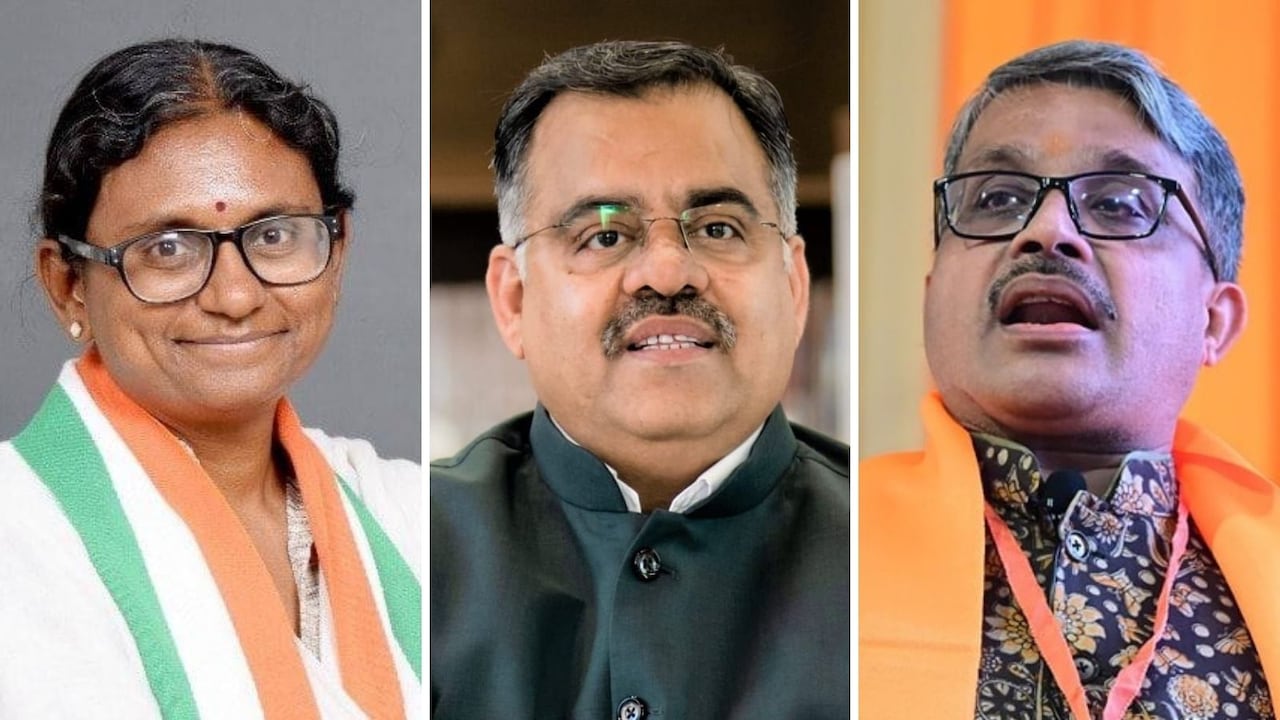
For the state of Madhya Pradesh, the BJP has placed its trust in its National General Secretary Tarun Chugh and state-level strategist Rajneesh Agrawal to contest the state's two Rajya Sabha seats.
To challenge the ruling party, the Congress has nominated a prominent organizational leader to represent its interests in the state.
"The Congress has nominated former Mandsaur MP Meenakshi Natarajan for the Rajya Sabha seat from Madhya Pradesh."
Profiles of Key Candidates from Madhya Pradesh
The selected candidates bring distinct organizational and strategic backgrounds to this legislative contest.
Meenakshi Natarajan, a close associate of Rahul Gandhi, has previously served in several key organizational capacities within the Congress party.
The BJP has selected two distinct leaders to secure its representation in the state:
- Tarun Chugh: Originally from Amritsar, Punjab, he serves as the National General Secretary and plays a key role in national electoral management.
- Rajneesh Agrawal: A prominent state-level leader known within the party for his expertise in election strategy and booth management.
BJP Nominates Candidates Across Other States
The BJP has also finalized its candidate list across multiple other states to expand its presence in the Upper House.
The ruling party has announced candidates for the following states:
- Rajasthan: The party has nominated Satish Poonia and Alka Gurjar.
- Gujarat: Four candidates have been fielded, namely Rajubhai Shukla, Mukeshbhai Rathwa, Mansingh Parmar, and Jitendra Meghjibhai Kanjaria.
- Arunachal Pradesh & Manipur: The party has selected Tai Tagak for Arunachal Pradesh and A. Sharda Devi for Manipur.
- Odisha By-election: The party has named Debashish Samantaray as its official candidate.
Regional Nominations and Coalition Projections
Regional alliances have also declared their candidates to ensure representation in the Upper House.
In Meghalaya, the ruling MDA-II has backed James PK Sangma, while Mizoram's ruling ZPM has nominated spokesperson K. Laltluangkima.
Political observers anticipate that the National Democratic Alliance (NDA) will maintain its legislative dominance in these elections:
- Current NDA Strength: Holds 18 seats of the 26 seats going to polls, with expectations to retain 17 seats.
- Opposition Alliance: Currently holds five seats and is projected to win five seats.
- Other Parties: The YSRCP currently holds three seats, while JMM, TVK, and ZPM are also expected to win representation.
Understanding the Rajya Sabha Voting System
Members of the Rajya Sabha are elected indirectly by Members of Legislative Assemblies (MLAs) rather than through a direct public vote.
The Rajya Sabha is a permanent legislative house where one-third of its members retire every two years.
The election process relies on a unique proportional representation formula:
- Of the total 245 members, 233 are elected by state assemblies, and 12 are nominated by the President of India.
- A candidate requires a predefined quota of votes to win, which is calculated based on the total number of MLAs in the state and the number of seats being contested.
What to Watch Next
The voting for the 26 Rajya Sabha seats across 12 states is scheduled to take place on June 18. The election results are expected to be officially declared on the same day, which will immediately reshape the political dynamics of the Upper House.