
Bhopal Hosts Educators for Holistic Teaching Methods
Experts in Bhopal are exploring traditional Indian teaching methods for holistic student development. The program focuses on ancient educational frameworks.
Bhopal | Dr. PK PUROHIT
The Cliff News | 20 September 2026
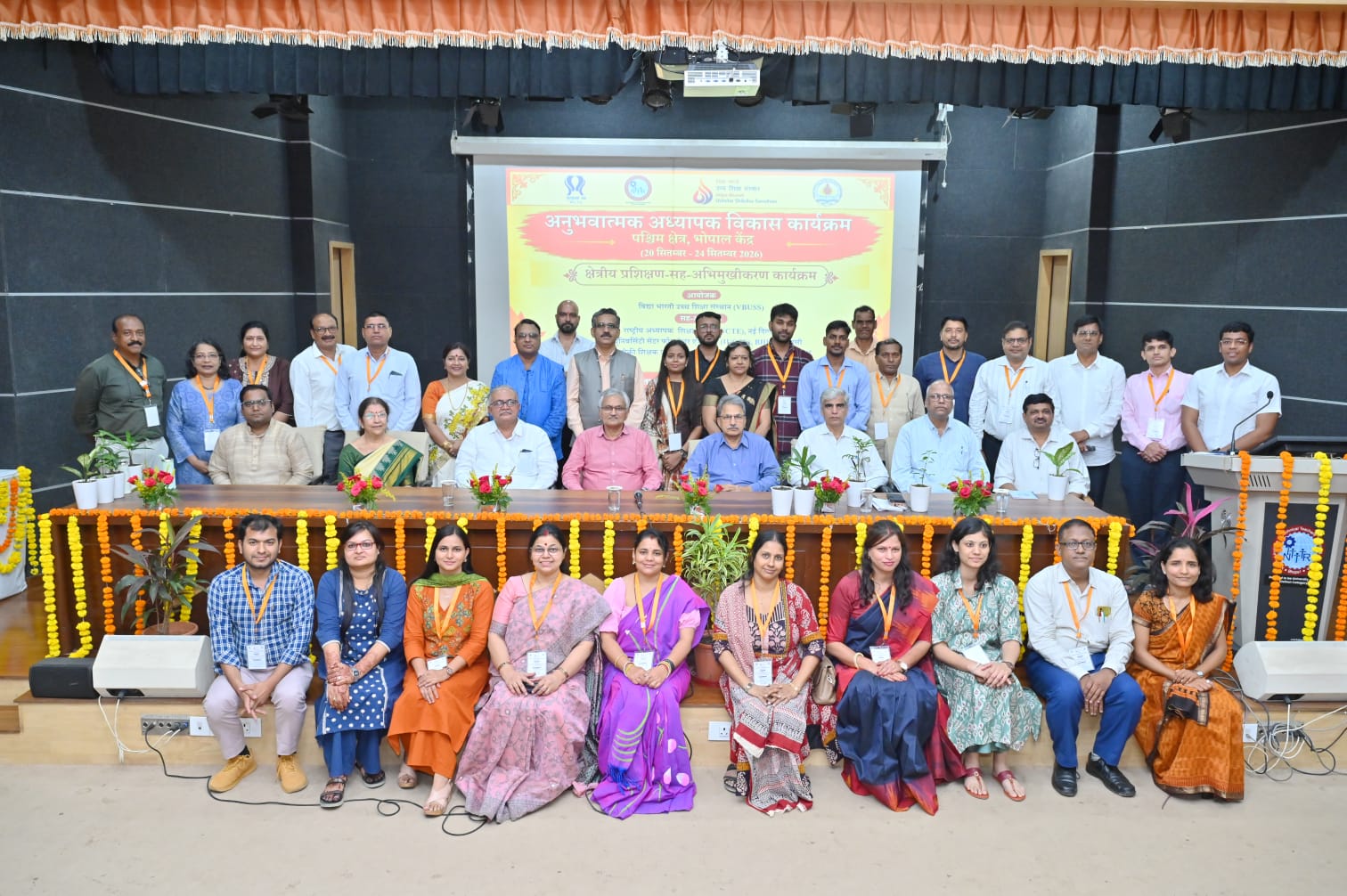
Bhopal is currently hosting a significant gathering of educators focused on revitalizing traditional Indian teaching methodologies to foster holistic student development. The National Institute of Technical Teachers' Training and Research (NITTTR) inaugurated a week-long Experiential Faculty Development Programme on September 20, running until September 24.
This pivotal initiative is a collaborative effort involving NITTTR, Vidya Bharati Uchcha Shiksha Sansthan, the National Council for Teacher Education (NCTE), and the Inter-University Centre for Teachers Education (IUCTE) at BHU. Its core objective is to reintroduce and integrate Indian educational perspectives into contemporary classroom teaching and teacher training.
Focus on Panchkoshiya and Panchpadi Models
Central to the programme is the exploration and training in the Panchkoshiya, or five-sheath, holistic development model, and the Panchpadi, or five-step, teaching methodology. These frameworks are designed to promote comprehensive personality growth in students, encompassing physical, mental, and spiritual aspects.
During the inaugural session, Madhya Pradesh Higher Education Minister Inder Singh Parmar stressed the profound responsibility of educators. He urged teachers to view their profession as instrumental in nation-building, emphasizing a positive mindset beyond simple knowledge dissemination.
“The true objective of education extends beyond mere knowledge transfer. Teachers hold the power to facilitate lasting change and should approach their profession with a commitment to nation-building.”
Prof. C.C. Tripathi, Director of NITTTR, reinforced the institute's dedication to value-based education and incorporating traditional knowledge into modern teacher training curricula.
Practical Application and Expert Insights
The programme includes practical field visits, allowing participants from across the country to observe the implementation of these traditional teaching models. For four days, attendees will witness firsthand how these methods are being applied in schools operated by Vidya Bharati across 31 districts of Madhya Pradesh.
Guest of Honour Dr. Kailash Chandra Sharma underscored the importance of character development alongside technological advancements. He stated, “While technology is transformative, education must remain focused on the development of a student’s character, mind, and soul.”
Expert sessions delved into pedagogical frameworks. Shri Govind Mahant elaborated on the balanced development of the five Koshas, while Shri Deshraj Sharma detailed the Panchpadi methodology. This five-step process includes Adhiti (listening/receiving), Bodha (understanding), Abhyasa (practice), Prayoga (application), and Prasara (dissemination), aiming to make learning engaging and student-centric.
Bridging Tradition and Modernity
Academic leaders, including Prof. Meena Chandavarkar and Dr. Raja Pathak, contributed to discussions on the future of teacher education in India. The organizing committee, chaired by Prof. P.K. Purohit, highlighted the programme's role in bridging the gap between traditional Indian values and contemporary educational practices.
The initiative aims to equip teachers with the necessary tools to nurture well-rounded individuals who can contribute significantly to the nation's growth and long-term development.