
Bharat Taxi Revolutionizes Indian Commute with Zero-Commission Driver-Owned Co-op Model
Union Home Minister Amit Shah launched Bharat Taxi, India's first driver-owned cooperative taxi service with zero commission, set to expand nationwide.
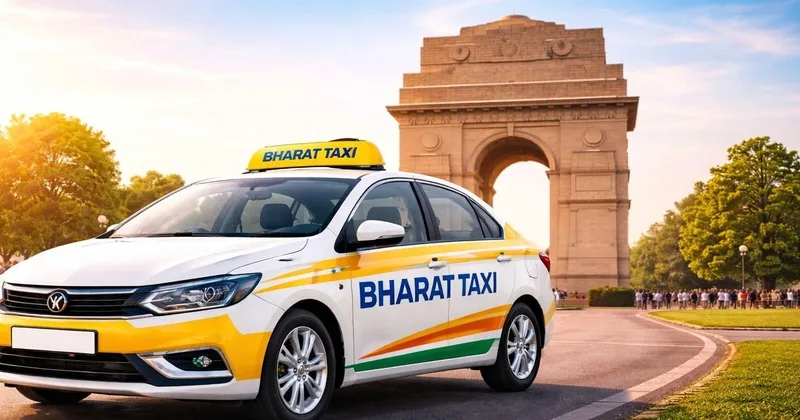
Top Summary
- What happened: Union Home and Cooperation Minister Amit Shah inaugurated the Bharat Taxi service across 14 cities in Gujarat.
- Why it matters: This marks India's first driver-owned taxi service based on a cooperative model, featuring an innovative “Zero Commission Model.”
- What changes: Drivers will retain 100% of their earnings, ensuring greater financial transparency and stability compared to traditional platforms.
- Who is affected: Taxi drivers across India, passengers seeking more equitable services, and the nation's digital transport sector.
Union Home and Cooperation Minister Amit Shah has launched the revolutionary Bharat Taxi service across 14 cities in Gujarat, hailing it as a historic and transformative step for India's transport sector. He announced plans to expand the service to over 500 cities within the next two years.
This initiative introduces India's first driver-owned taxi service built on a cooperative model, aiming to establish a more equitable and profitable system than existing ride-hailing platforms.
The Zero-Commission Advantage
The core of Bharat Taxi's appeal lies in its “Zero Commission Model,” which eliminates intermediary commissions. This innovative approach ensures that drivers retain their entire earnings.
The model seeks to strengthen drivers' economic status and maintain income transparency, addressing the common issue where drivers lose a significant portion of their income to commissions and fees on current digital platforms.
Empowering Drivers Through Cooperation
Under this cooperative framework, drivers are not just service providers but also co-owners of the platform. This aligns with the “Atmanirbhar Bharat” (Self-Reliant India) vision by economically empowering workers.
The cooperative structure guarantees drivers' participation in decision-making processes, fostering a more democratic and transparent system.
Furthermore, the plan provides substantial benefits for drivers, including:
- Low-interest vehicle loans
- Health and life insurance
- Financial assistance for business expansion
These provisions are designed to create stable and secure income sources for existing drivers while simultaneously generating new employment opportunities.
Broader Economic and Social Impact
Bharat Taxi transcends merely providing transportation; it's a stride towards social and economic reform. It particularly benefits small and medium-class drivers currently facing financial pressure from high commissions and intense competition.
Experts believe that a successful implementation could forge a new balance between India's digital economy and its cooperative movement, potentially inspiring similar cooperative digital platforms in other sectors.
The initiative is also poised to play a crucial role in job creation, digital inclusion, and reducing the economic disparity between rural and urban areas. Extending taxi services to smaller cities and towns will boost local employment and enhance regional transport infrastructure.
What to Watch Next
The ultimate success of Bharat Taxi hinges on its effective implementation, robust technical infrastructure, and efficient management. If executed proficiently, this model could establish a new benchmark for India's transport sector and inspire cooperative-based digital platforms across other industries.