
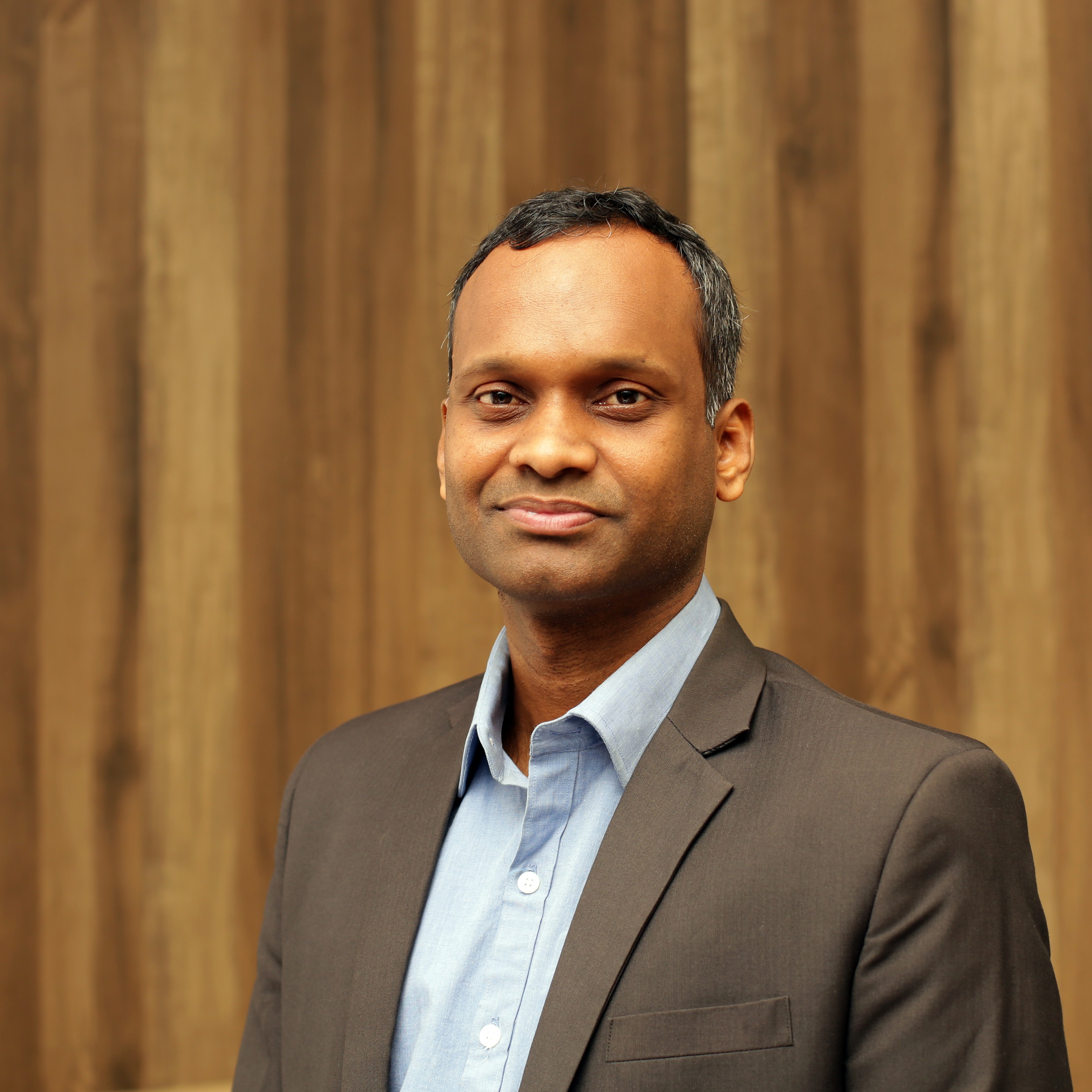
We are building the world’s most detailed human brain maps: IIT-Madras Professor Mohanasankar Sivaprakasam
What happened: IIT-Madras professor Mohanasankar Sivaprakasam revealed India is now leading a global effort to map the entire human brain at cellular resolution. Why it...
-
What happened: IIT-Madras professor Mohanasankar Sivaprakasam revealed India is now leading a global effort to map the entire human brain at cellular resolution.
-
Why it matters: These maps could transform early diagnosis, treatment, and drug discovery for neurological diseases.
-
What changes for people: India is moving from importing medical tech to building world-class healthcare and brain-science platforms.
-
Who is affected: Patients, clinicians, researchers, startups, and India’s med-tech and neuroscience ecosystem.
Powerful lead
For decades, the most detailed maps of the human brain were something India consumed—not created. That balance is now shifting. At IIT Madras, a team led by Mohanasankar Sivaprakasam is assembling what could become the most detailed human brain atlas ever built, positioning India at the centre of global brain science.
Who is Prof Mohanasankar Sivaprakasam
Dr Sivaprakasam heads two pivotal institutions:
-
Healthcare Technology Innovation Centre (HTIC)
-
Sudha Gopalakrishnan Brain Centre
A specialist in implantable medical electronics, he trained in the US before returning to India in 2008 with a clear goal:
Translate cutting-edge research into technologies that reach real patients.
His work was recently recognised with the Rashtriya Vigyan Puraskar for outstanding contributions to science and technology.
HTIC: Building healthcare technologies that scale
Founded in 2011, HTIC was never meant to be just another lab.
-
Today, it spans 15,000 sq ft
-
Works with 40+ hospitals, industries, and government bodies
-
Has produced 14 commercially successful medical products
-
Technologies have reached over 2 crore patients
-
Incubated 60+ health-tech startups
The focus is simple: affordability, access, and quality—together.
Innovations that changed access to care
Some of HTIC’s breakthroughs quietly reshaped Indian healthcare:
Mobile eye surgery units
-
Fully functional operating theatres on wheels
-
Enabled 40,000+ cataract surgeries in remote regions
-
Solved access—not cost—as the biggest barrier
Digital eye screening (3nethra & 3nethra Neo)
-
Portable, AI-assisted eye screening devices
-
Operable by non-experts
-
Used in 2,500+ locations across 40–50 countries
-
Over 4 million infants screened for retinopathy of prematurity
Indigenous endoscopy platforms
India imports nearly all endoscopy equipment. HTIC spent five years developing a fully indigenous alternative.
This marks a rare success in deep medical hardware—one of India’s weakest links.
The brain challenge: Why maps matter
While mice brains are well-mapped, the human brain remains largely uncharted at cellular detail.
-
Mouse brain: ~1 cubic cm
-
Human brain: 1,000+ cubic cm
-
100 billion cells
-
Data volumes in petabytes
MRI shows damage after it happens.
Cell-level maps show what’s coming.
That gap led to the launch of the Sudha Gopalakrishnan Brain Centre in 2022.
Mapping the human brain—cell by cell
The centre’s approach is bold and risky:
-
Slice entire human brains
-
Image them under microscopes at half-micron resolution
-
Digitally reconstruct them in 3D
So far:
-
350+ human brains acquired
-
Covers fetal stages to 100 years of age
-
Includes neurotypical and diseased brains
-
First global brain maps released in early 2025
The work advanced the field by nearly 10× and earned global recognition, including an editorial titled:
“India Gets a Seat at the Table of Human Brain Cartography.”
Why this changes medicine
These atlases are not just academic milestones.
They enable:
-
Earlier diagnosis of neurological disorders
-
Better understanding of disease progression
-
New targets for drug discovery and neuro-devices
-
AI-driven insights into ageing, degeneration, and cognition
Degeneration doesn’t happen overnight. Now, it can be tracked before it’s irreversible.
The med-tech ecosystem problem
Despite progress, Prof Sivaprakasam sees a structural flaw in Indian med-tech:
-
Innovation is funded
-
Incubators exist
-
Talent is strong
But adoption is weak.
Public healthcare drives 60–70% of demand, yet hospitals remain conservative. Without demand creation, startups stay small.
Another missing piece:
India lacks large domestic med-tech companies that can acquire and scale startups.
Indian startups that impress him
A few exceptions stand out:
-
Twin Health – Reversing diabetes using digital metabolic twins
-
Innovaccer – Optimising healthcare value chains with AI
-
Voxelgrids – One of India’s first serious indigenous MRI efforts
Digital platforms scale faster—but India still needs hardware champions.
AI in healthcare: What’s coming
Prof Sivaprakasam believes AI’s biggest impact will be in efficiency and prevention:
-
Cutting administrative burden by 10–20%
-
AI-driven imaging diagnostics
-
Drug discovery acceleration
-
Disease prediction using non-medical signals like sleep and movement
Healthcare doesn’t need more hospitals—it needs smarter systems.
Bottom line
From rural cataract surgeries to the world’s most detailed human brain maps, Prof Mohanasankar Sivaprakasam’s work shows what happens when engineering, medicine, and ambition converge. India is no longer just participating in global science—it is beginning to define it.