
UMass Scientists Build Artificial Neurons That Speak the Brain’s Electrical Language
For decades, researchers have pursued neuromorphic computing—designing chips that mimic the way the brain’s neurons fire and connect, aiming for computers that think more like...
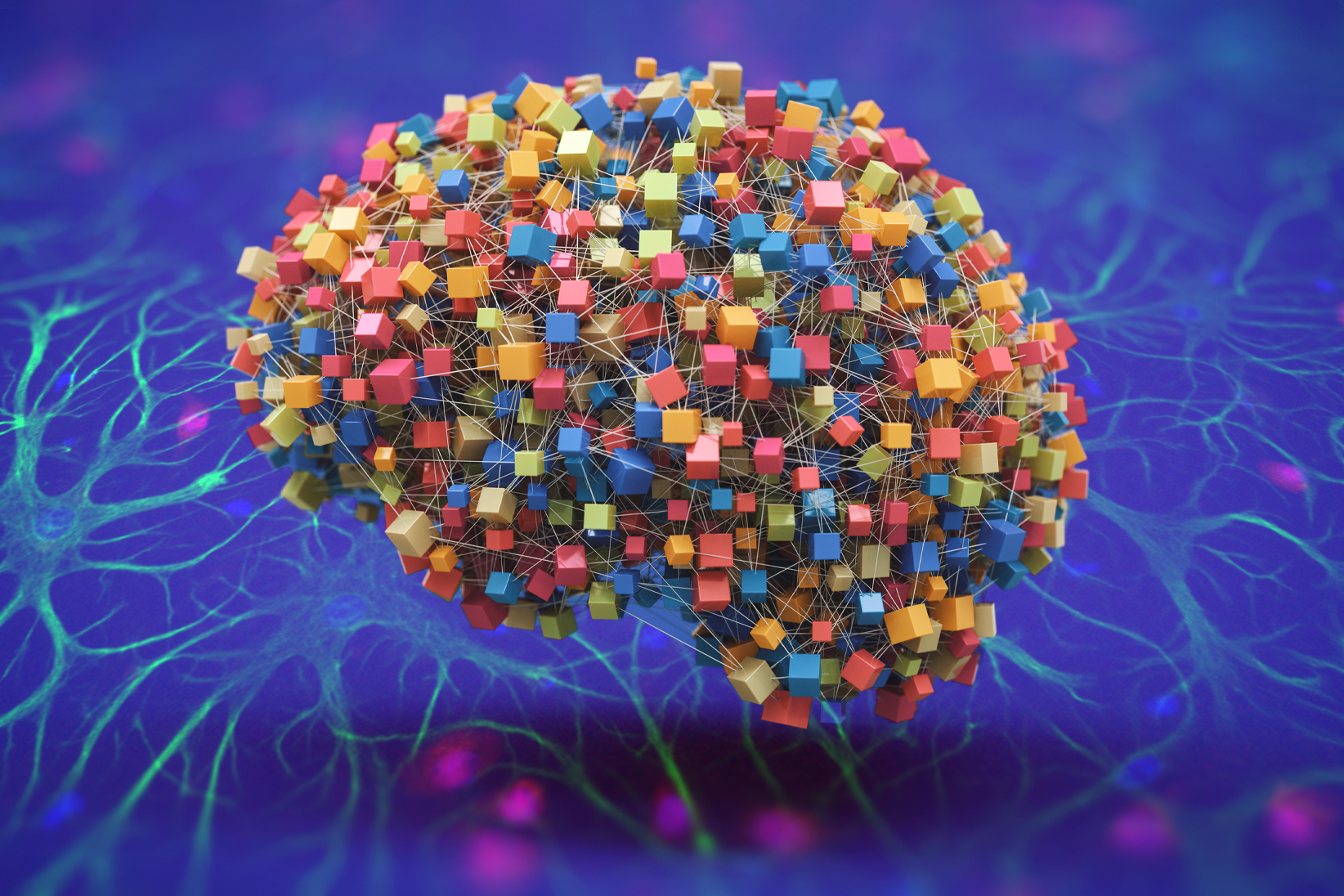
For decades, researchers have pursued neuromorphic computing—designing chips that mimic the way the brain’s neurons fire and connect, aiming for computers that think more like humans while consuming far less energy. One major hurdle has been that artificial neurons operate at much higher voltages than biological ones, limiting their fidelity and efficiency.
A team at the University of Massachusetts Amherst may have closed this gap. Their artificial neurons now fire within the same voltage range as living cells, using only picojoules of energy per spike—comparable to biological neurons. Published in Nature Communications, the work demonstrates that silicon and biology can finally “speak” the same electrical language.
Microbe Nanowires Enable Biological Fidelity
At the heart of the UMass device is a memristor—a component that remembers electrical states—built from protein nanowires harvested from the bacterium Geobacter sulfurreducens. Unlike silicon, these nanowires naturally conduct charges at low voltages. Connected to a simple RC circuit that mimics neuronal charging and discharging, the device generates repeatable voltage spikes, allowing one artificial neuron to trigger the next, just like in the brain.
The design can be fabricated using standard CMOS chip-making processes, avoiding exotic quantum or photonic setups. However, scaling remains a challenge, as protein nanowires must be grown, purified, and precisely placed on chips—a process not yet proven at industrial scale.
Energy Efficiency Matches Biology
The artificial neurons operate at a few picojoules per spike, overlapping directly with biological neurons, which typically use 0.3–100 picojoules. This efficiency makes neuromorphic computing attractive: while brains run on roughly 20 watts, conventional data centers consume megawatts for comparable tasks.
Beyond energy, the UMass neurons respond to chemical signals. Integrated sodium and dopamine sensors adjust firing rates similarly to biological neurons, and the device can even synchronize with living heart cells in a dish. This represents a step toward hardware that reacts dynamically to its biological environment.
Variability and Probabilistic Computing
Like real neurons, the artificial neurons exhibit small variations in firing. This randomness can be advantageous for probabilistic computing, though some systems may treat it as noise. Interestingly, variability decreases at higher firing rates, mirroring biological behavior.
Future Applications and Outlook
For now, practical uses are likely in niche biosensing applications—medical diagnostics, drug screening, and toxicity testing—where artificial neurons interpret cellular signals directly. While brain-computer interfaces or superhuman AI remain long-term goals, the technology opens the door to new bio-integrated computing platforms.
“Ten years can give us too much surprise,” says Jun Yao, lead researcher and Associate Professor at UMass Amherst. “Consider 10 years ago, we would never have imagined AI like ChatGPT. I carry the grand hope and belief that neuromorphic computing will continue to evolve in ways we can’t fully predict today.”
This breakthrough demonstrates a critical step: artificial neurons that fire like the real thing, bridging the gap between silicon and biology and pointing to a future where electronics may truly think more like us.