
Trump's 'Stone Age' Threat: A Civilizational Echo Against Iran
Trump's threat to push Iran 'back to the Stone Age' sparks historical debate.
Top Summary
- What happened: Former US President Donald Trump threatened to push Iran 'back to the Stone Age' if it continues nuclear weapons development.
- Why it matters: The phrase evokes the destruction of a nation's infrastructure and a regression of civilization, particularly poignant for Iran.
- What changes for people: The threat raises concerns about potential military action and its devastating impact on Iranian society.
- Who is affected: The Iranian people, its government, and potentially the wider region face heightened instability.
The 'Stone Age' Threat: An Ancient Echo
Former US President Donald Trump's recent statement regarding Iran has ignited controversy.
He declared the US would only retreat once Iran was forced "into the Stone Age" to halt nuclear weapons production.
This phrase, seemingly archaic, now implies the use of overwhelming force targeting critical infrastructure.
Decades of Regression
The statement signifies a desire to set Iran back decades, beyond a simple military strike.
This is especially striking given Iran's location in a region that birthed some of the world's earliest civilizations.
Threatening to revert it to the “Stone Age” carries a profound warning of collapse.
Historical Irony Unveiled
The Sumerian civilization, in ancient Mesopotamia, pioneered urban life and governance.
This region witnessed humanity's initial steps towards settlement, administration, and record-keeping.
The “Stone Age” reference appears crude considering the area's deep ties to organized human origins.
Defining the 'Stone Age'
The land now known as Iran has been inhabited for millennia, undergoing continuous development.
Long before Europe and the US, this area fostered early settlements and culture.
The Stone Age, roughly 300,000 BCE to 3000 BCE, saw humans using primarily stone tools.
The Stone Age Phases
Historians divide the Stone Age into:
- Palaeolithic (Old Stone Age)
- Mesolithic (Middle Stone Age)
- Neolithic (New Stone Age)
Human life began transforming during this period.
Societies gradually shifted from hunting and gathering to farming and food production.
Early humans shared the planet with species like Neanderthals and Denisovans.
Early Human Life
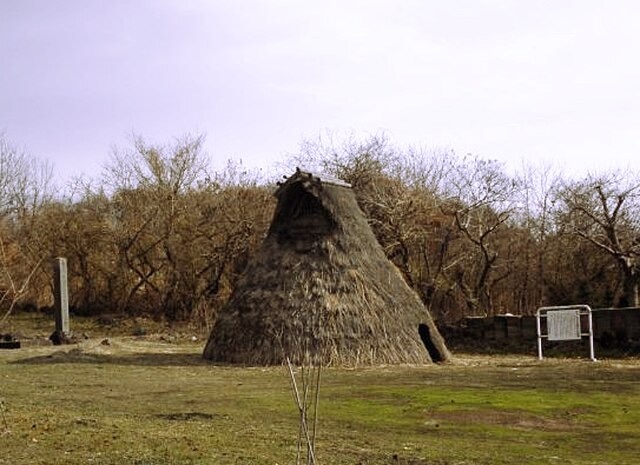
People resided in caves, rock shelters, or basic huts during the early Stone Age.
They primarily hunted and gathered, constantly moving to find food and safety.
Farming, trade, and structured settlements were still limited throughout much of the era.
Birthplace of Cities
Mesopotamia, between the Tigris and Euphrates rivers, hosted the world's first cities around 4500 to 3000 BCE.
The Sumerians built cities like Ur and Uruk, creating early urban centers.
They developed irrigation, managed resources, built institutions, and invented cuneiform writing.
Ancient Civilizations
Ancient Egypt flourished along the Nile, organizing life around the river and farming cycles.
The Indus Valley Civilization emerged around 2600 BCE in the northwestern Indian subcontinent.
Cities like Harappa and Mohenjo-daro featured planning, drainage, and standardized structures.
An Unsettling Threat
Trump's remark is especially unsettling given the region's long civilizational history.
In the age of AI and precision warfare, the rhetoric remains surprisingly blunt.
The ultimate threat remains: wiping a civilization off the map.
What to Watch Next
The international community's response to Trump's statement will be closely monitored. Future developments in Iran's nuclear program and US foreign policy will determine the stability of the region.