
PM-SETU’s ₹6,000 Crore ITI Push: Big Skilling Reform — But Will It Actually Create Jobs?
The government’s largest vocational training initiative aims to modernise 1,000 ITIs through industry partnerships, yet questions remain about placements, rural access, and real job demand....
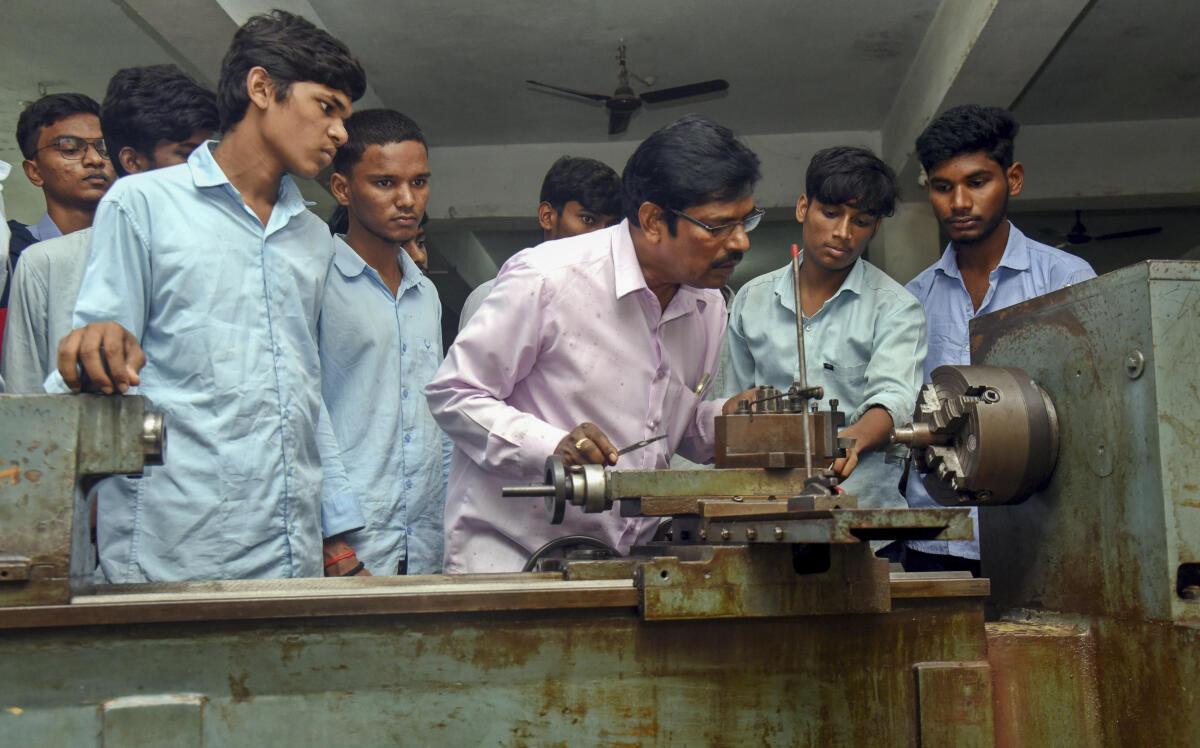
The government’s largest vocational training initiative aims to modernise 1,000 ITIs through industry partnerships, yet questions remain about placements, rural access, and real job demand.
What happened:
-
The Union Budget 2026-27 allocated ₹6,000 crore to the PM-SETU scheme, focused on upgrading Industrial Training Institutes (ITIs) and boosting employability through stronger industry involvement.
Why it matters now:
-
India faces a growing technical skills gap even as millions of youth seek jobs — making vocational training reforms critical for economic growth and workforce readiness.
What changes for people:
-
Students may see upgraded facilities, new courses, and closer industry exposure, but actual employment outcomes will depend heavily on implementation and market demand.
Who is affected:
-
ITI students, trainers, private industry partners, state governments, and sectors facing technician shortages such as manufacturing and infrastructure.
A ₹6,000 crore bet on India’s vocational training future
The Pradhan Mantri Skilling and Employability Transformation through Upgraded ITIs (PM-SETU) has emerged as the biggest programme under the Ministry of Skill Development and Entrepreneurship.
Launched in October 2025, the scheme plans to modernise 1,000 government ITIs and transform five National Skill Training Institutes into centres of excellence. Over five years, the initiative carries a massive ₹60,000 crore overall outlay, signalling the government’s push to overhaul vocational education.
Officials say the goal is simple: make ITI graduates more job-ready in an economy struggling with both unemployment and a shortage of skilled technicians.
How the hub-and-spoke model will reshape ITIs
Under PM-SETU, ITIs will be organised into a hub-and-spoke structure:
-
200 Hub ITIs will act as anchor institutions.
-
800 Spoke ITIs will connect to hubs for shared training and resources.
Each upgraded institute is expected to receive advanced infrastructure, machinery, and industry-aligned training programmes. Funding will follow a cost-sharing model — 50% from the Centre, 33% from states, and 17% from industry, with higher central support for hilly and North-Eastern regions.
Five NSTIs in Bhubaneswar, Chennai, Hyderabad, Kanpur, and Ludhiana will be upgraded to train instructors and develop specialised skills programmes in partnership with global institutions.
Private sector gets a bigger role than ever
A major shift in PM-SETU is mandatory industry funding and deeper operational control. Unlike earlier models where private contributions were optional, companies must now commit financially and help drive performance targets.
Industry partners can be single firms or consortiums, and their responsibilities may include curriculum design, infrastructure planning, and achieving key performance indicators.
Supporters believe this model could align training with real market needs. Critics worry that giving private players stronger control may shift focus toward high-return urban clusters instead of underserved regions.
Concerns over rural access and inclusion
Experts say the hub-and-spoke design could unintentionally favour ITIs located near cities, where industries and infrastructure are already stronger.
Vocational education organisations warn that rural institutes — which often serve different local skill demands — may struggle to fit into cluster models shaped by large industry partners.
There are also broader equity issues. Past data shows women make up only 6.6% of ITI trainees, highlighting a significant gender gap that future reforms must address.
Past performance raises tough questions
Despite heavy public investment, placement outcomes in the ITI ecosystem have been weak. A NITI Aayog report noted that only 405 candidates were placed out of over 4.14 lakh trained, reflecting extremely low placement rates.
At the same time, industries continue to report shortages of skilled workers — exposing a mismatch between training quality and job market needs.
Another major challenge is staffing. Only about 36% of sanctioned instructor posts are filled, forcing institutes to rely heavily on contractual or guest faculty.
Will PM-SETU really create jobs?
The scheme gives flexibility by allowing each ITI cluster to set its own performance targets instead of uniform national benchmarks. These KPIs include training delivery, placements, infrastructure upgrades, and industry collaboration.
However, experts caution that upgrading buildings and equipment alone may not solve deeper issues. Vocational training requires highly skilled trainers with current industry exposure — an area where India still faces a significant gap.
Some analysts argue that focusing primarily on large corporate partners could overlook local and small-scale industries, which actually generate a large share of employment opportunities for ITI graduates.
Multiple perspectives: ambitious reform or risky experiment?
Government officials view PM-SETU as a transformative step that could modernise India’s vocational ecosystem and improve employability outcomes.
Industry advocates say stronger private participation will make training more practical and aligned with real-world needs. Meanwhile, education experts warn that without clear job pathways, placement rates may continue to lag behind expectations.
Students themselves face a dilemma: many aspire to work for big-name companies, even though the majority of available jobs exist in smaller local industries.
Economic and governance impact
If successful, PM-SETU could help close India’s skills gap, strengthen manufacturing growth, and reduce reliance on imported technical talent. Improved vocational training may also support infrastructure projects, renewable energy expansion, and emerging industrial sectors.
But failure to deliver meaningful employment outcomes could increase pressure on policymakers and raise questions about the effectiveness of large-scale skilling investments.