
NITTTR Bhopal's Sampark Sarita Wins Rajbhasha Award
NITTTR Bhopal's Hindi magazine, Sampark Sarita, has received the prestigious Rajbhasha Award–2026 for its 27-year contribution to promoting the Hindi language.
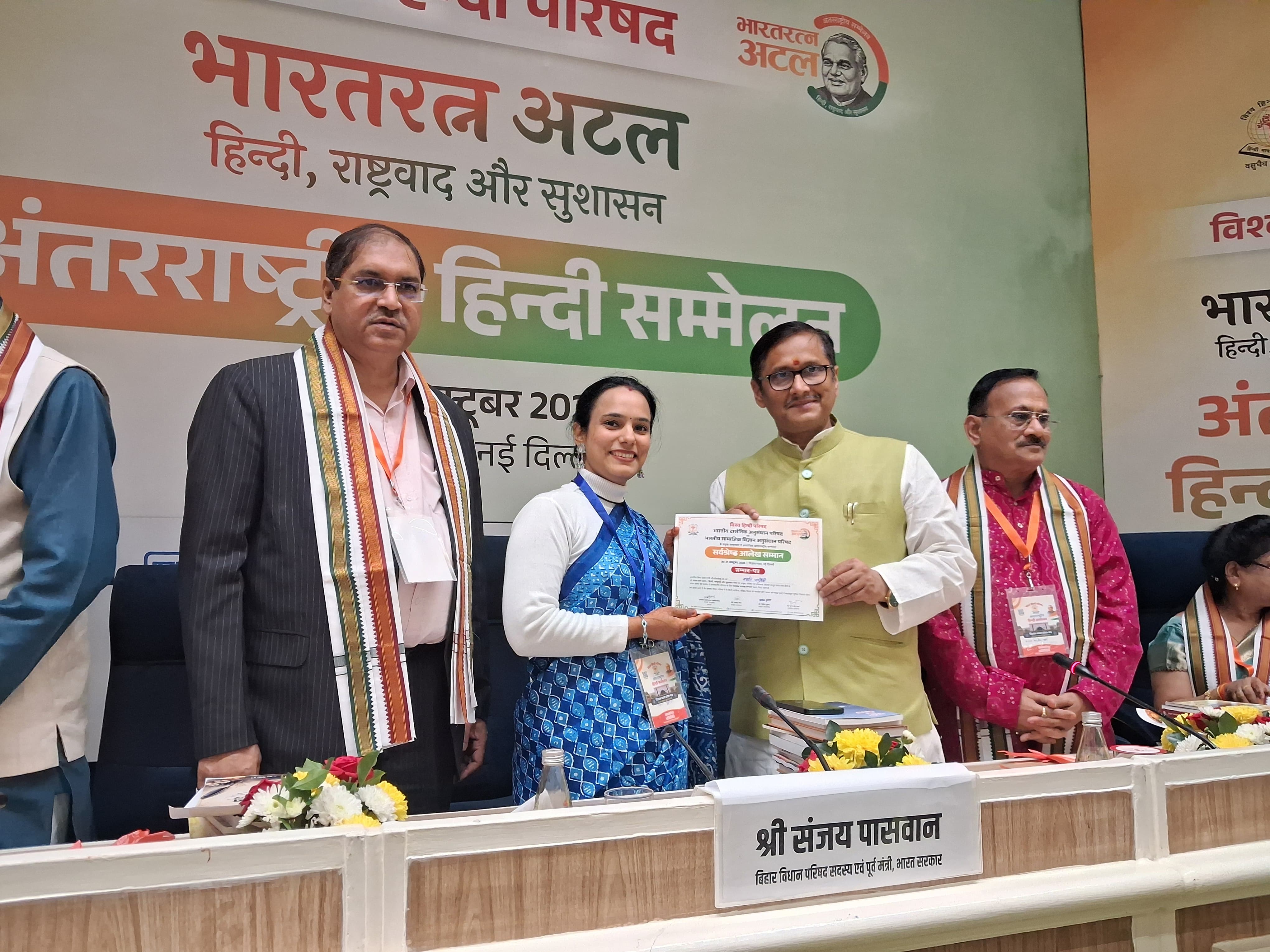
Bhopal | Dr. PK PUROHIT
The Cliff News | 1 November 2026
The National Institute of Technical Teachers Training and Research (NITTTR) in Bhopal has achieved national recognition with its Hindi magazine, Sampark Sarita, being honored with the esteemed Rajbhasha Award–2026. The award ceremony took place at Vigyan Bhawan in New Delhi during the International Hindi Conference, organized by the Vishwa Hindi Parishad.
Sampark Sarita was recognized in the Outstanding Hindi Magazine category. This significant accolade highlights the magazine's sustained excellence and its dedication to promoting and enriching the Hindi language over a period of 27 years. The award was accepted on behalf of the institute by the magazine's Editor, Prof. P. K. Purohit, and Co-editor, Mrs. Babli Chaturvedi.
Individual Accolades for NITTTR Faculty
The event also saw individual faculty members from NITTTR Bhopal receiving commendations for their academic and scientific contributions. Prof. P. K. Purohit was specially honored for an invited lecture that articulated the educational, cultural, and scientific vision of the late former Prime Minister, Shri Atal Bihari Vajpayee. His efforts in popularizing science through Hindi and his prolific writing were specifically noted.
Furthermore, Mrs. Babli Chaturvedi was presented with a special award for her impactful article and its accompanying presentation, further underscoring the institute's commitment to quality Hindi content.
International Platform for Hindi Promotion
Prof. C. C. Tripathi, Director of NITTTR, expressed immense pride in the institute's dual recognition. He emphasized that these awards are a testament to NITTTR's ongoing efforts to integrate the Hindi language into scientific and academic discourse. The International Hindi Conference provided a global stage, drawing over 350 delegates from countries including the United States, Canada, China, and Australia.
This international participation underscored the growing global interest in the evolution and dissemination of the Hindi language, reinforcing the value of scholarly endeavors in its cross-border development. The conference served as a vital platform for discussing the future of Hindi in various academic and cultural spheres.