
Meet Anita Jha: The Madhubani lawyer who runs her legal practice from a car for 13 years
• What happened: Advocate Anita Jha, a lawyer from Madhubani, Bihar, has been operating her legal practice from the backseat of her car for 13...
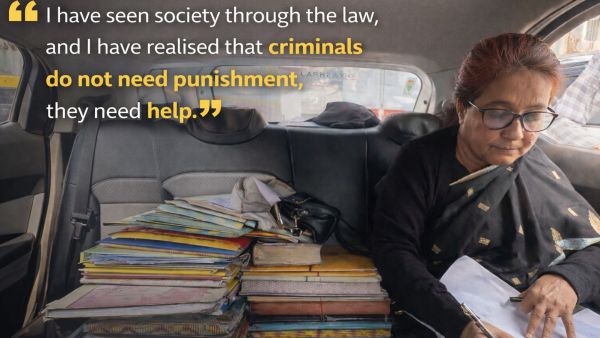
• What happened: Advocate Anita Jha, a lawyer from Madhubani, Bihar, has been operating her legal practice from the backseat of her car for 13 years.
• Why it matters now: Her story highlights ongoing gaps in legal infrastructure and the resourcefulness of district-level practitioners.
• What changes for people: Clients in remote districts gain easier access to legal guidance without waiting for chamber space or formal appointments.
• Who is affected: Local litigants, junior lawyers, and the district legal ecosystem around Madhubani District Court.
Advocate Anita Jha’s unusual workplace sits in the parking lot of the Madhubani District Court: the backseat of a white hatchback. For over 13 years, this compact car has doubled as her chamber, allowing her to meet clients, draft submissions, and review case files without waiting for office space in an overcrowded court complex.
Jha, now in her late 50s, has been practicing law for 28 years, commuting roughly 12 kilometres from her home in Kakraul village to the court each day. Her vehicle usually arrives around 10.30 am, and by the time it parks near the jail van, clients are already waiting with case papers in hand.
How the car became a courtroom extension
Court premises in many Indian districts struggle with space constraints. Senior advocates often secure chambers, while others operate from makeshift desks or shared corners. When such limitations persisted in Madhubani, Jha chose mobility over frustration, converting her car into a practical workspace.
Over time, it became a familiar landmark in the court’s parking space, and for clients, a predictable place to seek advice.
A mobile legal office for small-town litigants
Most of Jha’s visitors are from rural backgrounds and prefer direct, face-to-face consultation. For them, the car offers privacy and accessibility without navigating crowded court corridors.
Litigants often return to her car-office between hearings for quick clarifications, saving both time and travel costs.
Legal experts note that such grassroots adaptations quietly support access to justice, a principle frequently highlighted by the Bar Council of India and state judicial reforms.
A feminist undertone without proclamation
While Jha does not position herself as an activist, her journey illustrates the persistent challenges female advocates face in smaller districts, including limited infrastructure, safety concerns, and gendered biases within the legal community.
Yet, according to fellow practitioners in Madhubani, her visibility and consistency have encouraged more young women to consider litigation as a career path.
Why it matters beyond Madhubani
India’s district and taluka courts form the first line of access to justice. According to multiple legal policy studies, infrastructure shortages, chamber scarcity, and uneven digitisation affect legal delivery in semi-urban regions.
Stories like Jha’s underline how lawyers adapt to these gaps instead of waiting for structural reforms.
Her method does not change the law, but it changes who can reach the law. In places where governance and legal awareness are still evolving, that impact is significant.