
Kerala schools roll out statewide robotics training for 4.5 lakh Class 10 students before January 15
What happened: Kerala has launched a statewide robotics training programme for Class 10 students, covering around 4.5 lakh learners across government and aided schools. Why...
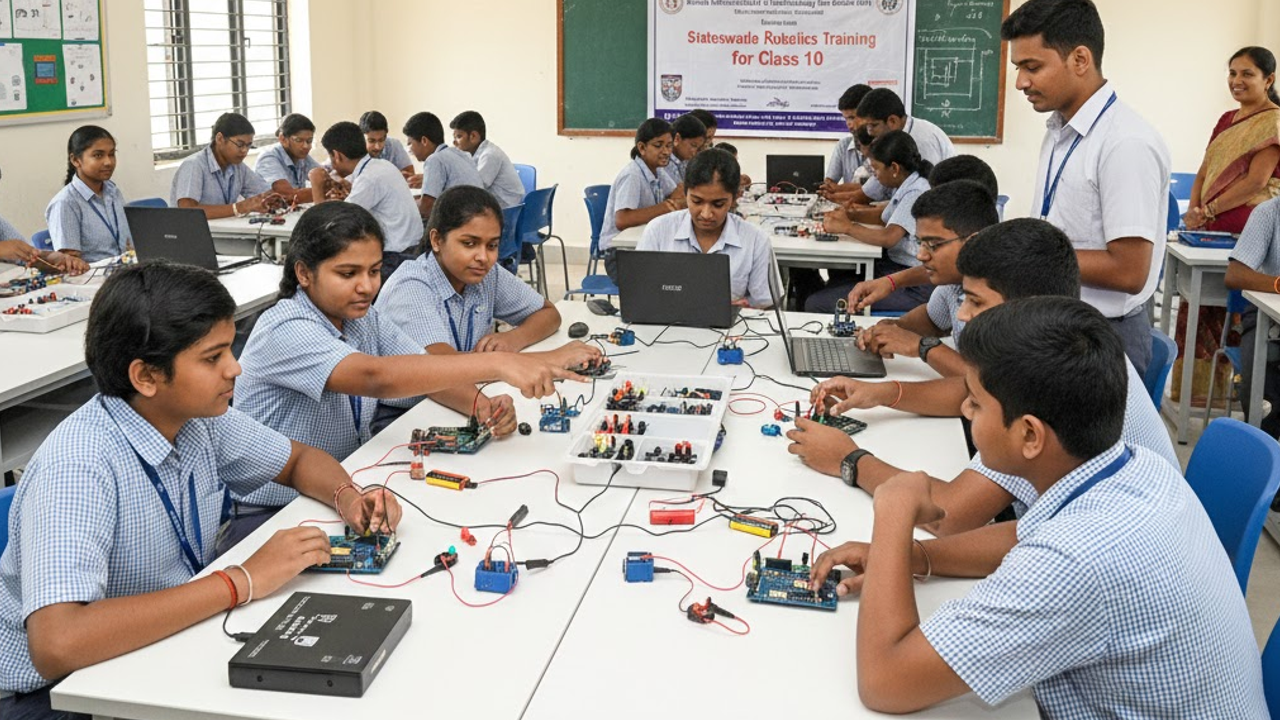
What happened: Kerala has launched a statewide robotics training programme for Class 10 students, covering around 4.5 lakh learners across government and aided schools.
Why it matters now: The programme is being completed before January 15, aligning directly with the SSLC examination syllabus for 2026.
What changes for people: Students receive hands-on exposure to robotics and block-based coding, moving beyond theory-based IT education.
Who is affected: Class 10 students, teachers trained under Little KITES, and the state’s public education system.
Kerala has taken a major step toward future-ready schooling by introducing a comprehensive robotics training programme for Class 10 students across the state. The initiative, led by the Kerala Infrastructure and Technology for Education (KITE), aims to ensure that every student gains practical exposure to robotics and coding before appearing for the Secondary School Leaving Certificate (SSLC) examinations this year.
A syllabus-linked push towards future skills
According to officials, the training is being conducted in all schools by January 15, 2026, ensuring uniform access irrespective of geography or school management. The programme is tightly aligned with the Class 10 Information Technology curriculum, reducing exam pressure while enhancing conceptual understanding.
Education department sources said the move reflects Kerala’s long-term strategy to embed emerging technologies early in school education, especially as automation and artificial intelligence reshape global job markets.
Two-phase training with hands-on focus
The robotics programme is structured in two sessions.
The first session introduces students to the fundamentals of robotics, sensors, and logical thinking.
The second session focuses on practical learning, including block-based coding using PictoBlox software, enabling students to write programs visually and test them on robotic kits.
Officials associated with KITE said the emphasis is on learning by doing, allowing students to experiment, debug, and collaborate rather than memorise concepts.
Powered by Little KITES network
The training is being delivered through Little KITES, described by the government as India’s largest student-led IT network. Selected students and teachers trained under this network support peer learning within schools, helping scale the programme efficiently.
A senior official involved in implementation said the peer-driven model not only reduces dependency on external trainers but also builds leadership and problem-solving skills among students.
Why this matters beyond the classroom
Education experts note that early exposure to robotics helps students develop computational thinking, a skill increasingly valued across sectors including manufacturing, healthcare, defence, and space research. For Kerala, which has invested heavily in public digital infrastructure, the programme strengthens its reputation as a leader in technology-enabled education.
The initiative also reduces the digital divide by ensuring that students from rural and economically weaker backgrounds access the same tools and training as their urban counterparts.
Official assurance and next steps
State education authorities have indicated that feedback from this phase will be used to refine and potentially expand robotics and AI modules to lower classes in the coming academic years. Any future expansion will be announced formally after the SSLC examinations conclude.
What to watch next
Whether robotics modules are extended to Classes 8 and 9 statewide.
How students perform in IT and practical assessments linked to the training.
Possible integration of AI and automation topics in Kerala’s school curriculum next year.