
Kendriya Vidyalayas: Are KVs Still Serving Their Original Purpose?
KV schools see a shift in student demographics, raising questions about access and purpose.
Top Summary
- What happened: Kendriya Vidyalayas (KVs) are experiencing a decline in enrollment from children of Central Government employees, their original target demographic, while enrollment from non-government families increases.
- Why it matters: This shift raises questions about whether KVs are fulfilling their intended purpose and who they are truly serving. It also highlights disparities in access to quality education.
- What changes for people: The changing demographics may impact the learning environment and peer groups within KVs, and access to KV education for different groups. Reforms in 2022 aimed to reduce overcrowding are now in place.
- Who is affected: Central Government employees, non-government families seeking affordable education, teachers within the KV system, and policymakers responsible for ensuring equitable access to education.
The Changing Face of Kendriya Vidyalayas
Kendriya Vidyalaya Sangathan (KVS) schools, established in the 1960s, were designed for children of Central Government employees. They are known for high academic standards and discipline. This year's results are no exception, with several students scoring above 90 per cent.
However, data indicates a significant shift. Increasingly, KVs are educating students from non-government families.
Numbers Don't Lie
Available KVS data (up to 2018) shows a clear trend. The proportion of students from Central Government families decreased from 60 per cent in 2011-12 to 47 per cent in 2017-18.
In 2011-12, 6,56,527 students out of 10,91,931 were from Central Government families. By 2017-18, this number dropped to 5,92,436, despite total enrollment increasing to 12,54,922 students.
Conversely, the share of students from non-government families rose from 25 per cent in 2011-12 to 36 per cent in 2017-18, growing from 2,74,791 to 4,61,950 students.
According to Somit Shrivastav, Joint Commissioner (Academics), KVS, in metros, the growing presence of private schools influences parental choice.
"We are here to provide quality education to all, and our academic results continue to reflect that.”
A System Built for One, Occupied by Another?
Rahul Singhania, a former IRS officer, notes the paradox:
"KVs were designed for transferable Central Government staff, but of late, many of those families are opting out. What fills the gap is a mix of discretionary admissions and aspirational demand from outside.”
Education reformist Deepika Kulshreshta points to the impact of discretionary seats and government families choosing private schools.
"Demand from outside, combined with quota-based entries, was sustaining full enrolment even as the original beneficiary group was partially opting out."
The 2022 reforms aimed to curb “excess” admissions, capping class strength at 40 students, according to Shrivastav.
The Allure of Private Schools
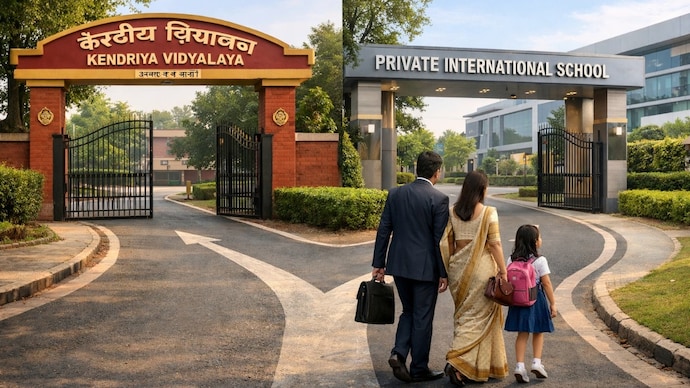
Many bureaucrats are choosing private schools for reasons beyond academics, such as exposure and peer networks.
One Income Tax officer in Delhi sends his children to The Mother’s International School despite a KV being nearby. His wife cited the overall environment and peer group as influencing factors.
Another bureaucrat stated they would opt for better facilities and exposure if they could afford it, and move children to another private school upon transfer.
Two Systems Within One
The same officers who choose private schools for their children often help their domestic staff secure KV admissions. This highlights a dual system where private schools represent aspiration and KVs provide access.
Teachers also observe this trend. A retired KV teacher from Powai stated that nearly 90 per cent of students in her school came from marginalised backgrounds. She questioned why more officers don’t choose KVs for their own children.
Another teacher coordinator from Colaba, Mumbai, believes that bureaucrats prefer IB or ICSE schools for signaling money and status. They may recommend admissions for staff children but choose differently for their own.
The Admission Maze
For families outside the system, KV admissions have been challenging. Journalist Prachi Misra described a confusing process involving multiple offices and a required letter that she never received.
Monika Roy in Noida secured admission after months of persistence and a recommendation from a gazetted officer in 2018. She noted that a strong *sifarish* (recommendation) was often necessary.
These accounts reflect a shadow system that, while officially dismantled in 2022, still impacts perceptions and practices.
The Shadow System That Existed
Previously, KV admissions involved multiple discretionary quotas. These included recommendations from:
- Members of Parliament (up to 10 students per school annually)
- District Magistrates (17 admissions)
- The Education Ministry (reserved pool)
These channels accounted for an estimated 40,000 seats annually.
What to Watch Next
It remains to be seen how the 2022 reforms will further reshape the demographics of Kendriya Vidyalayas. Future data releases from KVS will be critical in assessing the long-term impact on access, equity, and the fulfillment of the system's original mandate.