
JEE Main 2026: Key exam day rules, dress code and what diabetic students can carry
• What happened: The NTA has issued detailed JEE Main 2026 Session 1 exam day guidelines ahead of the January test dates.• Why it matters...
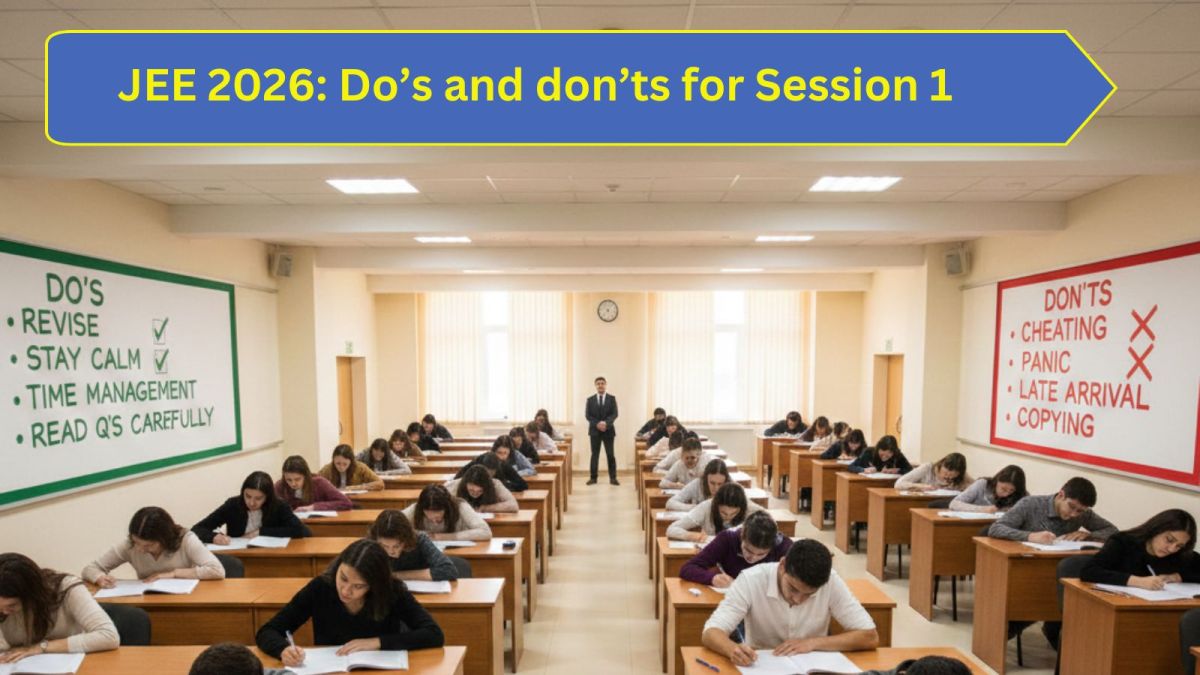
• What happened: The NTA has issued detailed JEE Main 2026 Session 1 exam day guidelines ahead of the January test dates.
• Why it matters now: Clear rules on documents, dress code and prohibited items help candidates avoid last-minute issues at exam centres.
• What changes for people: Students must follow a strict entry protocol and deposit their admit card before leaving the hall.
• Who is affected: All BTech, BE and BArch aspirants appearing in Session 1 at NTA-designated centres across India.
The JEE Main 2026 Session 1 will run on January 21, 22, 23, 24, 28 and 29, 2026, with Paper 1 conducted in two shifts from January 21 to 24 and Paper 2 scheduled for January 29 in a single morning shift. With lakhs of students preparing to enter centres nationwide, the National Testing Agency has outlined clear rules to ensure smooth conduct and uniform security standards.
Below is a mobile-friendly breakdown of the rules for session one candidates, including document checks, items allowed inside the centre and relaxations for diabetic students.
When and how the exam will run
According to the NTA schedule:
• Paper 1 (BE/BTech): January 21–24, 9 am to 12 pm (morning shift) and 3 pm to 6 pm (afternoon shift)
• Paper 2 (BArch/BPlanning): January 29, 9 am to 12:30 pm (single shift)
Candidates are advised to reach their centres well before reporting time to complete frisking and verification without stress.
Documents you must carry
Students must bring the following as per NTA rules:
• A printed copy of the JEE Main 2026 Session 1 admit card
• An original photo ID (such as Aadhaar card, PAN card, passport or voter ID)
• A recent passport photo affixed on the admit card
• Two spare passport photos (optional but useful)
• One identical passport photo for the attendance sheet
NTA has underlined that candidates must submit their admit card in the drop box before leaving the exam room. If the admit card is not deposited, the answer script will not be evaluated.
Items strictly not allowed
Security personnel will stop entry of the following:
• Textual materials, notes, paper, stationery
• Mobile phones, earphones, cameras, pagers, calculators
• Electronic gadgets, metallic items, docupens, log tables
• Handbags, purses, pencil boxes, geometry boxes (except where permitted for Paper 2 drawing)
• Food and water bottles, unless medically exempt
Carrying prohibited items may lead to disqualification or removal from the centre.
Dress code for JEE Main
To enable smooth frisking, NTA advises:
• Avoid rings, bracelets, earrings and metallic accessories
• Thick-soled footwear is not allowed
• Wear simple, comfortable clothing
• Scarves should not be worn inside centres
This dress code applies across all exam locations.
Special rules for diabetic candidates
NTA has given relaxations to ensure health safety for diabetic candidates. They are allowed to carry:
• Sugar tablets
• Fruits (bananas, apples or oranges)
• A transparent water bottle
However, chocolates, candies, sandwiches and packaged food are not allowed.
Guidelines for drawing test (Paper 2)
Candidates appearing for the drawing section of Paper 2 must bring:
• Geometry box set
• Pencils and erasers
• Colour pencils or crayons
The NTA has underlined that watercolours are not permitted on the drawing sheet.
Why this matters for students
The JEE Main is one of India’s most competitive entrance exams, and even small mistakes on exam day can cost candidates valuable time or entry into the hall. With multiple shifts, digital verification and strict security checks, clarity on what to carry remains crucial for a hassle-free experience.