
ISRO Uses Chandrayaan-2 Orbiter Data to Unlock New Insights into Moon’s Polar Regions
ISRO’s Breakthrough in Lunar Science The Indian Space Research Organisation (ISRO) on Saturday said it has collected advanced data from the Chandrayaan-2 lunar orbiter, providing...
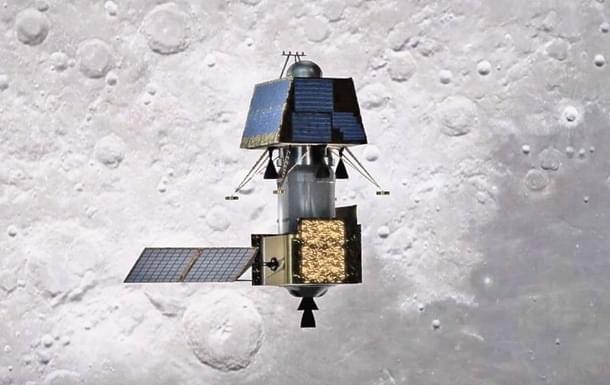
ISRO’s Breakthrough in Lunar Science
The Indian Space Research Organisation (ISRO) on Saturday said it has collected advanced data from the Chandrayaan-2 lunar orbiter, providing a deeper understanding of the Moon’s polar regions — including crucial physical and electrical characteristics of its surface.
“This represents India’s major value addition towards future global exploration of the Moon,” ISRO said in an official statement.
The Chandrayaan-2 Orbiter, which has been operating around the Moon since 2019, continues to deliver high-quality scientific data five years after launch.
India’s First Full-Polarimetric Lunar Mapping
At the heart of this new research is one of the orbiter’s key instruments — the Dual Frequency Synthetic Aperture Radar (DFSAR).
ISRO noted that the DFSAR is the first instrument ever to map the Moon using the L-band radar in full-polarimetric mode at a high spatial resolution of 25 metres per pixel.
This cutting-edge radar system sends and receives signals in both vertical and horizontal orientations, enabling scientists to study surface textures and material properties in exceptional detail.
1,400 Datasets Reveal New Clues about Water-Ice
Since entering lunar orbit, the DFSAR has collected and processed about 1,400 radar datasets, which have been used to create polarimetric mosaics of the Moon’s north and south poles (80°–90° latitude).
Scientists from ISRO’s Space Applications Centre (SAC) in Ahmedabad have used this data to produce advanced data products that shed light on:
-
The potential presence of water-ice,
-
The roughness and texture of the lunar surface, and
-
The dielectric constant, a key electrical property that helps determine surface density and porosity.
These findings are significant because the Moon’s polar regions are believed to contain permanently shadowed craters where water-ice may have accumulated — a potential resource for future human and robotic missions.
Indigenous Algorithms, Global Impact
ISRO emphasized that the algorithm used to analyse full-polarimetric radar data and the subsequent data products were developed entirely in-house by Indian scientists.
“The successful indigenous processing of complex polarimetric data demonstrates India’s growing expertise in planetary radar science,” the space agency said.
The results not only enhance scientific understanding of the lunar poles but also position India as a key contributor to upcoming international lunar exploration initiatives, including potential missions under NASA’s Artemis program and other collaborative projects.