
Interstellar Object 3I/ATLAS Baffles Astronomers with Shape-Shifting Colours and No Visible Tail
A Mysterious Visitor from Beyond the Solar System Astronomers around the world are closely tracking 3I/ATLAS, a Manhattan-sized interstellar object currently passing through the solar...
A Mysterious Visitor from Beyond the Solar System
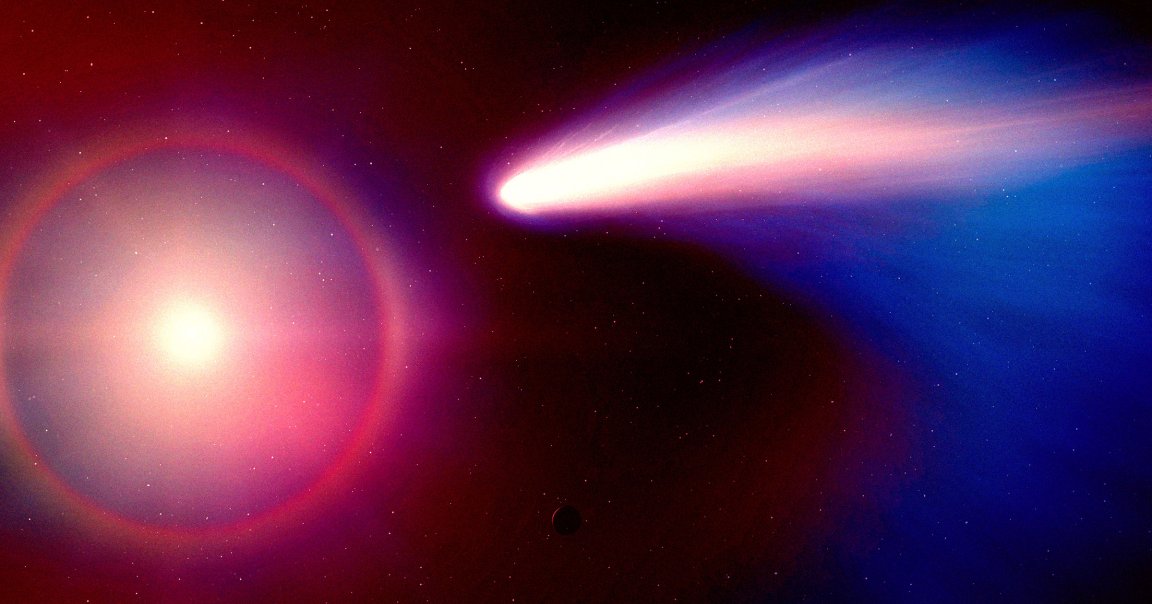
Astronomers around the world are closely tracking 3I/ATLAS, a Manhattan-sized interstellar object currently passing through the solar system, which has stunned scientists by changing shapes and emitting shifting colours.
The discovery, made on July 1, 2025, by the Asteroid Terrestrial-impact Last Alert System (ATLAS) — a U.S.-developed global early warning network with telescopes in the U.S., Chile, and South Africa — marks the third confirmed interstellar object ever detected after ‘Oumuamua (2017) and 2I/Borisov (2019).
What makes 3I/ATLAS extraordinary is its unpredictable brightness and lack of a visible tail, despite its proximity to the Sun — a feature that has fueled debate within the scientific community.
Harvard Astronomer Suggests “Artificial Origin”
Renowned Harvard astrophysicist Avi Loeb has reignited controversy by suggesting that 3I/ATLAS may not be a natural comet at all, but rather an alien spacecraft or probe.
Loeb, who previously advanced a similar theory about ‘Oumuamua, argues that the object’s unusual trajectory, unexpected acceleration, and absence of outgassing are “inconsistent with known natural phenomena.”
According to Loeb’s calculations, if 3I/ATLAS were a typical comet, its brightening and acceleration would imply that it has shed about 13% of its total mass — enough to produce a large, visible tail. Yet, none has been observed.
“The lack of a debris trail defies our current understanding of cometary physics,” Loeb stated. “That leaves open the possibility that 3I/ATLAS could be an artificial structure — perhaps a defunct probe drifting through space.”
NASA and Other Astronomers Push Back
Most scientists, however, urge caution. Researchers at NASA’s Jet Propulsion Laboratory (JPL) and other observatories maintain that 3I/ATLAS’s behaviour can still be explained through natural mechanisms, such as sporadic outgassing or the presence of volatile compounds that respond differently to solar radiation.
Astrophysicist Neil deGrasse Tyson dismissed the alien hypothesis outright, saying:
“Just because we don’t fully understand an object doesn’t make it extraterrestrial. Nature is often more creative than our imagination.”
Recent observations from the R. Naves Observatory in Spain on November 5 showed no visible tail, but they did capture subtle changes in surface colouration and reflectivity, suggesting dynamic processes on or beneath the object’s surface.