
Indian Researchers Simulate H5N1 Spillover to Humans, Mapping How Early Action Could Stop a Pandemic
As global concern over H5N1 avian influenza grows, Indian scientists have developed a detailed computer model showing how the virus could jump from birds to...
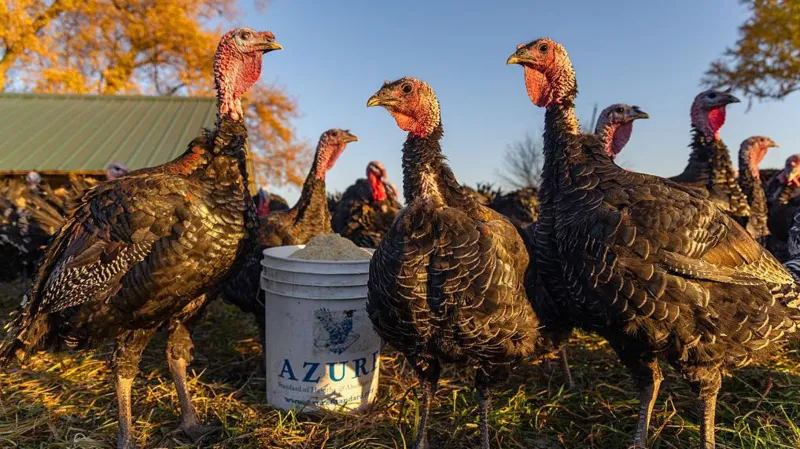
As global concern over H5N1 avian influenza grows, Indian scientists have developed a detailed computer model showing how the virus could jump from birds to humans—and how swift, targeted interventions might prevent a full-scale outbreak. The study underscores that timing, rather than scale alone, could determine whether a handful of infections fizzles out or escalates into a public health emergency.
Why H5N1 remains a global concern
H5N1, commonly called bird flu, has circulated in poultry and wild birds for decades, particularly across South and South-East Asia. Human infections remain rare, but when they do occur, the disease can be severe. According to data compiled by the World Health Organization (WHO), between 2003 and August 2025, nearly 1,000 confirmed human cases were reported across 25 countries, with close to half proving fatal.
Recent developments have renewed scrutiny. In the United States, the virus has spread widely among birds, crossed into dairy cattle, and infected dozens of people—mostly farmworkers—leading to hospitalisations and at least one death. In India, the virus has largely remained an animal health issue, but earlier this year it caused the deaths of several big cats at a wildlife rescue facility in Nagpur, highlighting its ability to jump species.
Modelling a human outbreak before it happens
Against this backdrop, researchers Philip Cherian and Gautam Menon of Ashoka University set out to answer a critical question: if H5N1 begins spreading among humans, how quickly would authorities need to act to contain it?
Their findings, published in the peer-reviewed journal BMC Public Health, are based on computer simulations using BharatSim—an open-source modelling platform originally developed during the Covid-19 pandemic. The tool allows scientists to recreate realistic patterns of daily movement and social interaction to see how an infectious disease might spread.
Professor Menon said the work is intended as a preparedness exercise rather than a prediction. The risk of a human pandemic, he noted, is real but not inevitable if surveillance and public health responses are fast and flexible.
From a single spillover to community spread
The model assumes a scenario familiar to epidemiologists: a lone human infection originating from contact with an infected bird, most likely a poultry worker or market vendor. That first case, by itself, is not the main threat. The danger emerges if the virus adapts enough to pass efficiently from person to person.
To test this, the team built a “synthetic” village based on Namakkal district in Tamil Nadu, one of India’s largest poultry hubs, with thousands of farms and massive daily egg production. In the simulation, the virus begins at a workplace and then moves through households, schools, and other shared spaces.
By tracking these interactions, the researchers calculated key indicators such as the basic reproduction number (R₀), which reflects how many new infections one infected person generates on average.
The narrow window for intervention
One of the study’s central findings is how quickly control can slip away. If close contacts are identified and quarantined when only two human cases are detected, the outbreak is very likely to be contained. Once infections climb to around ten, however, the probability that the virus has already spread silently into the wider community rises sharply.
Different interventions were tested. Pre-emptive culling of infected birds works best before any human infection occurs. After spillover, isolating patients and quarantining households can stop the virus at early transmission stages. If it reaches wider, tertiary spread, far tougher measures—such as localised lockdowns—may be required.
The model also reveals a delicate balance with quarantine. Introducing it too early may inadvertently increase household transmission by confining people together for long periods. Acting too late, on the other hand, reduces its effectiveness altogether.
Expert caution and limitations
Independent experts urge caution in interpreting the results. Seema Lakdawala, a virologist at Emory University in the US, points out that the simulation assumes a highly efficient influenza transmission pattern. In reality, not all flu strains—and not all infected individuals—spread the virus equally well.
The authors themselves acknowledge limits to the study. It focuses on a single, idealised village and does not include multiple simultaneous outbreaks driven by migratory birds or poultry trade networks. Nor does it fully capture how human behaviour might change once people become aware of an outbreak.
What the study adds to preparedness
Despite these caveats, public health specialists say the research is valuable because it translates abstract risk into actionable timelines. It reinforces a key lesson from Covid-19: early detection, rapid contact tracing, and targeted containment can dramatically alter the course of an outbreak.
As H5N1 continues to circulate globally, the study adds to the growing body of evidence that preparedness—rather than panic—remains the most effective defence.