
IndiaAI Mission Fuels Voice AI Race: Gnani.ai's InyaVoice OS Unveiled
Indian startups are building advanced voice AI models for natural human-machine interactions.
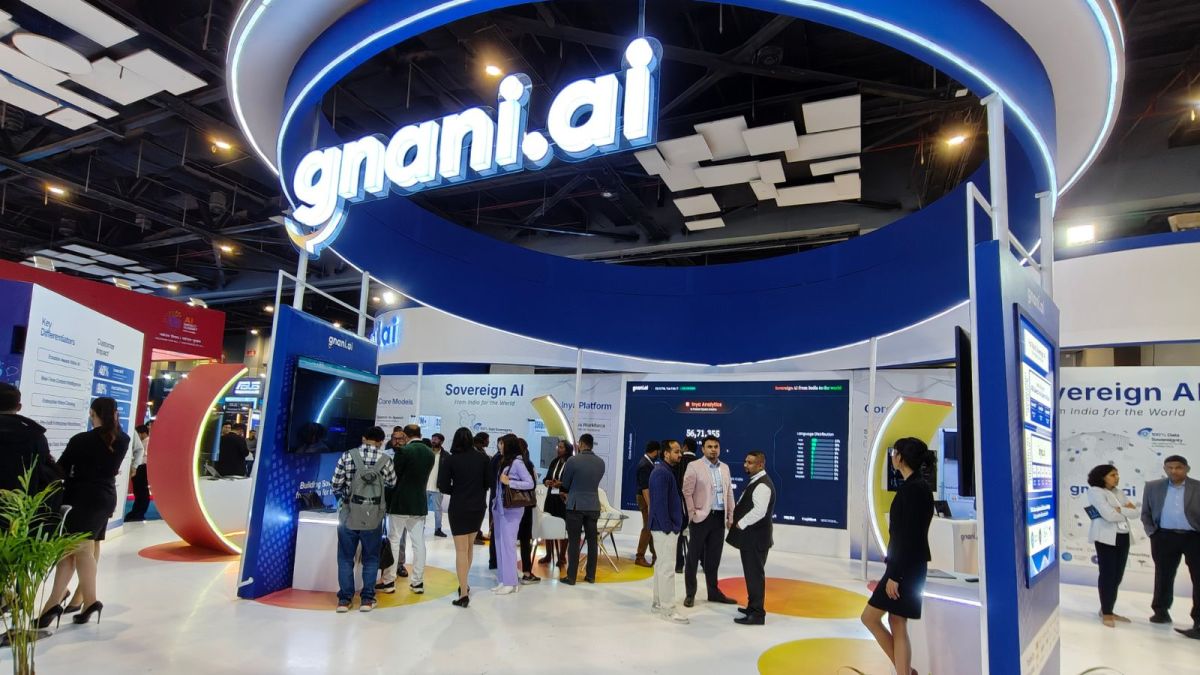
Top Summary
- What happened: Gnani.ai launched InyaVoice OS, an AI-powered speech-to-speech model, during the AI Impact Summit 2026 in New Delhi.
- Why it matters: The model aims to create more natural and human-like conversations with AI systems.
- What changes: InyaVoice OS focuses on phonetics, emotion, and intent to improve AI interactions.
- Who is affected: Enterprises, smartphone OEMs, and consumers seeking advanced voice automation solutions are affected.
IndiaAI Mission Spurs Voice AI Development
Indian AI startups are aggressively developing advanced voice AI models. These models go beyond simple text-to-speech functions. They focus on delivering natural and human-like interactions.
Gnani.ai, selected under the Centre’s Rs 10,372-crore IndiaAI Mission, unveiled its InyaVoice OS during the AI Impact Summit 2026. The summit was held at Bharat Mandapam in New Delhi.
The Power of Voice: A Natural Interface
Ganesh Gopalan, CEO and co-founder of Gnani.ai, emphasized the importance of voice as the most natural form of communication. He spoke to The Indian Express during the AI Impact Summit.
"Voice is the most natural form of communication in the world. If humans love talking to humans using voice, and humans talk to machines, why should it be any different?"
According to Gopalan, multilingual voice AI capabilities are essential for replicating colloquial conversations.
Multilingual Support and Emotion in Voice AI
Gopalan stressed the critical need for voice AI systems to support multiple languages. He also highlighted the importance of speech-to-speech AI models.
These models capture the emotion behind spoken words, unlike text-to-speech models. Gnani.ai focuses on reducing the risk of AI hallucinations and ensuring low latency for real-time conversations.
InyaVoice OS Development and Data Acquisition
The development of InyaVoice OS relied on a large, proprietary dataset of Indian languages. Gnani.ai started collecting voice data in 2017.
"Essentially, when you develop an AI system, there are two or three components that go into it. In order to train the model, you need a lot of data. And that data we’ve been collecting from 2017."
The company aimed to cover every district of India in its data collection efforts.
Data Sources and Scaling Voice AI Models
Gnani.ai utilized a mix of proprietary, public, and synthetic datasets for AI training. Gopalan emphasized the importance of controlling every element of the AI pipeline for scaling voice-based language models.
This includes pricing, accuracy, and latency in real-time systems. Gopalan criticized companies relying solely on global APIs, stating that they won't survive in production at scale.
Voice-First AI Devices and the Market Landscape
Gopalan believes that B2C and B2B use cases for voice AI are distinct. He mentioned that OpenAI is not necessarily suited for industry-specific problems.
He also noted the evolving user behavior, with Gen Z users showing a greater inclination towards voice interactions. Gnani.ai is working with smartphone OEMs to integrate deep tech capabilities.
Compute Availability and Regulatory Concerns
Compute access is a significant barrier for AI startups in India. The IndiaAI Mission provides compute at a more affordable rate.
Gopalan acknowledged the government's efforts in making compute accessible. The pricing on the IndiaAI Mission website is among the lowest globally.
Addressing regulatory concerns, Gopalan discussed the misuse of voice cloning. Gnani.ai has two separate teams working on voice cloning and voice authentication, respectively.
They also implement dynamic passphrases and behavioral analysis to combat voice AI-enabled identity theft.
What to Watch Next
Future developments will likely focus on improving the accuracy and security of voice AI systems. Also, look for increasing adoption of voice AI in various sectors, including finance and customer service as voice authentication becomes more dynamic.