
Chandrayaan-2 Makes First Observation of Solar Coronal Mass Ejection Effects on Moon
India’s Chandrayaan-2 mission has made the first-ever observation of the Sun’s Coronal Mass Ejection (CME) affecting the Moon, the Indian Space Research Organisation (ISRO) said...
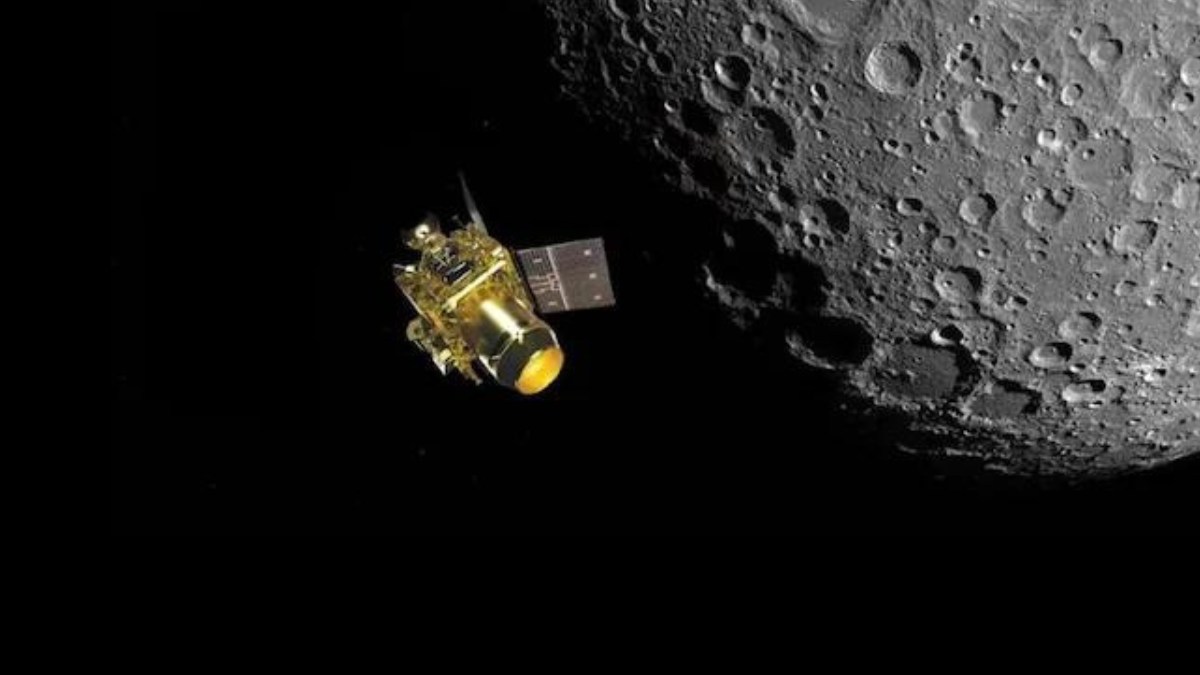
India’s Chandrayaan-2 mission has made the first-ever observation of the Sun’s Coronal Mass Ejection (CME) affecting the Moon, the Indian Space Research Organisation (ISRO) said on Saturday.
Using its onboard payload CHACE-2 (Chandra's Atmospheric Compositional Explorer 2), the orbiter recorded an increase in the total pressure of the dayside lunar exosphere when CMEs struck the Moon. The number density of neutral atoms or molecules increased by more than an order of magnitude, confirming earlier theoretical predictions.
The rare observation occurred on May 10, 2024, when a series of CMEs were hurled from the Sun toward the Moon. Since the Moon lacks a global magnetic field, it is highly vulnerable to solar effects, which can temporarily enhance the lunar exosphere by knocking off atoms from its surface.
Launched on July 22, 2019, Chandrayaan-2’s orbiter remains fully operational in a 100 km x 100 km orbit, despite the Vikram lander losing contact during its landing attempt on September 7, 2019. The mission carries eight scientific payloads designed to study the Moon’s surface and exosphere.
ISRO said this observation not only advances scientific understanding of lunar space weather, but also has implications for future lunar bases, as architects must account for such extreme solar events that temporarily alter the Moon’s environment.