
Amit Shah Lays Out BJP’s Roadmap for West Bengal Ahead of 2026 Assembly Elections
Shah reviews BJP’s poll readiness in Bengal Union Home Minister and senior BJP leader Amit Shah on Wednesday (December 31, 2025) conducted an extensive review...
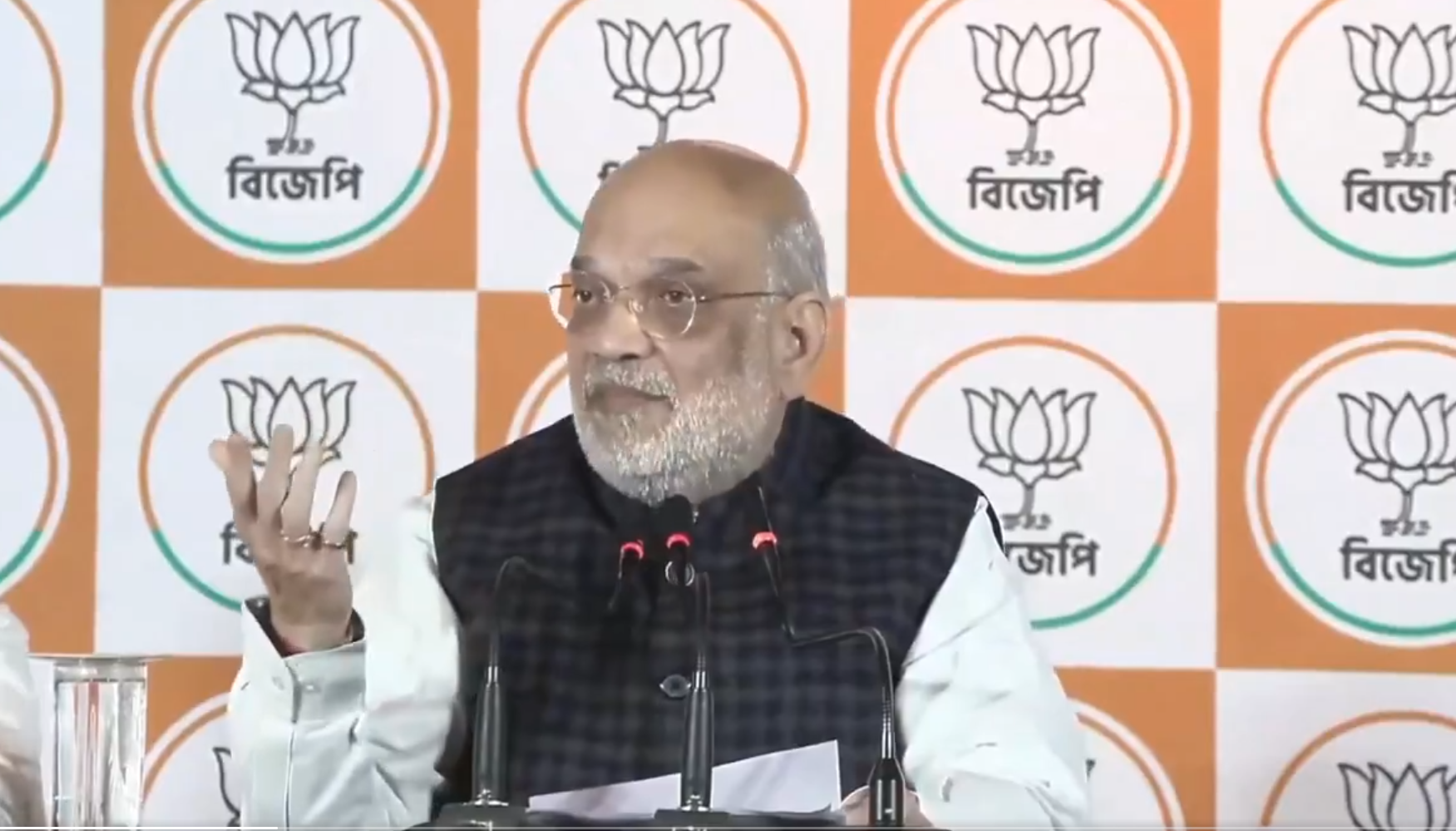
Shah reviews BJP’s poll readiness in Bengal
Union Home Minister and senior BJP leader Amit Shah on Wednesday (December 31, 2025) conducted an extensive review of the Bharatiya Janata Party’s preparedness for the West Bengal Assembly elections scheduled for early 2026. The closed-door meeting in Kolkata brought together the party’s current and former public representatives, organisational office-bearers, MPs, MLAs, civic body councillors, and central observers.
Party leaders said the exercise was aimed at assessing organisational strength, candidate performance in recent elections, and identifying gaps that need urgent attention as the BJP seeks to challenge the ruling Trinamool Congress (TMC) for the third consecutive Assembly election.
Dilip Ghosh’s return signals unity drive
One of the most notable signals from the meeting was the renewed prominence given to former state BJP president Dilip Ghosh, who has been largely absent from the party’s frontline activities in recent months. Shah not only invited Ghosh to the main meeting but also held a separate discussion with him, alongside former state chief Sukanta Majumdar, current state president Samik Bhattacharya, and Leader of the Opposition Suvendu Adhikari.
Party insiders see this as an attempt to bridge differences between the BJP’s older leadership and its newer power centres in Bengal. Speaking briefly to reporters after the meeting, Ghosh said he had been invited to share his experiences and opinions, adding that he would play a more active role in the 2026 elections.
Ghosh is widely regarded as one of the BJP’s most effective Bengal leaders, having overseen the party’s dramatic rise from just three Assembly seats to over 70, and its breakthrough victory in 18 Lok Sabha seats in 2019. His aggressive, street-level campaigning style is expected to be leveraged once again as the BJP sharpens its electoral pitch.
Clear instructions: visibility, outreach, performance
According to leaders present at the meeting, Shah issued detailed and time-bound instructions to party representatives. MPs, MLAs, and local leaders were told to spend at least four days a week in their constituencies and hold a minimum of five street-corner meetings daily to reconnect with voters.
Crucially, Shah reportedly made it clear that ticket distribution for the 2026 elections would depend heavily on performance over the next two months. Leaders would need to demonstrate sustained public engagement, organisational discipline, and electoral potential to be considered.
Shah also interacted with BJP candidates from the 2024 Lok Sabha elections, asking them to candidly assess what worked and what did not during their campaigns. They were advised to map Assembly segments under their parliamentary constituencies and share insights to strengthen the party’s booth-level strategy.
Booth-level focus and long-term presence
Emphasising organisational depth, Shah underscored the central role of booth-level workers and the deployment of vistaraks (full-time grassroots organisers) across all constituencies. Strengthening the party’s booth committees, he said, would be critical to counter what the BJP describes as the TMC’s entrenched local networks.
A senior leader said Shah plans to camp in Kolkata for several days every month in the run-up to the polls, signalling sustained central leadership involvement rather than sporadic visits.
Political messaging: culture, corruption, and infiltration
During the meeting, Shah reportedly invoked figures such as Swami Vivekananda, Bankim Chandra Chattopadhyay, and Rabindranath Tagore, promising to restore Bengal’s cultural and intellectual legacy if the BJP comes to power. Party leaders said cultural revival would form an important emotional and ideological plank of the campaign.
On Tuesday, Shah had already set the tone for the BJP’s election narrative by launching a sharp attack on Chief Minister Mamata Banerjee and the TMC. He accused the state government of encouraging illegal immigration from Bangladesh for electoral gains and alleged widespread corruption. According to BJP leaders, the issue of infiltration will be placed at the centre of the party’s 2026 campaign.
Confidence within BJP, sharp pushback from TMC
Several BJP leaders struck an optimistic note after the meeting. Suvendu Adhikari said the party was energised and confident of bringing “real change” to the state. BJP MP Khagen Murmu spoke about facing alleged attacks by TMC workers during a visit to flood-affected areas in north Bengal, asserting that intimidation would not deter the party.
The ruling TMC, however, dismissed Shah’s visit and the BJP’s plans. State Education Minister Bratya Basu termed Shah a “political tourist” and predicted that the BJP would fail to cross even 50 seats in the Assembly elections. The TMC also highlighted what it called the BJP’s history of inflated poll predictions, pointing to the gap between its claims and actual results in the 2021 Assembly and 2024 Lok Sabha elections.
High-stakes battle ahead
With West Bengal remaining one of the BJP’s toughest electoral challenges, Shah’s visit underscores the party’s intent to mount an aggressive, tightly managed campaign in 2026. The renewed emphasis on unity, grassroots mobilisation, and polarising issues suggests that the contest is set to intensify in the months ahead, with both the BJP and TMC preparing for a fiercely fought political showdown.