
Yogi Adityanath Backs Delimitation Bill, Women's Quota
Uttar Pradesh CM Yogi Adityanath urged 80 MPs to support the Delimitation Bill, essential for 33% women's reservation by 2029.
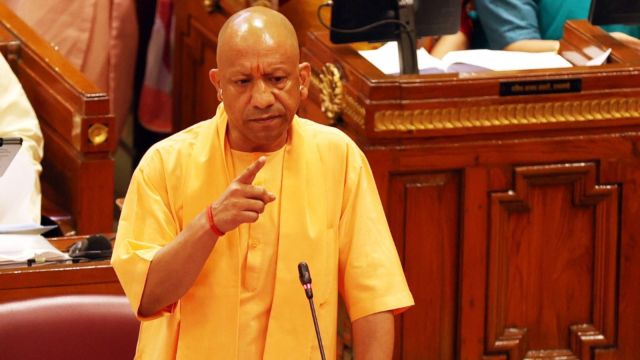
The Cliff News | 28 November 2026
Uttar Pradesh Chief Minister Yogi Adityanath has strongly endorsed the Union Cabinet's recent approval of the Delimitation Bill, viewing it as a crucial step towards implementing the 33 per cent women's reservation in Parliament and state legislative assemblies by the year 2029. He has specifically appealed to all 80 Members of Parliament from Uttar Pradesh to lend their support to the proposed legislation.
Addressing reporters in Balrampur, Uttar Pradesh, on Saturday, Chief Minister Adityanath expressed his gratitude to Prime Minister Narendra Modi and the Union Cabinet for advancing the Delimitation Bill. He highlighted that the 'Nari Shakti Vandan Adhiniyam', which already passed Parliament, is now set to be implemented by 2029, facilitated by a significant increase in legislative seats.
Facilitating Women's Reservation
Adityanath explained that the proposed 50 per cent increase in the number of seats in both the Lok Sabha and state legislative assemblies, coupled with the existing 'Nari Shakti Vandan Adhiniyam', will directly enable the implementation of the 33 per cent reservation for women. This provision is seen as a vital initiative to ensure greater representation for women in India's democratic structures.
“Under the leadership of Prime Minister Modi, the ‘Nari Shakti Vandan Adhiniyam’ (Women’s Reservation Bill) has already been passed by Parliament. With the Union Cabinet paving the way for this Bill to be implemented by 2029, it is now ensured that the 50% increase in the number of seats in Parliament and the Legislative Assemblies will facilitate the implementation of a 33% reservation for women.”
The Chief Minister emphasized that this move is a commendable effort to ensure at least one-third representation for women, who constitute roughly half of India's population, in national and state legislatures. Importantly, this will be achieved without altering existing social or geographical boundaries.
Addressing Concerns on Representation
A significant aspect of the Delimitation Bill, as pointed out by Adityanath, is its reliance on the 2011 Census as the basis for redrawing constituencies. This approach is intended to address concerns voiced by southern states regarding potential impacts on their political representation following a delimitation exercise. The bill ensures that the existing number of seats for each state will be maintained, with provisions for an increase.
The mechanism for implementing women's reservation will involve the Election Commission establishing a system for rotational reservation for an initial period of 15 years. This phased approach aims to integrate the reservation smoothly into the parliamentary and assembly structures.
Appeal to Uttar Pradesh MPs
Chief Minister Adityanath made a direct appeal to the 80 Members of Parliament representing Uttar Pradesh, urging them to wholeheartedly support the Delimitation Bill. He stressed that their backing is crucial for clearing the path for the timely implementation of the 'Nari Shakti Vandan Adhiniyam' before the 2029 Lok Sabha elections.
“I urge all 80 Members of Parliament from Uttar Pradesh to support this bill and contribute to paving the way for the implementation of the ‘Nari Shakti Vandan Adhiniyam’ in time for the 2029 Lok Sabha elections. This is an excellent opportunity to foster a prosperous India through the empowerment of women; we must extend our full support and cooperation to realise the vision of a self-reliant and developed nation.”
He further stated that supporting this legislation is an opportunity to advance the vision of a self-reliant and developed India through the empowerment of women. He called for full support and cooperation from all MPs to realize this national objective.
Legislative Context
The Union Cabinet's approval pertains to the Constitution (One Hundred and Thirty-Second Amendment) Bill, 2026, and the Delimitation (Second) Bill, 2026. These legislative proposals are designed to synchronize the implementation of women's reservation with a fresh delimitation exercise. The Centre plans to introduce these bills during a special session of Parliament commencing on November 30.
Section 10 of the proposed Delimitation Bill outlines a 50 per cent increase in the number of Lok Sabha seats allocated to each state and Union Territory, alongside an enhancement of the total number of seats in state legislative assemblies. Should these bills receive approval from both Houses of Parliament, the strength of the Lok Sabha could potentially rise from its current 550 seats to 850 seats.
Implementation Sequence and Opposition Views
The government's strategy involves a three-bill package linking the 106th Constitutional Amendment (2023), which provides for women's reservation, with a new delimitation exercise. The proposed sequence mandates parliamentary approval of these bills, followed by the establishment of a Delimitation Commission to redraw constituencies, and ultimately, the implementation of the women's quota. The target is to complete this entire process before the 2029 Lok Sabha elections.
The proposed reservation will also extend to women from Scheduled Castes and Scheduled Tribes, with an expected duration of 15 years and a rotation of reserved constituencies every three terms. However, the plan has faced objections from the Opposition. While generally supporting women's reservation, opposition parties have questioned the necessity of linking its implementation with a delimitation exercise, arguing that the quota could be implemented in the existing Lok Sabha structure.
Census Data and Other Concerns
The choice of the 2011 Census data for delimitation has also become a point of contention. The Opposition advocates for using the latest Census figures to reflect current population distributions accurately. The Centre's proposal intends to use the 2011 Census for redrawing constituencies and identifying SC/ST reserved seats, while retaining the 1971 population basis for the state-wise allocation of Lok Sabha seats until 2051.
Southern states have expressed reservations about their political representation, with the proposed uniform seat increase aimed at mitigating these concerns. Additionally, opposition parties have raised issues regarding the absence of a specific sub-quota for OBC women and the lack of caste-based population data within the proposed framework.
Prior to his remarks on the Delimitation Bill, Chief Minister Adityanath offered prayers at the Maa Pateshwari Devi Temple in Tulsipur, Balrampur, and visited a gaushala.