
Why Suryakumar Yadav was upset with Ishan Kishan during India’s 2nd T20I win over New Zealand
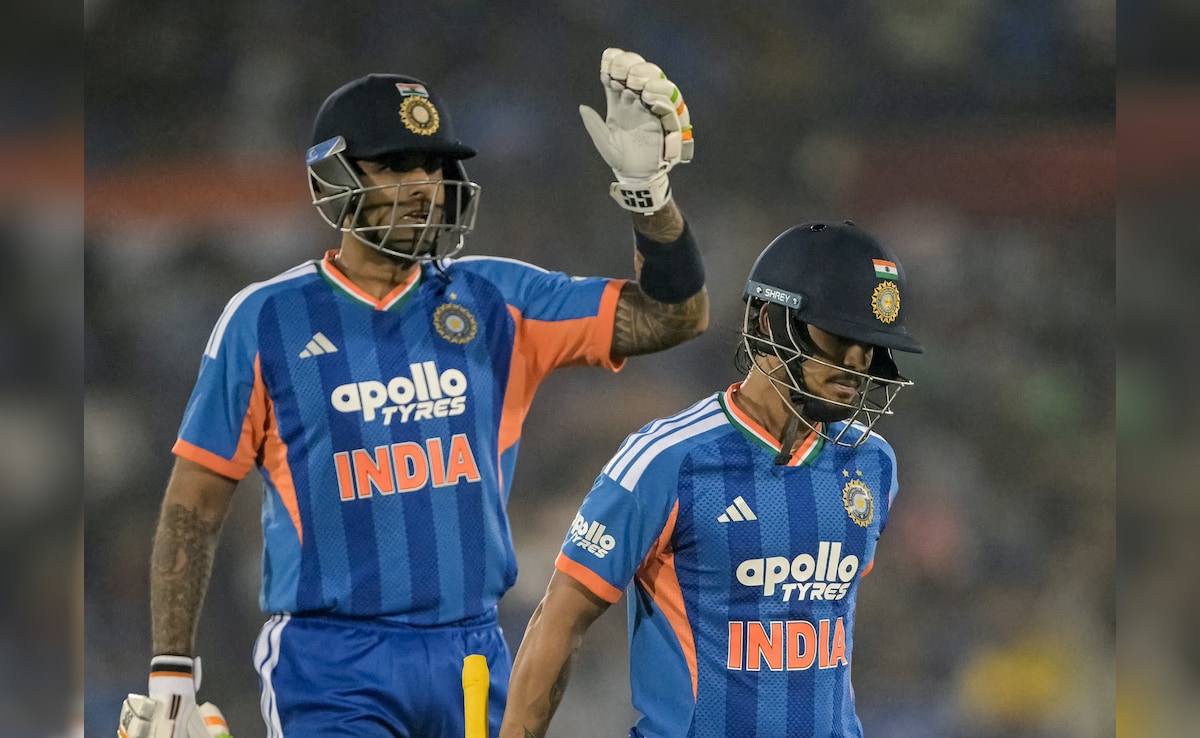
What happened: Suryakumar Yadav briefly lost his cool with Ishan Kishan during India’s chase in the 2nd T20I vs New Zealand in Raipur. Why it...
-
What happened: Suryakumar Yadav briefly lost his cool with Ishan Kishan during India’s chase in the 2nd T20I vs New Zealand in Raipur.
-
Why it matters now: The moment came amid a record-breaking run chase, highlighting India’s aggressive T20 approach ahead of the home T20 World Cup.
-
What changes for people: The incident revealed India’s dressing-room clarity on attacking cricket, not a rift between players.
-
Who is affected: Team India fans, selectors, and T20 World Cup watchers tracking form and leadership dynamics.
India’s captain Suryakumar Yadav may have looked visibly annoyed during the 2nd T20I against New Zealand, but the reason behind it was far from controversy. It was, instead, a snapshot of how fiercely committed this Indian side is to playing fearless, high-tempo T20 cricket.
After India’s emphatic seven-wicket victory in Raipur, Suryakumar himself explained the moment that caught viewers’ attention.
The moment that sparked questions
Chasing a stiff target of 209, India stumbled early to 6 for 2, losing Sanju Samson and Abhishek Sharma cheaply. With pressure mounting, Ishan Kishan and Suryakumar Yadav launched a counterattack that completely flipped the game.
The duo added 122 runs in just 48 balls for the third wicket, turning a tense chase into a one-sided contest.
Yet during the Powerplay, cameras caught Suryakumar showing visible frustration toward Kishan.
What actually upset Suryakumar Yadav
Clearing the air after the match, Suryakumar Yadav revealed the reason with a smile.
“I was angry he didn’t give me the strike in the Powerplay,” Suryakumar said.
The comment came in good humour, underscoring not ego, but intent. The Indian skipper wanted to keep the momentum relentless, even while Kishan was on a rampage.
Underline: It was about maximising damage, not disagreement.
Kishan’s fearless assault set the tone
Ishan Kishan was the chief aggressor early on, smashing 76 off just 32 balls, including a blazing 21-ball fifty.
His assault dismantled New Zealand’s bowling attack and neutralised the pressure of the steep target. Kishan eventually fell while attempting another big hit, but by then the match was already firmly in India’s grip.
Suryakumar finished the job in style, hammering 82 off 37 balls, showcasing once again why he remains one of the most destructive T20 batters in the world.
India create history with record chase
India’s chase became the biggest win by balls remaining by a full-member nation while chasing a target of 200-plus.
The record surpassed:
-
Pakistan’s 24-ball win vs New Zealand (2025)
-
Australia’s 23-ball win vs West Indies (2025)
India sealed the match with several overs to spare, sending a strong message ahead of major tournaments.
Suryakumar on India’s fearless batting philosophy
The Indian captain stressed that such moments reflect the team’s mindset.
“This is what we want from the batters — to go out there, express themselves, and be happy,” he said.
He added that the dressing room atmosphere remains relaxed and positive, with players encouraged to play their natural game without fear of failure.
Bowlers set the platform despite challenges
India’s bowlers also played a crucial role in keeping New Zealand under control.
-
Arshdeep Singh: 0/53, struggled for rhythm
-
Hardik Pandya: 1/25 in 3 overs, provided control
-
Harshit Rana: 1/35, including a wicket maiden
-
Kuldeep Yadav & Varun Chakaravarthy: 3 wickets for 70 runs combined
-
Shivam Dube: chipped in with a wicket
Suryakumar admitted India feared New Zealand could push the total to 225–230, but praised the bowlers for restricting them to 208.
Underline: Containing New Zealand under 210 proved decisive.
Why this matters ahead of the T20 World Cup
With the home T20 World Cup approaching, India’s performance under pressure, leadership clarity, and fearless batting approach are strong positives.
The brief on-field frustration was not a sign of discord, but a reflection of competitive hunger and high standards.