
Why Europe Finally Stood Up to Trump: Inside the Tariff War That Forced a Retreat
In a dramatic turn in the ongoing global trade tensions, U.S. President Donald Trump was forced to withdraw a 10% tariff imposed on European goods...
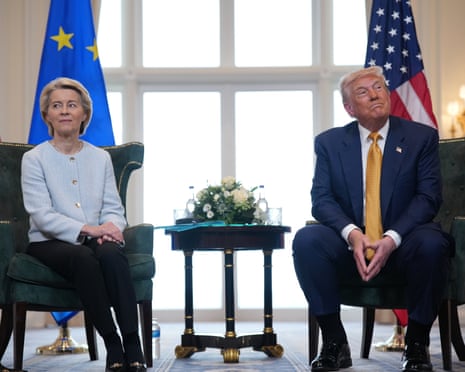
In a dramatic turn in the ongoing global trade tensions, U.S. President Donald Trump was forced to withdraw a 10% tariff imposed on European goods after the European Union’s 27 member states collectively issued a counter-threat dubbed the “Trade Bazooka.”
This rare show of unity from Europe surprised many and exposed the limits of America’s economic muscle—even under Trump, a leader known for aggressive negotiation tactics.
A Standoff Begins in Davos
The confrontation traces back to the World Economic Forum in Davos, where Trump openly mocked European nations, claiming that U.S. dominance in trade allowed Washington to “dictate terms.”
His comments were met with visible discomfort among EU leaders—but what followed was a quiet, coordinated response.
European officials sent a strong message:
“If the U.S. raises tariffs further, Europe will impose retaliatory duties across multiple American industries at once.”
This wasn’t routine diplomatic pushback—it was a united front Europe rarely shows in high-stakes negotiations.
Why Europe’s ‘Trade Bazooka’ Worked
1. Europe Hit Where It Hurt: U.S. Exports
The EU targeted sectors that have strong political influence in America—
✔ Aviation
✔ Agriculture
✔ Automobiles
✔ Tech components
These industries collectively employ millions of American workers.
Losing Europe, the world’s largest single market, would have been disastrous.
2. Europe Stood United
Trump historically exploited divisions within the EU, often praising individual nations to weaken collective decision-making.
This time, the opposite happened—
all 27 nations signed off on the retaliation plan.
That unity shocked Washington.
3. Timing Was Perfect
With U.S. markets shaky and global investors nervous, Trump couldn’t risk a full-blown tariff war.
Trump Backs Down: 10% Tariff Withdrawn
Facing intense diplomatic pressure, economic warnings from advisers and strong lobbying by U.S. business groups, Trump reversed the tariff quietly—without a public fight.
Analysts say the rollback is a rare diplomatic setback for Trump, who has built his political image around projecting strength in global trade.
What Europe Learned From the Standoff
The Davos episode served as a wake-up call for the European Union.
1. Unity is Europe’s greatest strength
Previously divided on trade and defense matters, the EU realized that collective action is its strongest bargaining chip against global powers.
2. Sovereignty and borders matter
Davos discussions reinforced the idea that protecting borders, sovereignty and economic independence requires cooperation—not nationalistic isolation.
3. The world is shifting toward economic blocs
From U.S.–China rivalry to India’s rise, the global order is re-aligning. Europe now understands that staying relevant requires coordinated economic strategy.
What Happens Next?
Short-term:
• EU and U.S. will restart negotiations on a moderated trade agreement.
• Businesses on both sides will push for tariff stability.
Long-term:
• Europe is likely to toughen its stance in future trade disputes.
• Trump may look for alternative markets to compensate politically.