
‘When it comes to the party, he is my boss’: PM hails Nitin Nabin as BJP’s youngest national president
What happened: Nitin Nabin, aged 45, was sworn in as the Bharatiya Janata Party’s youngest-ever national president on January 20. Why it matters now: The...
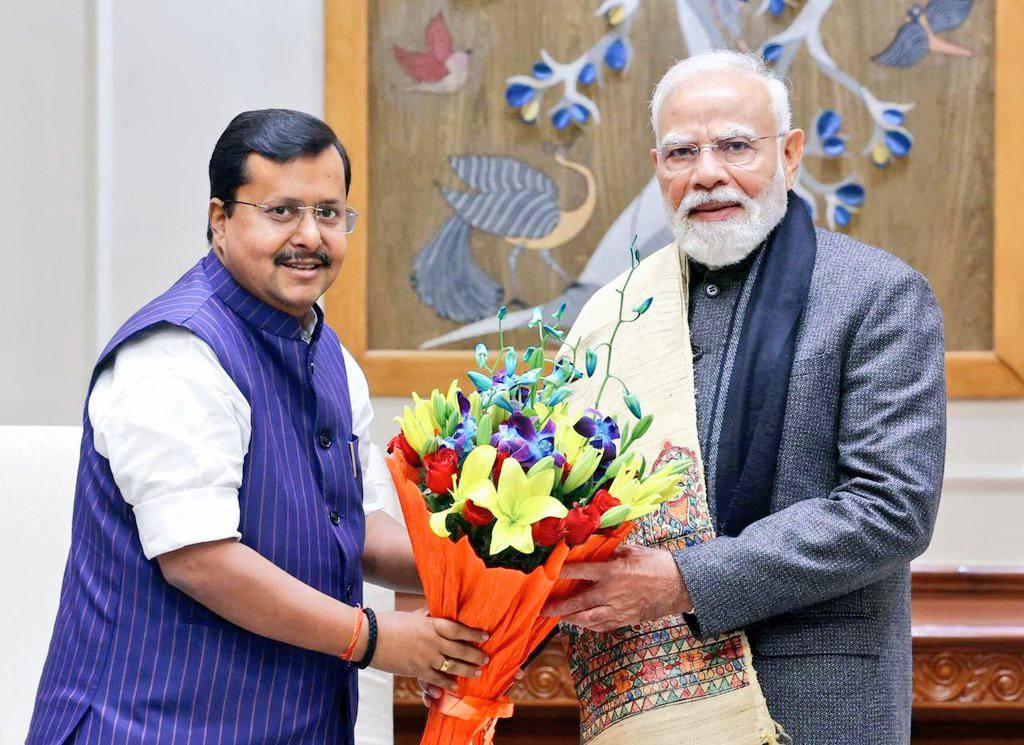
-
What happened: Nitin Nabin, aged 45, was sworn in as the Bharatiya Janata Party’s youngest-ever national president on January 20.
-
Why it matters now: The leadership change comes at the start of what the party calls a crucial 25-year phase leading toward a “developed India”.
-
What changes for people: A generational shift in party leadership could influence strategy, organisation, and outreach, especially among young voters.
-
Who is affected: BJP workers nationwide, political observers, and voters tracking the future direction of the ruling party.
Prime Minister Narendra Modi on January 20 congratulated Nitin Nabin on taking charge as the new national president of the Bharatiya Janata Party, striking a humble note by calling himself a “party worker” and saying that, when it comes to party matters, “Nitin Nabin is my boss.”
The remarks came during the official ceremony at the party headquarters, marking a significant generational moment for the BJP.
A milestone appointment for the BJP
At 45 years old, Nitin Nabin, who hails from Bihar, becomes the youngest national president in the party’s history. He succeeds Jagat Prakash Nadda and assumes leadership at a time when the BJP is preparing for long-term political and organisational goals.
Senior party leaders, including members of the Union cabinet and the outgoing president, were present at the swearing-in ceremony, underlining the importance of the transition.
Party workers across several states, including Bihar, marked the occasion with celebrations, reflecting strong grassroots enthusiasm.
PM underscores party discipline and hierarchy
Addressing party members, the prime minister emphasised the BJP’s organisational culture, stating that positions and responsibility within the party matter more than individual stature.
By referring to himself as a party worker and acknowledging the authority of the new president, he reinforced the message that the BJP operates on institutional discipline rather than personality-driven leadership.
Political analysts see this as an attempt to highlight internal unity and respect for organisational roles at a time when leadership transitions often attract scrutiny.
‘A millennial leader for a new phase’
The prime minister highlighted Nitin Nabin’s age and generational identity, describing him as a leader who bridges India’s past and present.
He noted that the new president belongs to a generation that grew up with radio and print but is equally comfortable with digital tools and artificial intelligence. According to the prime minister, this blend of experience and adaptability would help the party navigate modern political challenges.
He also linked the leadership change to what he described as the next 25 years, a period the BJP sees as critical for shaping India’s long-term development trajectory.
Experience alongside youth
While emphasising youth, the prime minister also pointed to Nitin Nabin’s organisational experience, saying it would benefit party workers at every level.
Party insiders say the new president is known for grassroots engagement and organisational work, qualities the BJP values as it balances governance responsibilities with electoral mobilisation.
Observers note that the appointment reflects a calculated move, combining generational renewal with continuity, rather than a sudden break from existing structures.
Political messaging and contrast
During his address, the prime minister also contrasted the BJP’s internal culture with that of rival parties, describing the BJP as a party of governance and workers, while criticising dynastic models elsewhere.
Such messaging, analysts say, is aimed at reinforcing the party’s long-standing narrative of merit-based leadership and cadre-driven politics, especially ahead of future electoral contests.
Why this leadership change matters
The elevation of a younger national president signals the BJP’s intent to future-proof its organisation. With changing voter demographics and increasing digital engagement, leadership that can connect with younger audiences is seen as strategically important.
For party workers, the change could bring new organisational priorities and outreach methods, while maintaining ideological continuity.
For the wider political landscape, the move will be closely watched as an indicator of how the ruling party plans to position itself over the next decade and beyond.