
‘Vote Theft Is in Voter Lists, Not EVMs’: Trinamool Congress Takes On Election Commission Over Bengal Roll Revision
The Trinamool Congress (TMC) has launched a sharp political and legal challenge to the Election Commission of India (ECI) over the ongoing Special Intensive Revision...
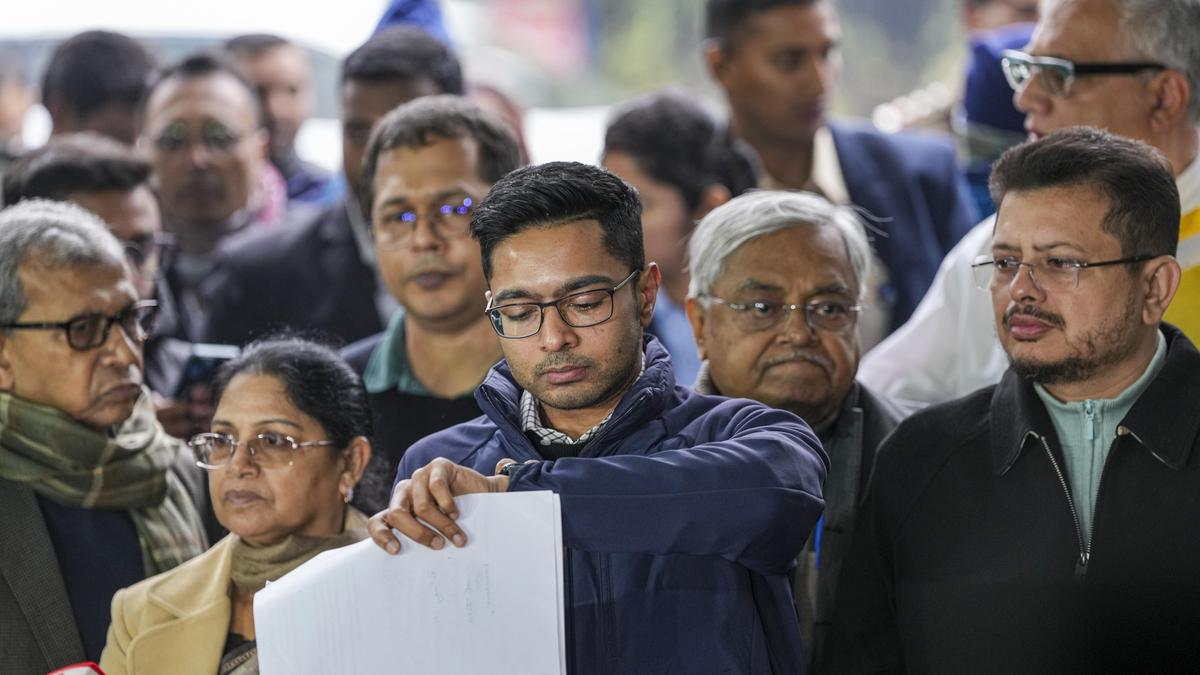
The Trinamool Congress (TMC) has launched a sharp political and legal challenge to the Election Commission of India (ECI) over the ongoing Special Intensive Revision (SIR) of electoral rolls in West Bengal, alleging that large-scale “vote theft” is being carried out through voter list revisions rather than through electronic voting machines (EVMs).
The party warned on Wednesday, December 31, 2025, that it would contest the final electoral rolls in court if discrepancies identified during the SIR process were not adequately addressed.
High-Level Meeting With Full Commission
A 10-member TMC delegation led by the party’s national general secretary, Abhishek Banerjee, met the full Election Commission in New Delhi in a meeting that lasted nearly two-and-a-half hours. After the meeting, Banerjee said the delegation had raised serious concerns about what it described as opaque processes and unexplained deletions affecting a large section of Bengal’s electorate.
According to the TMC, around 1.36 crore voters have been flagged for what the ECI terms “logical discrepancies.” The party demanded detailed hearings and full disclosure of the nature of these discrepancies.
‘No Clarity on Key Questions’
Banerjee said the delegation raised 10–11 substantive questions but received clear answers on only two or three issues. He alleged that queries related to the SIR were repeatedly redirected towards questions of citizenship, while concerns about voter deletions were met with procedural responses, such as being asked to file Form 7, without addressing the underlying issues.
“If the final electoral roll contains discrepancies, there is no question of accepting it. We will fight it legally,” Banerjee said, signalling a possible court battle after the SIR is completed.
Concerns Over ‘Logical Discrepancies’
The TMC said the category of “logical discrepancies” includes issues such as implausible age gaps between parents and children, inconsistencies in grandparents’ ages, mismatches in names or surnames, and address-related errors.
Banerjee claimed that no comprehensive list explaining these discrepancies had been made public. He also alleged that in several cases, voters whose documents had already been verified and marked as “found okay” were still issued hearing notices. According to him, ECI officials acknowledged that there could be technical flaws in the software or app being used for verification.
Senior Citizens, Migrant Workers Flagged
The delegation also questioned the treatment of senior citizens during the revision exercise. Banerjee said the party objected to elderly voters being summoned for physical hearings and asked why orders for home hearings for voters above 85 years were issued only recently. The TMC demanded that all voters aged 60 and above be allowed home hearings, a suggestion the Commission reportedly said it would consider.
The issue of migrant workers was also raised, with the TMC demanding virtual hearings for voters who are working outside the State. Banerjee pointed out that similar flexibility had been extended in other States, such as Bihar.
Allegations of Selective Oversight and Third-Party Surveys
The TMC accused the ECI of selectively deploying micro-observers in West Bengal, alleging an attempt to portray the State’s electoral process as uniquely problematic.
The delegation also flagged what it claimed was the engagement of a third-party agency, Data Mission, to conduct surveys in Bengal. Banerjee alleged that Chief Election Commissioner Gyanesh Kumar said he was unaware of such an appointment and suggested it may have been done at the level of the Chief Electoral Officer without his direct knowledge.
Immigration Claims and Demand for Transparency
Another major point of contention was the alleged removal of around 58 lakh names from the draft electoral rolls. The TMC demanded clarity on claims that many of these names belonged to Rohingya or Bangladeshi nationals, saying no credible data had been shared.
“Identifying and deporting illegal immigrants is justified, but transparency is non-negotiable,” Banerjee said, calling for the Commission to release verified figures and supporting data.
‘Weaponisation’ of Electoral Rolls
The TMC accused the Chief Election Commissioner of attempting to “weaponise” electoral rolls to disenfranchise voters. Banerjee appealed to other Opposition parties to focus on voter list revisions rather than EVMs.
“This is vote theft. It does not happen through EVMs. It happens in voter lists, in software and algorithms,” he said, alleging that between 50 lakh and one crore voters could be at risk of being removed. He challenged the ECI to publicly release the full list of the 1.36 crore voters marked with logical discrepancies if its process was fair.
Election Commission’s Warning
Sources in the Election Commission, meanwhile, told The Hindu that the TMC delegation was cautioned to ensure that Booth-Level Officers (BLOs), Electoral Registration Officers (EROs), and other election staff were not threatened or obstructed during the SIR process. The Commission warned that strict action would be taken against anyone attempting to intimidate officials or take the law into their own hands.
As the SIR process continues in West Bengal, the standoff between the ruling party in the State and the constitutional authority overseeing elections signals a potentially contentious lead-up to future polls, with voter list integrity emerging as a central political battleground.