
Violence, Voter Intimidation Claims Mark Bengal’s Crucial Phase 2 Polling as Mamata–Suvendu Face-Off Dominates
The second and final phase of the West Bengal Assembly elections saw a tense start on April 29, with reports of violence, vandalism, alleged voter...
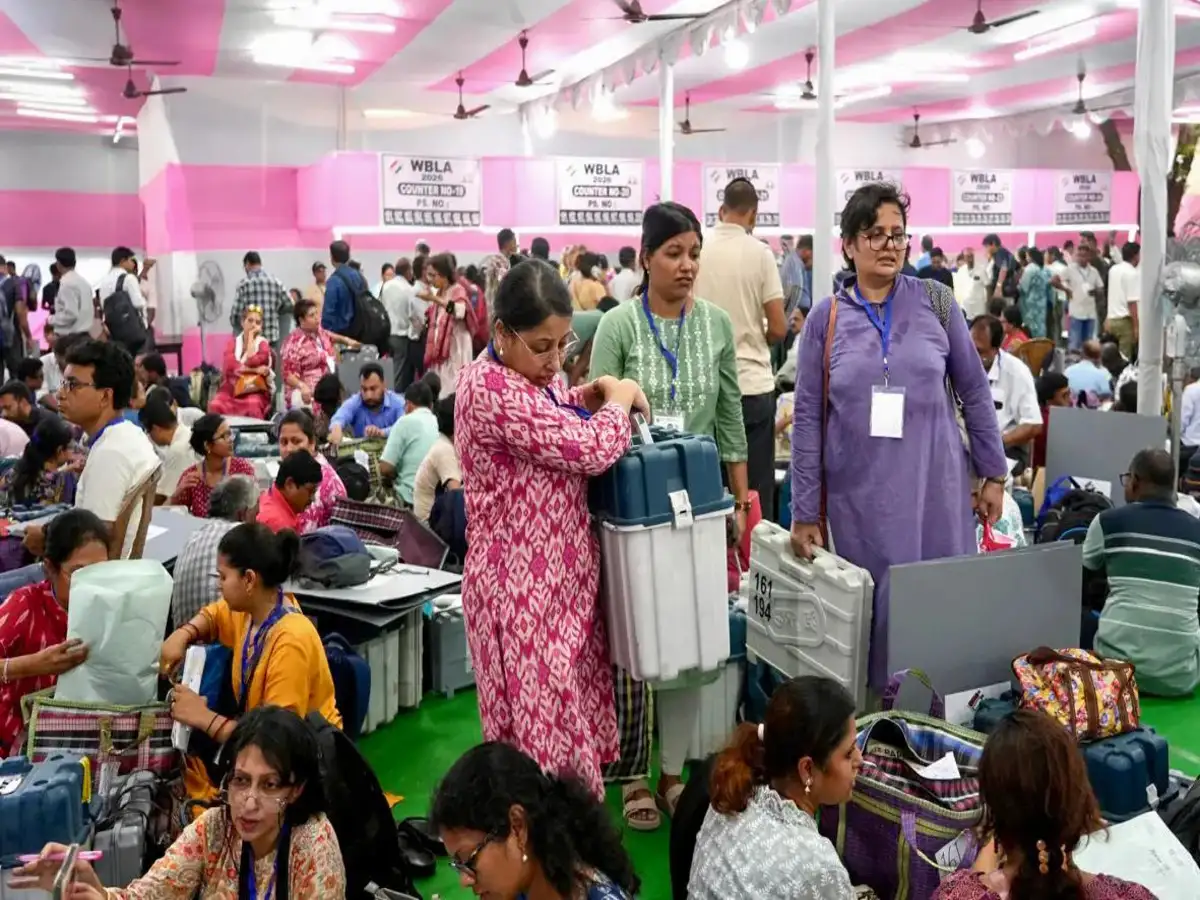
The second and final phase of the West Bengal Assembly elections saw a tense start on April 29, with reports of violence, vandalism, alleged voter intimidation, and EVM-related complaints from multiple areas.
With 142 constituencies voting in a decisive round, the spotlight is especially on Bhabanipur, where Mamata Banerjee is taking on Suvendu Adhikari in one of the election’s biggest prestige battles.
Despite massive security deployment, the early hours of polling were marked by clashes, political allegations, and fresh concerns over whether voting is truly free and fair.
- What happened: West Bengal’s Phase 2 polling began amid reports of violence, vandalism, alleged booth-level intimidation, and technical complaints, while political tensions surged in several constituencies.
- Why it matters now: This is the final and most decisive phase of the Bengal election, covering 142 seats, including politically symbolic battlegrounds like Bhabanipur, where the result could shape the state’s final power equation.
- What changes for people: Voters are facing a high-pressure atmosphere, with concerns around security, intimidation, and access to polling booths, even as authorities promise tighter monitoring and possible action on complaints.
- Who is affected: Voters across south Bengal and Kolkata-region seats, party workers of TMC, BJP, and ISF, election officials, security personnel, and millions tracking the state’s most closely watched contest.
A high-stakes phase begins under a cloud of tension
West Bengal’s second and final phase of Assembly polling opened under heavy tension, with reports of clashes and allegations surfacing almost as soon as voting began. This phase is critical because it covers the remaining 142 constituencies of the 294-seat Assembly, effectively making it the round that could decide who forms the next government in the state.
The scale alone shows how crucial this round is. According to live election coverage, over 3.22 crore voters are eligible in this phase, deciding the fate of 1,448 candidates across key districts including Kolkata, Howrah, North 24 Parganas, South 24 Parganas, Nadia, Hooghly, and Purba Bardhaman.
Violence and vandalism reported from multiple locations
According to reports, incidents of violence and vandalism were flagged from several areas during the early hours of polling, including Chapra, Shantipur, Nimtala, and Bhangar. These early disturbances reinforced the long-standing concern that Bengal elections remain politically explosive, especially in closely fought constituencies.
One of the biggest flashpoints came from Chapra in Nadia district, where the BJP alleged that a polling agent was assaulted by people linked to the ruling TMC. The injured person, identified in reports as Mosharef Mir, was reportedly admitted to hospital. BJP leaders claimed the attack happened after the mock poll began and alleged he was hit on the head. The TMC denied the accusation.
Separately, in Shantipur, a BJP camp office in Ward No. 16 was reportedly found vandalised, adding to the atmosphere of tension.
In Bhangar, unrest was reported after allegations that an ISF agent was prevented from entering a polling booth. ISF leaders claimed agents’ forms were being snatched and women voters were being blocked, though such claims remain politically contested and require official verification.
At Booth No. 140 in Nimtala, voting reportedly did not begin even by around 7:30 am, leading to tension among waiting voters.
Bhabanipur becomes the symbolic centre of the battle
The biggest political theatre of the day remains Bhabanipur, where Chief Minister Mamata Banerjee is contesting against Leader of Opposition Suvendu Adhikari in what is being framed as one of the most symbolic fights of the election. TOI described it as a prestige battle and a political rematch with emotional echoes of Nandigram 2021, where Suvendu defeated Mamata.
Mamata visited multiple booths in her constituency early in the day and made sharp allegations against the BJP and election observers. She claimed that “several observers have come from outside and are acting as per the BJP’s directions,” and questioned whether voting could be considered free and fair under such conditions. She also alleged that TMC flags had been removed and that some party workers were being picked up.
The BJP hit back immediately.
Suvendu Adhikari accused Mamata of trying to “create fear” among voters, while she accused the BJP of attempting to “forcefully rig” the election. That exchange alone shows how politically combustible the final phase has become.
EVM complaints and repoll warning add to the pressure
Beyond violence, EVM-related complaints also added another layer of controversy.
Live updates from TOI reported that the BJP alleged irregularities in Falta, including claims that voters were being prevented from properly choosing the party candidate. The West Bengal CEO reportedly said that repolling could be ordered if claims such as taping of EVM buttons are verified. That is a serious development because it signals that officials are at least publicly acknowledging the possibility of corrective action if technical or procedural manipulation is proven.
Turnout is strong despite the tension
Even with the disturbances, turnout remained brisk in the early hours.
According to TOI’s live updates:
- 18.39% turnout by 9 am
- 39.97% turnout by 11 am
That suggests voters are still coming out in significant numbers despite the tense environment. The Election Commission of India (ECI) also highlighted strong participation, especially among women and young voters, and encouraged continued turnout.
Security is massive — but the political distrust remains bigger
The state has effectively turned into a security fortress for this phase.
Reports say more than 2.3 lakh CAPF personnel and 38,297 state police officers have been deployed, along with 142 general observers, 95 police observers, and 100 expenditure observers. That level of deployment shows how sensitive authorities consider the final phase to be.
And yet, despite all that, the core issue remains the same: trust.
In Bengal elections, security presence may reduce escalation, but it does not automatically remove accusations of intimidation, local pressure, booth capture fears, or political confrontation. That is why the narrative around this phase is likely to be shaped not just by turnout numbers, but by whether complaints trigger formal reports, repolls, or post-poll legal and political battles.
Bottom line
West Bengal’s decisive Phase 2 polling began with exactly the kind of tension many feared: violence reports, booth-level allegations, EVM complaints, and a fierce war of words between TMC and BJP. With 142 seats voting and the Mamata vs Suvendu battle in Bhabanipur dominating attention, the final phase is not just an election — it is a high-stakes test of control, turnout, and credibility.