
Vietnam & EU Forge Stronger Ties Amid Global Instability
Vietnam and the EU elevate relations amid trade and security concerns.
Top Summary
- What happened: Vietnam and the European Union have established a "Comprehensive Strategic Partnership".
- Why it matters: This move strengthens trade ties and provides stability amid global economic and security uncertainties.
- What changes for people: Increased cooperation in trade, technology, and security, potentially leading to economic benefits.
- Who is affected: Businesses involved in EU-Vietnam trade, citizens of both regions, and geopolitical players in the Indo-Pacific.
A New Chapter for EU-Vietnam Relations
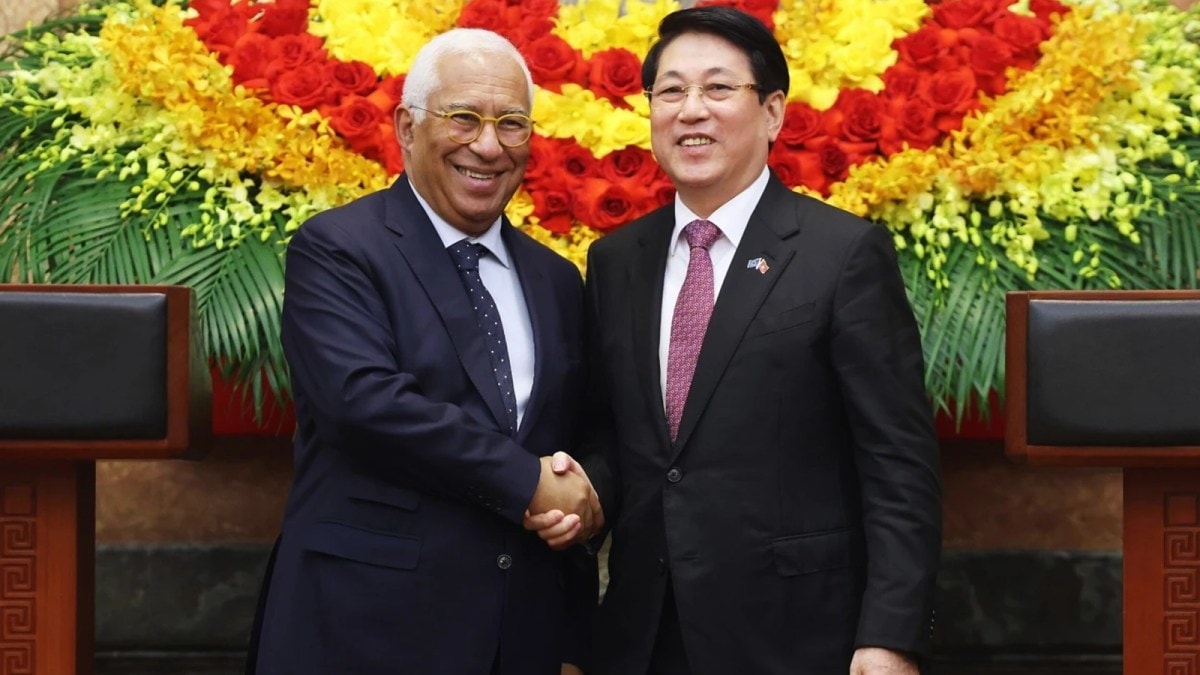
Vietnam and the European Union have officially upgraded their diplomatic ties, forming a "Comprehensive Strategic Partnership." The agreement signals a deepened commitment to collaboration amidst global challenges. The announcement was made during European Council President Antonio Costa's visit to Hanoi.
Vietnamese President Luong Cuong hailed the partnership as a "historical milestone." Costa emphasized its importance in a world where the “international rules-based order is under threat.”
Trade and Strategic Interests Drive Partnership
The EU's deepening relationship with Vietnam is largely driven by trade. Vietnam is now the bloc's largest trading partner in Southeast Asia. Bilateral trade surged by roughly 50% between 2019 and 2024, reaching €67 billion ($79 billion).
Data from the first 10 months of 2025 indicates an additional 8.4% year-on-year increase. This partnership aims to secure supply chains and promote mutual economic growth.
EU Follows Other Global Powers
While significant, the EU's partnership comes after similar agreements with China, the United States, Russia, Japan and Singapore. Vietnam is deliberately diversifying its relationships to avoid over-reliance on any single nation.
"For the EU, it is not only symbolically important that the relationship now formally reaches the same level as Vietnam’s ties with China, the United States, or Japan. This status also opens more opportunities for regular dialogue and exchange to further strengthen the relationship," said Alfred Gerstl, an expert on Indo-Pacific international relations at the University of Vienna.
Shared Concerns Over Global Order
Analysts suggest that the disruption to international order caused by the Donald Trump administration has incentivized cooperation. Both the EU and Vietnam share an interest in reinforcing a rules-based trading system. Khac Giang Nguyen, a visiting fellow at the ISEAS–Yusof Ishak Institute in Singapore, stated that the timing is significant.
Vietnam is also using these partnerships to widen its room for maneuver, employing “bamboo diplomacy” for flexibility.
Beyond Trade: Cooperation on Multiple Fronts
The EU-Vietnam statement outlines an agenda that extends beyond trade. Cooperation is planned in areas such as:
- Critical raw materials
- Semiconductors
- Artificial intelligence
- Transport
- Secure communications infrastructure
The agreement also addresses supply-chain resilience, security, and defense.
Political Friction and Human Rights
Despite closer ties, political differences remain. The EU has concerns about Vietnam's human rights record, especially regarding independent trade unions and the repression of critics.
Vietnam's government was expected to legalize independent trade unions as part of the EU-Vietnam free trade deal. However, rights groups say genuinely independent unions still do not operate freely.
Bill Hayton, associate fellow at Chatham House’s Asia-Pacific Program, told DW that Vietnam likely thinks that through this elevation of relations, "it has neutralized the EU’s attempts to try to change its political system."
Differing Views on Russia
Another point of contention is Vietnam's stance on Russia and the Ukraine conflict. While the EU and Vietnam may disagree on the war, they both support "the principles of independence, territorial integrity and sovereignty.”
There are concerns that Vietnam will continue to prioritize its relationship with Russia, potentially irritating the EU.
Vietnam's Balancing Act
Vietnam's “bamboo diplomacy,” formulated in 2016, aims to avoid entanglement in major power struggles. The country has successfully grown its economy and expanded its diplomatic reach. The EU partnership is a significant step but is unlikely to alter Vietnam's non-alignment strategy.
What to Watch Next
Future developments will likely focus on the implementation of the various cooperation agreements. Monitoring Vietnam's progress on human rights and its relationship with Russia will also be crucial to assessing the partnership's overall success.