
US-India Trade Deal Near as Trump Hails Modi; Key Russian Oil Waiver Under Review
US President Donald Trump signals a looming trade deal with India while Washington reviews a critical Russian oil waiver expiring on June 17.
Top Summary
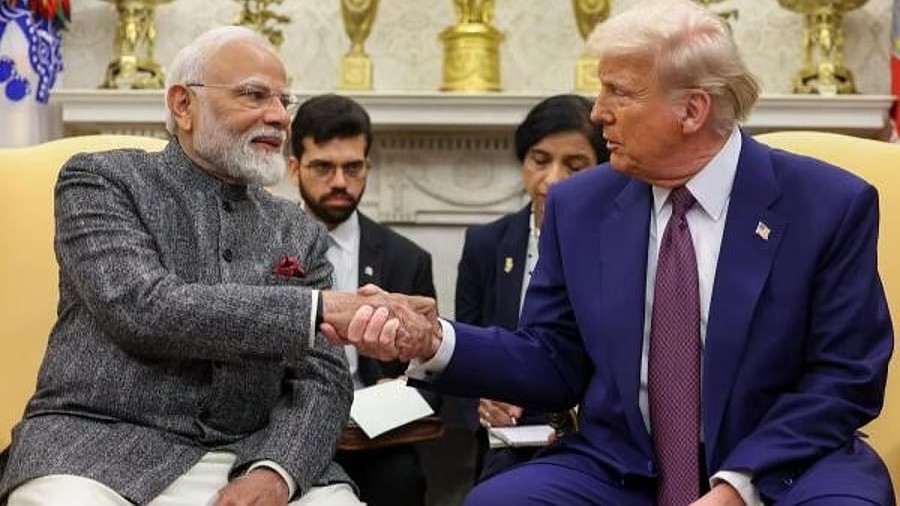
- What happened: US President Donald Trump announced that a bilateral trade agreement with India is expected soon, describing PM Modi as a close friend.
- Why it matters: The announcement follows intensive trade talks and a recent agreement where the US dropped 25% tariffs after India pledged to stop purchasing Russian oil.
- What changes: Trade conditions may shift as Washington reviews temporary oil import waivers and flags India alongside 59 other economies over forced labor import policies.
- Who is affected: Indian exporters, energy sectors, global oil markets, and international trade policymakers are directly impacted.
Trump Optimistic on India Trade Agreement
United States President Donald Trump has expressed strong confidence that Washington and New Delhi will finalize a bilateral trade agreement in the near future.
While speaking on Thursday, Trump characterized Indian Prime Minister Narendra Modi as a "good friend" and highlighted a significant shift in trade dynamics between the two nations.
"For years, India took advantage of the United States. They charged us tremendous tariffs and paid nothing. Now it is the exact reverse and we are making a lot of money with India."
Recent USTR Delegations and Forced Labor Warnings
The optimistic comments follow a four-day diplomatic visit by officials from the United States Trade Representative (USTR) to New Delhi from June 1 to June 4.
The bilateral negotiations covered a broad spectrum of critical trade issues, which included:
- Market access and economic security cooperation
- Non-tariff barriers and trade facilitation measures
- Customs procedures and regulatory alignments
However, trade tensions persist as the US recently flagged 60 economies, including India, Australia, China, Japan, and the UK, for failing to adequately restrict imports produced with forced labor.
"The failure of our most important trading partners to address the importation of goods made with forced labor is unacceptable. This creates a dynamic where American workers are forced to compete globally on an unlevel playing field," said US trade representative ambassador Jamieson Greer.
Russian Oil Waivers and Tariffs Under Scrutiny
The trade talks coincide with a critical US evaluation of the temporary waiver allowing select nations to purchase Russian oil.
Originally introduced in March and extended twice to stabilize global energy markets during disruptions in West Asia and the Strait of Hormuz, this temporary waiver is set to expire on June 17.
US State Secretary Marco Rubio confirmed to Congress that any decision regarding a further extension would rest with the US Treasury Department.
"We would like to end it as soon as we possibly can because the underlying policy of this country has been to sanction their oil," Rubio stated.
Previously, Trump had imposed an additional 25% tariff on Indian imports, accusing India of funding Russia's war in Ukraine via oil purchases.
According to a White House fact sheet, Trump signed an Executive Order last Friday removing the 25% tariff after India officially committed to stopping its purchases of Russian oil.
What to Watch Next
Observers should monitor whether the US Treasury Department extends the temporary Russian oil waiver past the June 17 deadline. Additionally, the final terms of the anticipated US-India trade pact will reveal how both nations navigate forced labor regulations and import tariffs.