
US Explores Locomotive Sales and Mineral Cooperation with Pakistan Amid Strategic Engagement
The Trump administration has initiated discussions with Pakistan on potential partnerships in the sale of American locomotives and collaboration in critical mineral exploration, according to...
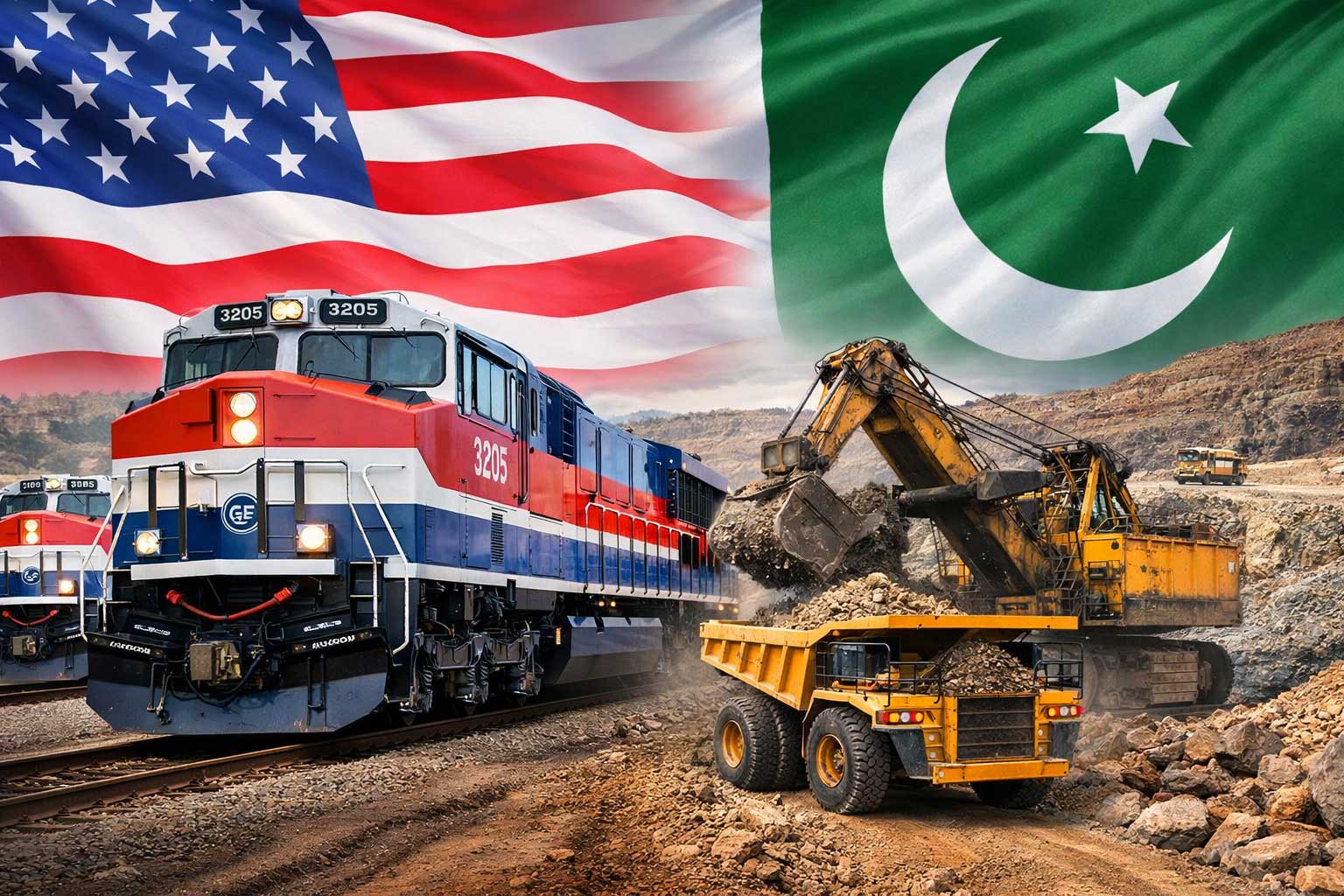
The Trump administration has initiated discussions with Pakistan on potential partnerships in the sale of American locomotives and collaboration in critical mineral exploration, according to sources cited by The Express Tribune. The talks are aimed at fostering trade and investment opportunities while strengthening strategic ties between the two countries.
High-Level Meetings in Washington
The engagement took place during Pakistan Finance Minister Muhammad Aurangzeb’s visit to Washington in October, coinciding with the International Monetary Fund (IMF) annual meetings. During the visit, Aurangzeb reportedly met several senior U.S. officials, including Raymond Emory Cox, Special Assistant to the President for International Economic Relations, and Ricky Gill, Special Assistant to the President and Senior Director for South and Central Asia.
Sources said that Gill encouraged Pakistan to consider purchasing American locomotives under an existing tender. Pakistan Railways, which previously procured 55 U.S.-made locomotives, currently faces liquidity challenges and relies on maintenance and refurbishment of its existing fleet. A renewed acquisition could enhance Pakistan’s railway capabilities while boosting U.S. exports.
Digital Infrastructure and Starlink
In addition to transportation, U.S. officials emphasized the importance of digital infrastructure. Gill reportedly requested Pakistan’s support for Starlink’s licence application to provide high-speed internet services, particularly in rural and remote areas. The move aligns with Washington’s broader strategy to expand American technological presence overseas.
The discussions also highlighted Pakistan’s decision to withdraw a proposed 5 percent digital services tax, a gesture appreciated by U.S. officials as a facilitator for trade agreements and a level playing field for American businesses.
Focus on Critical Minerals
A key component of the engagement was cooperation in critical minerals, which are vital for technology and defense sectors. U.S. officials stressed that supporting American commercial interests globally remains a priority for the Trump administration.
The U.S. Congress has approved a $135 billion fund to support global critical mineral investments, while the U.S. Export-Import Bank has already sanctioned a $1.25 billion loan to Reko Diq Mining Company in Balochistan. Thomas Lersten, a senior official at the U.S. State Department’s Bureau of Economic, Energy and Business Affairs, proposed collaboration with Pakistan on reserve assessments and offtake agreements to accelerate mineral extraction. He also noted that artificial intelligence remains a strategic priority for U.S. investment in the region.
Financial and Regional Cooperation
Aurangzeb additionally met Robert Kaproth, Assistant Secretary of State for International Finance, to discuss regional financial developments and the U.S. focus on private-sector digital finance solutions and cross-border digital frameworks. These discussions underscore Washington’s strategy to integrate financial technology initiatives with broader trade and infrastructure engagements in South Asia.
Implications for Bilateral Relations
The talks signal a deepening of U.S.-Pakistan cooperation in areas beyond traditional security and defense ties, highlighting economic and technological collaboration as key elements of the relationship. Experts suggest that these engagements could accelerate infrastructure development in Pakistan, facilitate U.S. corporate investment, and strengthen regional economic integration, while also contributing to U.S. strategic interests in South and Central Asia.
If implemented, locomotive purchases and critical mineral partnerships could mark a significant step in Pakistan-U.S. economic collaboration, bridging industrial and technological cooperation with broader geopolitical objectives.