
U.S. Carries Out First Airstrikes in Nigeria Under Trump, Targeting Islamic State Militants
The United States has conducted airstrikes against Islamic State (ISIS) militants in northwestern Nigeria, marking the first known U.S. military action in the country under...
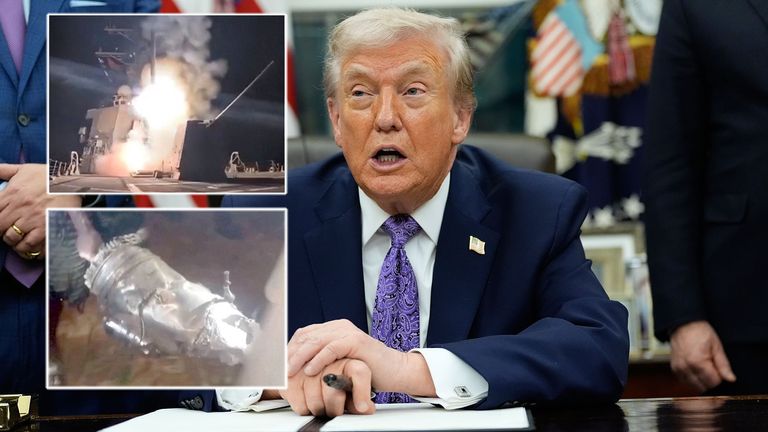
The United States has conducted airstrikes against Islamic State (ISIS) militants in northwestern Nigeria, marking the first known U.S. military action in the country under President Donald Trump. The strikes, carried out on Christmas Day, came amid heightened rhetoric from the White House over attacks on Christian communities in Nigeria.
President Trump announced the operation late Thursday, describing it as a “powerful and deadly” strike ordered in response to continued killings attributed to Islamic State-linked fighters. Posting on his Truth Social platform, Trump said the militants had ignored earlier warnings to halt violence against Christians and that the United States had now acted militarily.
Pentagon and AFRICOM Confirm Operation
The U.S. Department of Defense confirmed that “multiple ISIS terrorists” were killed in the operation, which it said was conducted at the request of Nigerian authorities. However, officials did not disclose details about the scale of the strike, the specific targets, or whether U.S. aircraft or drones were used.
U.S. Africa Command (AFRICOM) said in a statement on social media platform X that the strike took place in Sokoto state, in northwestern Nigeria, and was coordinated with the Nigerian government. AFRICOM reiterated that the operation targeted Islamic State militants operating in the region.
U.S. Defense Secretary Pete Hegseth publicly praised the military action, saying the Pentagon was prepared to act decisively and expressing gratitude for Nigeria’s cooperation and support.
Political and Diplomatic Context
The strikes follow months of increasingly sharp criticism of Nigeria by President Trump. In October and November, he accused the West African nation of failing to protect Christians and described the violence they face as an “existential threat,” language that some observers said amounted to characterising the situation as genocide.
Those comments were welcomed by some religious advocacy groups in the United States but drew concern from diplomats and analysts, who warned that framing Nigeria’s complex security crisis primarily as religious persecution risks inflaming sectarian tensions.
Nigeria’s government and many independent security experts have consistently rejected the idea that the country’s violence is driven mainly by religion. They argue that while religious identity can be a factor, most conflicts stem from a mix of insurgency, criminality, land disputes, and weak state presence.
Nigeria’s Security Challenges
Nigeria, Africa’s most populous country, is almost evenly divided between a largely Muslim north and a predominantly Christian south. Its northeast has endured more than 15 years of jihadist violence led by Boko Haram and Islamic State West Africa Province (ISWAP), a conflict that has killed over 40,000 people and displaced around two million.
In parallel, vast areas of the northwest, north-central, and central regions have been destabilised by heavily armed criminal gangs commonly referred to as “bandits.” These groups routinely attack villages, kill residents, and carry out mass kidnappings for ransom, blurring the lines between terrorism and organised crime.
Religious Freedom and U.S. Policy
The Trump administration has placed renewed emphasis on what it describes as global persecution of Christians. Earlier this year, the United States added Nigeria back to its list of countries of “particular concern” for religious freedom and imposed restrictions on certain categories of visas for Nigerian citizens.
Critics of the policy argue that such measures oversimplify Nigeria’s security landscape, while supporters say stronger pressure is needed to protect vulnerable communities.
Broader Implications
The Christmas Day strikes underscore Washington’s willingness to expand its counterterrorism footprint in West Africa, even as the region faces growing instability and shifting alliances. They also signal a more confrontational U.S. posture toward Nigeria under Trump, potentially complicating diplomatic relations with a key regional partner.
Whether the operation will have a lasting impact on militant activity—or on Nigeria’s fragile communal balance—remains unclear. Analysts say sustained cooperation with Nigerian forces and careful messaging will be critical to avoid unintended consequences in a country already grappling with overlapping security crises.