
Trump 'Surprised' by Iran Attacks on US Gulf Allies Amid Widening Conflict
Trump expresses surprise at Iran's attacks on Gulf allies amid escalating regional war.
Top Summary
- What happened: Donald Trump stated he was "surprised" by Iran's attacks on US allies in the Gulf, despite their long-standing military partnerships.
- Why it matters: The attacks highlight growing concerns among Gulf states about being drawn into a war they tried to prevent, straining US-Gulf relations.
- What changes for people: Rising fuel costs in the US are impacting consumers as the conflict disrupts international energy supplies, with the US average hitting almost $3.68 per gallon.
- Who is affected: Gulf countries, including Bahrain, Kuwait, Saudi Arabia, and the UAE, are facing increased security threats. Civilians in affected areas are urged to seek shelter.
Trump's Reaction to Gulf Attacks
President Donald Trump expressed his surprise that US allies in the Gulf had been targeted by Iran in an interview with NBC News. He described these nations as "terrific" and stated, "they got shot at unnecessarily."
He called Iran's actions “the biggest surprise I had of this whole thing.” For decades, these countries have provided the US with military bases and access and have been major buyers of US weapons.
Gulf States' Concerns
Many Gulf nations are increasingly worried about their relationship with the US. They feel dragged into a war they didn't initiate and actively tried to avoid through diplomacy.
"UAE air defences are currently responding to incoming missile and drone threats from Iran,"
according to the country’s defence ministry.
Escalating Attacks and Accusations
Iran has launched missiles toward Israel, with Israeli defense systems intercepting them. Mobile phone alerts have been issued, urging people to seek shelter.
Oil-loading operations have reportedly resumed in Fujairah, UAE, after a drone attack. The strait of Hormuz remains mostly closed, impacting global oil supplies, which are at four-year highs.
Iran's Counter-Accusations
Iran accuses "the enemy" (often referring to the US and Israel) of using copycat drones to attack neighboring countries, attempting to blame Tehran for the strikes. This accusation was made without evidence by the Iranian joint military command.
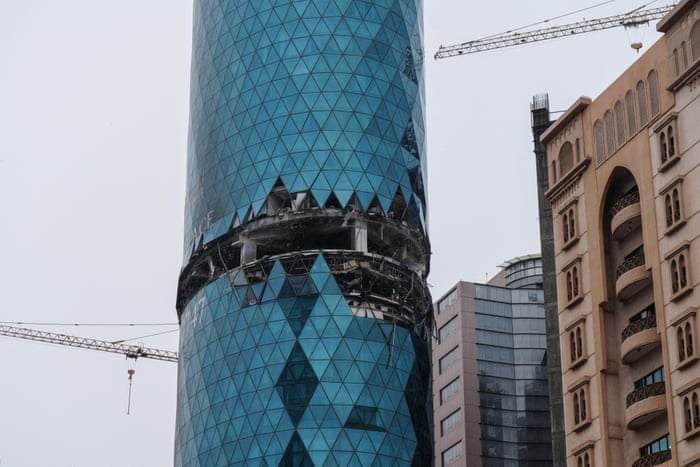
The United Arab Emirates reported a missile attack, and sirens sounded in Bahrain. Saudi Arabia said it intercepted 10 drones over Riyadh and its eastern region.
Casualties and Threats
Israeli forces allegedly killed four Palestinians, including two children, during a raid in the West Bank, according to Palestinian health authorities.
Iran’s Revolutionary Guards pledged to target Israeli Prime Minister Benjamin Netanyahu. Ayatollah Ali Khamenei, Iran's supreme leader, was killed in a US-Israeli strike on February 28 and succeeded by his son, Mojtaba Khamenei.
Global Impact
Frustration is rising over fuel costs across the US. Donald Trump claims to be unconcerned about the impact of higher prices. The US fuel average hit almost $3.68 per gallon on Saturday, up 75 cents from a month ago.
Iraq’s football team will travel to Mexico for a 2026 World Cup playoff match despite the conflict. The match is set for March 31 in Monterrey.
What to Watch Next
The international community will be closely watching for further escalations between Iran, Israel, and the US, and any potential impact on global energy supplies. Continued diplomatic efforts will be crucial to de-escalate tensions and prevent further regional instability.