
Trump Signals Momentum on Ukraine Peace Talks, but Territory Dispute Remains Unresolved
U.S. President Donald Trump has claimed that negotiations to end Russia’s nearly four-year war in Ukraine are closer to a breakthrough than at any point...
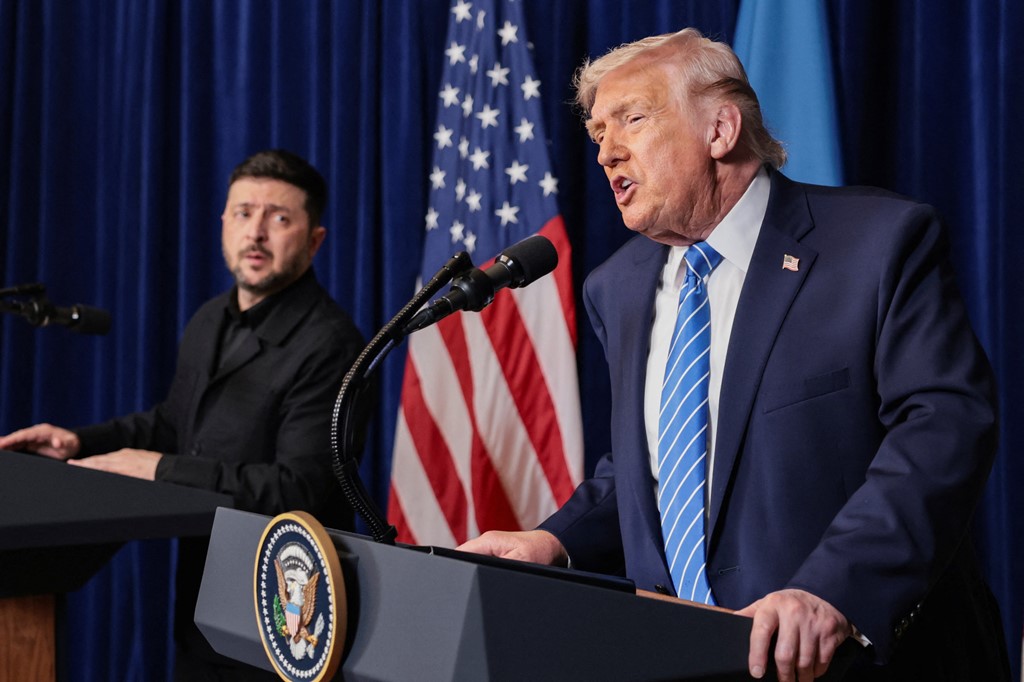
U.S. President Donald Trump has claimed that negotiations to end Russia’s nearly four-year war in Ukraine are closer to a breakthrough than at any point since the invasion began in February 2022. However, despite fresh high-level diplomacy involving Kyiv, Moscow and key European capitals, the most contentious issue — territory — remains unresolved.
A Diplomatic Push Before the New Year
Speaking on Sunday after hosting Ukrainian President Volodymyr Zelenskyy in Florida, Mr. Trump said the coming weeks would be decisive in determining whether a negotiated end to the conflict is achievable. The talks came amid renewed Russian missile and drone strikes on residential areas of Kyiv, underscoring the contrast between battlefield escalation and diplomatic outreach.
According to official statements from the White House and the Ukrainian presidency, Mr. Zelenskyy travelled to Florida for extended discussions with Mr. Trump and senior aides at the president’s Mar-a-Lago estate. The meeting followed a phone call between Mr. Trump and Russian President Vladimir Putin, after which the U.S. leader publicly insisted that Moscow was serious about pursuing peace.
What the Current Plan Looks Like
U.S. officials familiar with the negotiations say the latest framework under discussion would freeze the conflict along current frontlines in eastern Ukraine, particularly in the Donbas region. The proposal reportedly includes the creation of a demilitarized buffer zone and long-term security guarantees for Ukraine.
Mr. Trump acknowledged that Kyiv and Moscow remain divided over territorial control but argued that the gap has narrowed after weeks of intense talks. Ukrainian officials have, for the first time, publicly indicated conditional openness to territorial compromises — a significant shift from Kyiv’s long-standing insistence on the full restoration of its internationally recognized borders. Any such concession, President Zelenskyy has said, would require approval by Ukrainian voters through a referendum.
Russia, by contrast, has continued to demand that Ukrainian forces withdraw from occupied areas in the east, a position reiterated by the Kremlin after Mr. Putin’s call with Mr. Trump. Moscow has also dismissed European-backed proposals for a temporary ceasefire, arguing they would merely delay renewed fighting.
European Concerns and Security Guarantees
Following the Florida meeting, Mr. Trump and Mr. Zelenskyy held a joint call with several European leaders, according to Ukrainian and U.S. readouts. European governments, particularly those in NATO’s eastern flank, remain deeply wary of any settlement that could legitimize territorial gains achieved by force and set a precedent for future conflicts.
One key element under discussion is a form of NATO-style security guarantee for Ukraine, short of full alliance membership. Mr. Zelenskyy said Ukraine and the United States were fully aligned on the principle of binding security assurances designed to deter future Russian aggression — an issue that Russia has consistently opposed.
Political History Shapes the Talks
The tone of the latest engagement contrasts sharply with Mr. Zelenskyy’s February visit to the White House, when he was publicly criticized by Mr. Trump and Vice President J.D. Vance over Ukraine’s reliance on U.S. aid. Since returning to office, Mr. Trump has repeatedly criticized his predecessor Joe Biden for committing billions of dollars in military assistance to Kyiv, while emphasizing his own personal rapport with President Putin as a diplomatic asset.
Mr. Trump has even floated the idea of addressing Ukraine’s parliament to build domestic support for the proposed deal — a suggestion welcomed by Mr. Zelenskyy, though its feasibility remains uncertain.
War Continues as Talks Advance
Despite the diplomatic activity, the war on the ground shows no sign of easing. Russian forces have continued large-scale strikes on Ukraine’s energy infrastructure, leaving hundreds of thousands without electricity and heating during winter conditions. Moscow has warned that if Kyiv rejects negotiations, it will pursue its objectives by military means.
Why This Matters
The outcome of these talks carries major implications beyond Ukraine. A ceasefire or settlement could reshape European security, influence NATO’s future posture, and affect global energy markets and food supply chains. Conversely, a deal seen as rewarding aggression could weaken international norms against territorial conquest.
For now, optimism from Washington is tempered by unresolved disputes and ongoing violence. Whether the current momentum translates into a durable peace — or collapses under pressure from competing demands — is expected to become clearer early in the new year, as negotiations continue in Washington and European capitals.