
Trump Defends Tariff Policy Amid Supreme Court Scrutiny, Claims Americans Will Receive $2,000 Dividend
Trump Reasserts Tariffs as Cornerstone of His Economic Legacy Former U.S. President Donald Trump has reignited debate over his sweeping tariff policies, claiming they transformed...
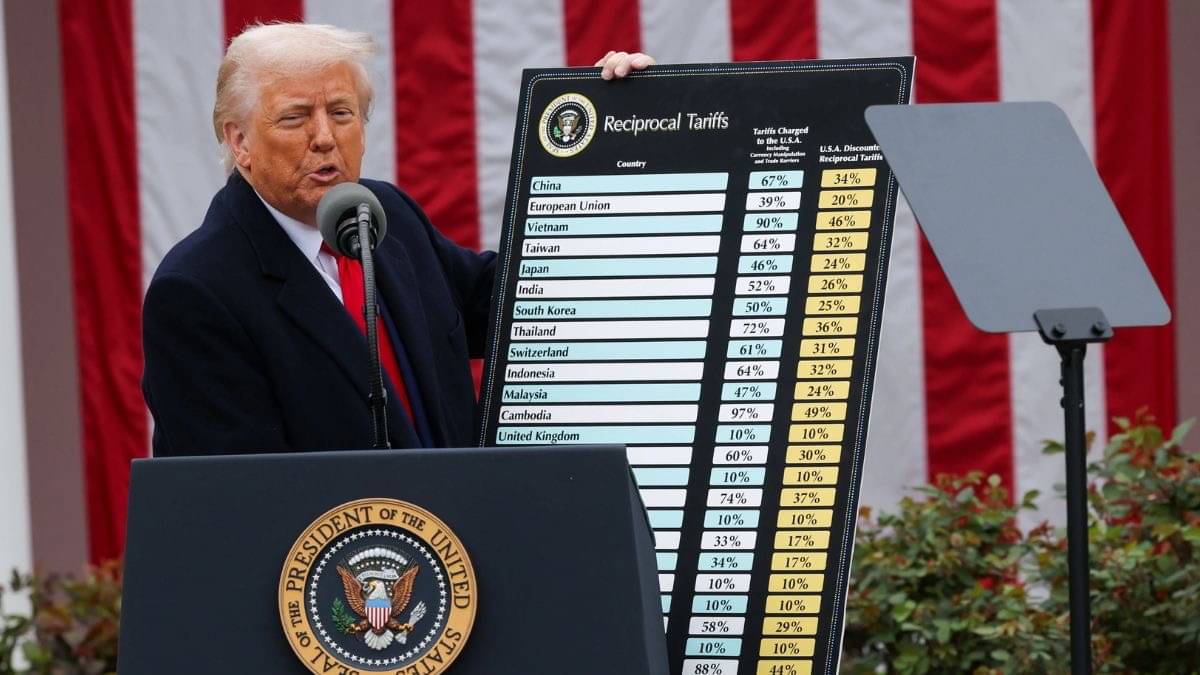
Trump Reasserts Tariffs as Cornerstone of His Economic Legacy
Former U.S. President Donald Trump has reignited debate over his sweeping tariff policies, claiming they transformed the United States into the “richest” and “most respected” country in the world. In a series of posts on his social media platform Truth Social, Trump dismissed critics of his trade measures as “fools” and promised that every American — except the wealthy — would soon receive a $2,000 dividend funded by tariff revenues collected under his administration.
The comments come at a sensitive time, as the U.S. Supreme Court weighs whether Trump’s use of emergency powers to impose unilateral tariffs exceeded the authority granted to the presidency under federal law. The case could redefine the balance between the executive and legislative branches on matters of trade and national security.
“People Against Tariffs Are Fools,” Says Trump
“People that are against Tariffs are FOOLS!” Trump wrote, touting what he described as a booming economy marked by record stock market levels, minimal inflation, and unprecedented gains in retirement savings. “We are taking in trillions of dollars and will soon begin paying down our enormous debt — $37 trillion,” he added.
Trump claimed that his tariffs spurred record investment and manufacturing growth, insisting that “plants and factories are going up all over the place.” He asserted that foreign businesses were moving operations to the U.S. “only because of tariffs.”
In a subsequent post, Trump lashed out at critics questioning the legality of his trade policies, arguing that the president has the constitutional authority to restrict trade for national security reasons. “Other countries can tariff us, but we can’t tariff them? It’s their dream!” he said, accusing the Supreme Court of undermining U.S. sovereignty.
Supreme Court Grapples With Limits of Executive Power
Trump’s remarks followed tense oral arguments at the U.S. Supreme Court, where justices from both conservative and liberal blocs pressed the administration’s lawyer on whether the former president had unlawfully bypassed Congress.
The case centers on a 1977 statute, originally intended to allow the executive branch to act swiftly during national emergencies. Trump invoked that law to impose wide-ranging tariffs that affected imports from major trading partners, including China, Canada, and the European Union.
During hearings, justices questioned whether such tariffs — applied without time limits or congressional oversight — amounted to a “major action” requiring explicit legislative authorization. Solicitor General D. John Sauer, representing the administration, defended the tariffs as a necessary tool for protecting national security and strengthening domestic industry.
While some conservative justices appeared sympathetic to the executive branch’s flexibility in foreign affairs, others cautioned against granting unchecked economic powers to the presidency. With the Court’s 6–3 conservative majority, legal observers expect a closely divided ruling that could have far-reaching consequences for presidential authority.
Economic and Political Stakes
The tariffs, which effectively tax imported goods, have generated hundreds of billions of dollars in federal revenue but also raised consumer prices and strained U.S. relations with key allies. Supporters argue the policy revived domestic manufacturing and reduced dependency on foreign supply chains. Critics, including economists and trade partners, warn that Trump’s approach has distorted global trade flows and risked retaliatory measures.
The administration contends that the tariffs could bring in trillions of dollars over the next decade, helping offset national debt and fund public programs. However, economists have expressed skepticism over Trump’s proposed $2,000-per-person “tariff dividend,” calling it politically symbolic rather than fiscally viable.
“Tariffs are taxes paid by importers, not foreign governments,” said Dr. Laura Chen, a senior trade analyst at the Peterson Institute for International Economics. “Passing that money directly to citizens would require congressional approval and would likely inflate costs for consumers.”
A Test of Trump’s Political Messaging
Trump’s renewed defense of tariffs underscores his effort to reassert economic nationalism as a defining theme of his political brand ahead of future elections. Analysts say his remarks are designed to rally working-class voters who view tariffs as a tool for protecting American jobs — even as legal and economic realities complicate those claims.
“Trump’s tariff rhetoric is as much about politics as economics,” said Mark Eldridge, a political commentator at Georgetown University. “He’s doubling down on a populist message that pits ordinary Americans against global elites and institutions like the Supreme Court.”
As the Court deliberates, the outcome could reshape not just trade policy but also the constitutional boundaries of presidential power. For now, Trump’s tariff crusade remains both a rallying cry for his supporters and a flashpoint in Washington’s struggle over who controls America’s economic destiny.