
‘Terrorism Can Never Be Normalised’: India Slams Pakistan at UN Over Use of Terror as State Policy
India delivered a sharp and unequivocal rebuttal to Pakistan at the United Nations Security Council, asserting that it is “not normal” to tolerate Islamabad’s continued...
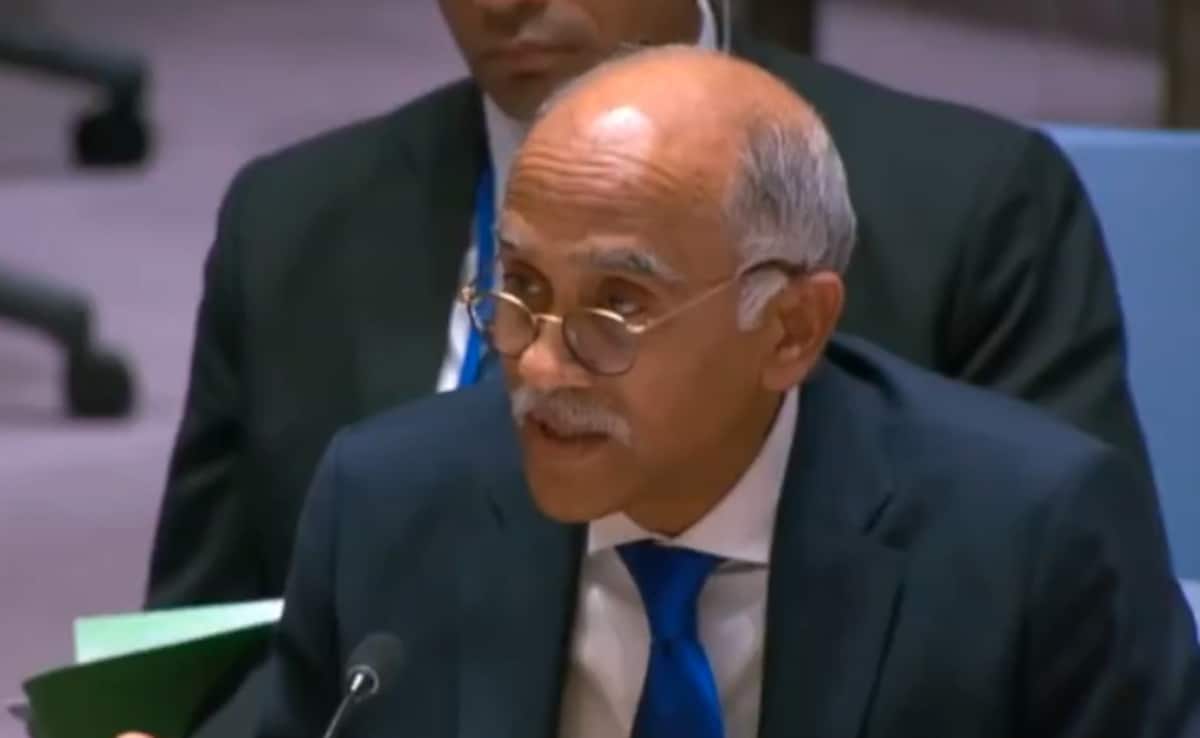
India delivered a sharp and unequivocal rebuttal to Pakistan at the United Nations Security Council, asserting that it is “not normal” to tolerate Islamabad’s continued use of terrorism as an instrument of state policy and rejecting what it called a “false and self-serving” narrative around Operation Sindoor.
India’s Permanent Representative to the UN, Ambassador Parvathaneni Harish, was responding to remarks made by Pakistan’s envoy during an open debate of the Security Council on Reaffirming International Rule of Law: Pathways to Reinvigorating Peace, Justice, and Multilateralism.
‘This chamber cannot legitimise terrorism’
Calling out Pakistan’s repeated attempts to internationalise bilateral issues, Ambassador Harish said the Security Council “cannot become a forum” for Islamabad to legitimise terrorism.
“We have heard talk from the representative of Pakistan about a ‘new normal’. Let me reiterate again: terrorism can never be normalised as Pakistan wishes to do,” Harish said. “It is not normal to tolerate Pakistan’s continued use of terrorism as an instrument of state policy.”
He added that India would take all necessary measures to protect its citizens and ensure national security, stressing that Pakistan’s conduct undermines international peace and stability.
Operation Sindoor: India defends its actions
India firmly defended Operation Sindoor, launched in May last year, describing it as a measured, responsible and non-escalatory response to the April 2025 Pahalgam terror attack, in which 26 civilians were killed.
“The facts are clear,” Harish said. “Pakistan-sponsored terrorists carried out a brutal attack on innocent civilians in Pahalgam. This very Council called for holding the perpetrators, organisers, financiers and sponsors accountable. That is exactly what India did.”
He underlined that India’s operation was aimed solely at dismantling terror infrastructure in Pakistan and Pakistan-occupied Kashmir, not at civilian or military escalation.
‘Pakistan pleaded for cessation’
In a rare public disclosure, Harish stated that after sustained Indian strikes under Operation Sindoor, it was Pakistan’s military that sought de-escalation.
“Until May 9, Pakistan was threatening more attacks on India. On May 10, the Pakistani military directly contacted our military and pleaded for a cessation of hostilities,” he said.
He noted that evidence of damage to multiple Pakistani airbases — including destroyed runways and hangars — is already in the public domain, countering Islamabad’s claims of restraint.
Jammu and Kashmir: ‘No locus standi’
Responding to Pakistan’s remarks on Jammu and Kashmir, India reiterated its long-standing position that the issue is strictly internal.
“Pakistan has no locus standi to comment on matters internal to India,” Harish said. “The Union Territory of Jammu and Kashmir has been, is, and will always remain an integral and inalienable part of India.”
Indus Waters Treaty under strain
India also addressed Pakistan’s comments on the Indus Waters Treaty, stating that New Delhi had entered the agreement in good faith over six decades ago.
“Over the past 65 years, Pakistan has violated the spirit of the treaty through three wars and thousands of terror attacks,” Harish said, adding that countless Indian lives have been lost to Pakistan-sponsored terrorism.
He said India was compelled to place the treaty in abeyance following the Pahalgam attack, until Pakistan “credibly and irrevocably” ends its support for cross-border terrorism.
Call for introspection in Pakistan
In a pointed closing remark, India urged Pakistan to reflect on its own commitment to the rule of law.
“Pakistan would be well advised to introspect,” Harish said, referring to constitutional changes that granted lifetime immunity to Pakistan’s military leadership. He described such moves as further evidence of the erosion of democratic and legal norms within Pakistan.
Strong message to the international community
India’s statement sent a clear message to the global community that terrorism cannot be excused, rationalised or reframed as geopolitics.
By invoking the Security Council’s own past resolutions and statements, New Delhi reinforced its argument that accountability for terrorism is not optional — and that attempts to normalise or deflect responsibility will be firmly challenged.