
Teen Whistleblowers Challenge IITK Director on Telegram Edit Claims for NEET Re-Test
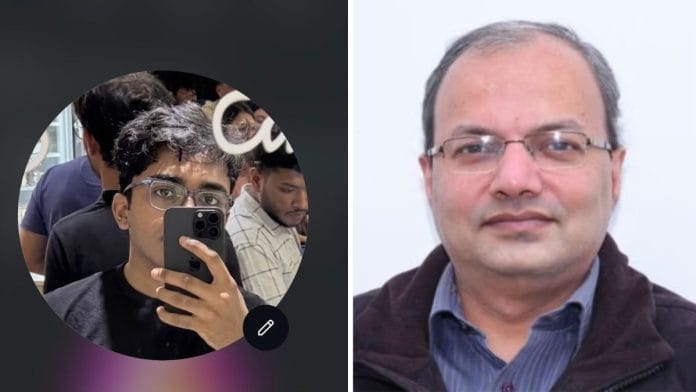
Teen whistleblowers Sarthak Sidhant and Nisarga Adhikary fact-check IITK Director Manindra Agrawal on Telegram's edit features amid NEET re-test ban.
Top Summary
- What happened: IIT Kanpur Director Manindra Agrawal defended a temporary Telegram ban for the upcoming NEET re-test, but his technical claims about message editing were publicly challenged and fact-checked by teen whistleblowers Sarthak Sidhant and Nisarga Adhikary, alongside numerous tech users.
- Why it matters: This debate scrutinizes the government's approach to preventing exam-related misinformation and paper leaks, raising questions about technical understanding in policy-making and the effectiveness of such restrictions.
- What changes: The temporary restriction on Telegram impacts a wide range of users, including businesses, AI bot operators, developer communities, and educational groups. However, critics point out that circumvention methods like VPNs remain active.
- Who is affected: The key figures involved are IIT Kanpur Director Manindra Agrawal, teen entrepreneurs Sarthak Sidhant and Nisarga Adhikary. Also affected are NEET aspirants, general Telegram users, and technology professionals who rely on the platform.
NEET Re-Test: Telegram Ban Sparks Fierce Debate
A significant social media debate has erupted following IIT Kanpur Director Manindra Agrawal's defense of a temporary Telegram restriction. This ban was implemented ahead of the NEET UG 2026 re-test, scheduled for June 21, amidst heightened security concerns.
However, Agrawal's justification was swiftly challenged by teen whistleblowers Sarthak Sidhant and Nisarga Adhikary, who previously gained attention during the CBSE OSM portal controversy. They, along with numerous technology professionals, questioned the technical basis of the ban.
Director Defends Ban Over "Fake Leak" Concerns
Director Agrawal argued that Telegram's message-editing feature could be exploited by fraudsters. He claimed it allowed them to create fake evidence of paper leaks by editing old posts after exams, presenting them as proof of prior access to question papers.
"The problem with Telegram channel is not sharing of leaked paper, there are many other ways of doing it, rather that it can be used to spread fake news of leak that appears genuine," Agrawal wrote. He later added: "Telegram allows one to fake a leak without leaving trace."
The government and NTA have defended the restriction as a temporary measure. They state its aim is to prevent fake paper leak claims before the re-test, which will be conducted under tighter monitoring and cyber surveillance.
Teens Lead Technical Fact-Check
Teen entrepreneur and developer Nisarga Adhikary, who was previously offered a role at IIT Kanpur, was among the first to push back. He criticized both the restriction's effectiveness and its technical rationale.
Nisarga argued that "blocking telegram totally isn't even possible," citing the platform's design for circumvention via proxies. Directly responding to Agrawal's claim about invisible edits, Nisarga stated, "sir, telegram shows it too," highlighting its open-source codebase as verifiable proof of edit timestamp functionality.
The Viral 'Meow Meow' Message
The debate gained viral traction when Sarthak Sidhant joined in. He questioned the logic of shutting down an entire communication medium due to misinformation, drawing parallels to WhatsApp, the Indian press, and Twitter.
Sarthak directly confronted Agrawal's assertion that Telegram had a "special feature that allows editing of post WITHOUT reflecting that edit has been done." He countered, "that's not true though," sharing a screenshot that visually demonstrated Telegram messages reflecting edits with an "edited" marker and timestamp.
His accompanying message, "meow meow," became a memorable symbol of the fact-check. Sarthak further confirmed that even changes to PDFs would have their timestamp of alteration reflected.
Beyond Telegram: Broader Criticisms Emerge
The discussion quickly expanded, with other users and professionals weighing in. User Artemis noted that anyone intending to distribute leaks could simply use alternative platforms like Discord, Signal, Reddit, cloud servers, WhatsApp, or YouTube.
"Agree. There are multiple ways of sharing leaked paper and closing access to Telegram is not going to solve it," Director Agrawal acknowledged. He reiterated that the ban addressed a different problem: the spread of fake leak news.
Technology professionals, including developer Adarsh, affirmed that Telegram edits are visible and its apps are open-source for verification. Concerns were also raised about the blanket restriction's impact on legitimate users, including businesses, AI bots, and educational groups.
Many critics questioned the policy's efficacy, observing that Telegram remained accessible to some via VPNs. They argued that the focus should shift from restricting platforms to addressing the fundamental vulnerabilities that allow misinformation and leak fears to flourish.
What to Watch Next
As the NEET re-test proceeds under heightened security, observers will monitor the effectiveness of these measures and the ongoing debate surrounding digital communication platform restrictions. The discussion is expected to continue shaping policies aimed at preventing exam-related misinformation in India.