
Supreme Court Slams States for Ignoring Stray Dog Control Order: “Your Country Is Being Portrayed in a Bad Light!”
Supreme Court expresses anger over non-compliance The Supreme Court on Monday came down heavily on state governments for failing to file compliance affidavits regarding its...
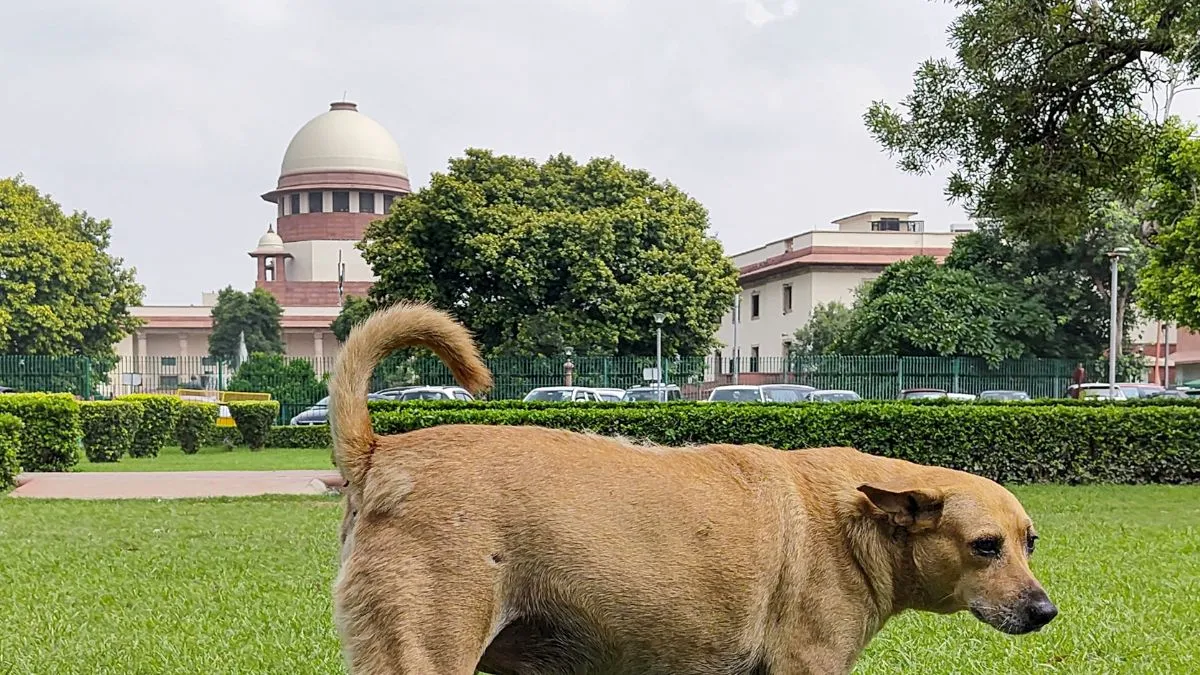
Supreme Court expresses anger over non-compliance
The Supreme Court on Monday came down heavily on state governments for failing to file compliance affidavits regarding its August 22 order mandating the capture, sterilisation, and release of stray dogs. The court’s directive aimed to implement the Animal Birth Control (ABC) Rules more effectively, following a surge in dog attacks nationwide.
A visibly irate three-judge bench comprising Justices Vikram Nath, Sandeep Mehta, and NV Anjaria expressed dismay that despite clear instructions and a two-month deadline, most states had not responded. “Yet no reply has come from state governments. Your country is being portrayed in a bad light internationally!” the bench observed sharply.
The court ordered all chief secretaries and union territory administrators to appear personally and explain the delay. “Don’t you read newspapers? The order was widely reported,” the bench said.
Spate of dog attacks nationwide
The court’s anger followed a string of disturbing incidents across several states. In Maharashtra, a young child was mauled in Pune last month, while another girl was attacked by a pack of 20 dogs in Bhandara district days earlier.
In Kerala’s Kannur district, a man performing in a street play on stray dogs was ironically bitten mid-performance. Similar incidents were reported in Lucknow, where a family of three was attacked, and in Telangana’s Warangal, where stray bites were reported within the last 48 hours.
These frequent attacks have reignited the debate over the balance between animal welfare and public safety—an issue that has plagued Indian cities for years.
Limited compliance from states
The court noted that only West Bengal, Telangana, and the Municipal Corporation of Delhi (MCD) had filed compliance reports. Even these submissions were not yet part of the official record, as they were filed during the Diwali court recess.
“The MCD has filed a reply, but the Delhi government has not?” the bench remarked in frustration, pointing to a lack of coordination between state departments and municipal authorities.
Rajasthan, Noida, and Chennai show progress
While most states lagged, a few have begun implementing the Supreme Court’s directives. Rajasthan’s Department of Autonomous Governance recently issued binding instructions to all local bodies, requiring them to mark feeding zones, coordinate with resident welfare associations (RWAs) and animal welfare groups, and sterilise and tag all stray dogs before release.
In Noida, authorities have launched a comprehensive survey to map stray dog populations and identify sterilised, unsterilised, aggressive, and rabies-suspect animals. Local RWAs and apartment associations have been asked to submit photographic documentation to assist in the process.
Meanwhile, in Tamil Nadu, the Greater Chennai Corporation has made substantial progress. By mid-September, it had vaccinated over 46,000 dogs against rabies, microchipped 12,000 for tracking, and geo-mapped sterilisation records to improve accountability.
The August order: balancing compassion and control
The Supreme Court’s August 22 directive modified an earlier order from August 11, reaffirming that stray dogs must be released back into their original localities after sterilisation and immunisation—except those found to be rabid or dangerously aggressive.
The bench emphasized strict adherence to the Animal Birth Control (Dogs) Rules, which outline humane population control measures and prohibit relocation of dogs outside their home territories.
Animal welfare experts say this approach seeks to prevent both unchecked breeding and unnecessary cruelty, though public frustration over rising attacks remains high.
The road ahead
The apex court’s summons to state chief secretaries signals growing judicial impatience with administrative inertia. As dog-bite incidents continue to make headlines, the issue underscores the need for a coordinated national policy—one that safeguards citizens without undermining animal rights.
For now, the next hearing will test whether states can demonstrate tangible progress or face stronger judicial intervention.