
SONIA GANDHI HITS OUT AT CENTRE OVER SILENCE ON KHAMENEI KILLING
New Delhi: Questioning the government's silence on the killing of Iran's Supreme Leader Ayatollah Ali Khamenei, veteran Congress leader Sonia Gandhi has said silence, in...
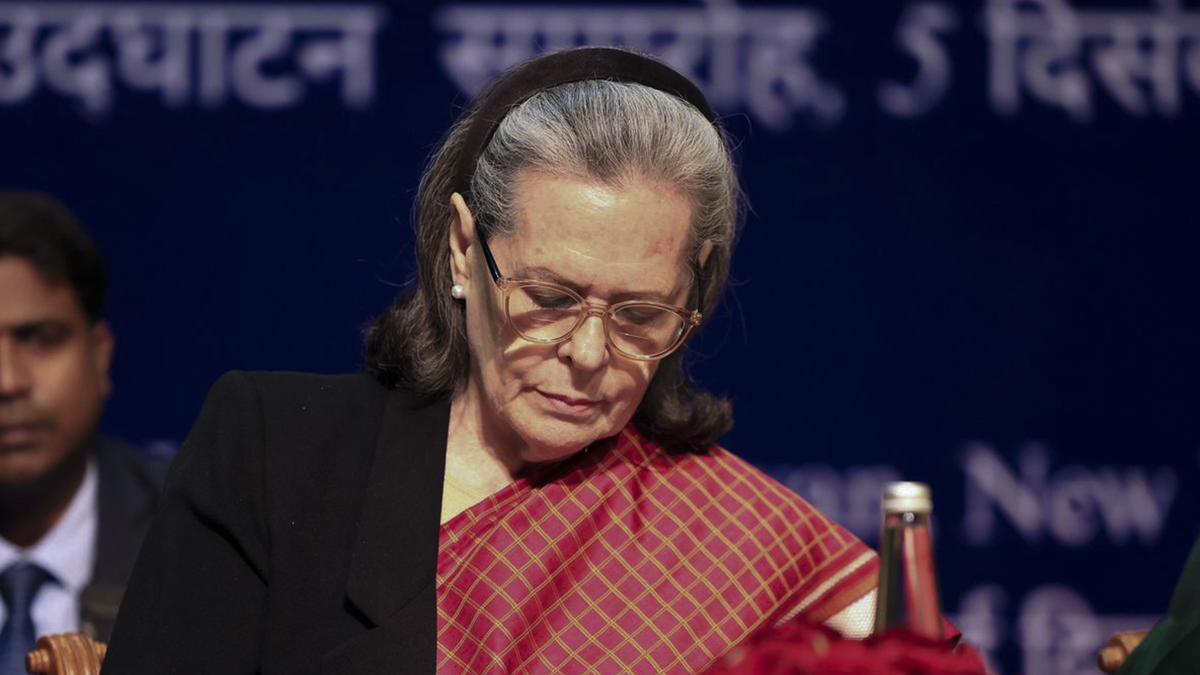
Congress leader says India’s “measured response” weakens credibility as a defender of sovereignty and international law.
What happened:
-
Sonia Gandhi criticised the Narendra Modi government for not strongly condemning the killing of Ali Khamenei.
-
In a column for The Indian Express, she called India’s silence an “abdication”.
-
The Centre has urged restraint in the Middle East but avoided direct condemnation.
Why it matters now:
-
The assassination of a sitting head of state during negotiations raises global legal and diplomatic questions.
-
India balances ties with both Iran and Israel.
-
Nearly 10 million Indians live in the Gulf, making regional stability crucial.
What changes for people:
-
Diplomatic tensions could affect oil prices and economic stability.
-
Indian expatriates in the Gulf may face heightened security risks.
-
India’s global positioning as a Global South leader may be tested.
Who is affected:
-
Indian diaspora in West Asia
-
Energy-dependent Indian consumers
-
Gulf-region employers and businesses
-
India’s diplomatic establishment
“Silence Is Not Neutral”
Writing days after Iran confirmed the assassination of its Supreme Leader, Sonia Gandhi said India’s response lacked moral clarity.
She argued that the killing of a sitting head of state during ongoing diplomatic engagement marked a “grave rupture” in international relations.
According to her, India’s absence of a direct statement defending sovereignty and international law undermines its long-standing foreign policy principles.
The Modi government has so far called for restraint and de-escalation but has not issued a specific condemnation of the strike.
Government sources maintain that India’s calibrated stance mirrors other major global powers and prioritises national interest.
Timing and Political Optics
Gandhi linked the episode to Prime Minister Narendra Modi’s recent diplomatic outreach to Israel.
She noted that the Prime Minister had reiterated support for the government of Benjamin Netanyahu shortly before the assassination.
The Congress leader questioned whether India’s posture signals alignment rather than strategic autonomy.
The Centre, however, insists India maintains independent relations with all regional powers.
Iran’s Past Support on Kashmir
Gandhi invoked a key historical moment.
In 1994, during deliberations at the UN Commission on Human Rights, Iran played a role in blocking attempts within the Organisation of Islamic Cooperation to internationalise Kashmir.
She described Tehran’s intervention as consequential at a delicate point in India’s economic trajectory.
She also highlighted Iran’s support for India’s diplomatic presence in Zahedan, which serves as a strategic counterweight to Pakistan’s Gwadar port and the China-Pakistan Economic Corridor.
Strategic Balance: Iran and Israel
India’s ties with Israel have expanded significantly in defence, agriculture and technology over the past decade.
At the same time, Iran remains central to India’s energy security and regional connectivity plans.
Gandhi argued that India’s diplomatic leverage stems precisely from maintaining relations with both Tehran and Tel Aviv.
But, she said, such leverage depends on credibility.
“Credibility rests on the perception that India speaks from principle rather than expediency,” she wrote.
Diaspora and Energy Stakes
The Gulf hosts nearly 10 million Indian nationals, forming one of the largest expatriate populations in the world.
From the Gulf War to evacuations in Yemen and Iraq, India’s crisis response has relied on being perceived as an independent actor.
Any prolonged instability in the Middle East could impact:
-
Oil imports and domestic fuel prices
-
Remittances from Indian workers abroad
-
Shipping and trade flows through key maritime routes
With global crude prices already volatile, foreign policy signals carry economic weight.
Global South Positioning
Gandhi framed the issue within India’s broader ambition to lead the Global South.
She questioned whether other developing nations would trust India to defend territorial integrity in the future if it appears hesitant now.
Invoking the civilisational ideal of “vasudhaiva kutumbakam”, she said the principle demands commitment to justice and dialogue, even in politically inconvenient moments.
Government’s Counter View
Officials have defended the restrained tone.
According to government sources, diplomatic responses are carefully calibrated to avoid escalation.
They argue that India’s priority remains safeguarding national interest, protecting its citizens abroad, and ensuring energy security.
Calling for restraint, rather than issuing sharp condemnations, is seen as consistent with India’s tradition of strategic autonomy.
Impact Snapshot
Economy: Oil volatility and potential inflationary pressures
Public Safety: Security risks for Indian nationals in conflict zones
Governance: Intensified domestic debate over foreign policy direction
International Relations: Balancing ties between Iran, Israel, and Western powers
Bottom line
Sonia Gandhi’s sharp critique places foreign policy squarely at the centre of domestic political debate.
At stake is not just a diplomatic statement, but India’s credibility as an independent voice in a fractured global order.
As tensions in the Middle East deepen, New Delhi’s balancing act between principle and pragmatism will face increasing scrutiny.
What to watch next
-
Whether the Centre issues a stronger formal statement
-
Parliamentary debate over India’s Middle East policy
-
Diplomatic outreach to Tehran and Tel Aviv
-
Impact of regional instability on oil prices and Indian markets