
Serial Bombing Plot Linked to Red Fort Blast: 32 Cars Recovered as Investigators Expose Expansive Terror Network
New Delhi: Investigators probing the deadly explosion outside Delhi’s Red Fort have uncovered a sweeping terror conspiracy involving 32 vehicles prepared to carry explosives across...
New Delhi: Investigators probing the deadly explosion outside Delhi’s Red Fort have uncovered a sweeping terror conspiracy involving 32 vehicles prepared to carry explosives across multiple cities. According to officials familiar with the multi-agency investigation, the network intended to execute serial attacks on December 6—a date often exploited by extremist groups due to its historical significance linked to the 1992 demolition of the Babri Masjid.
The revelation points to one of the most extensive vehicle-based terror plots India has faced in recent years.
A Complex Plan Built Around Untraceable Cars
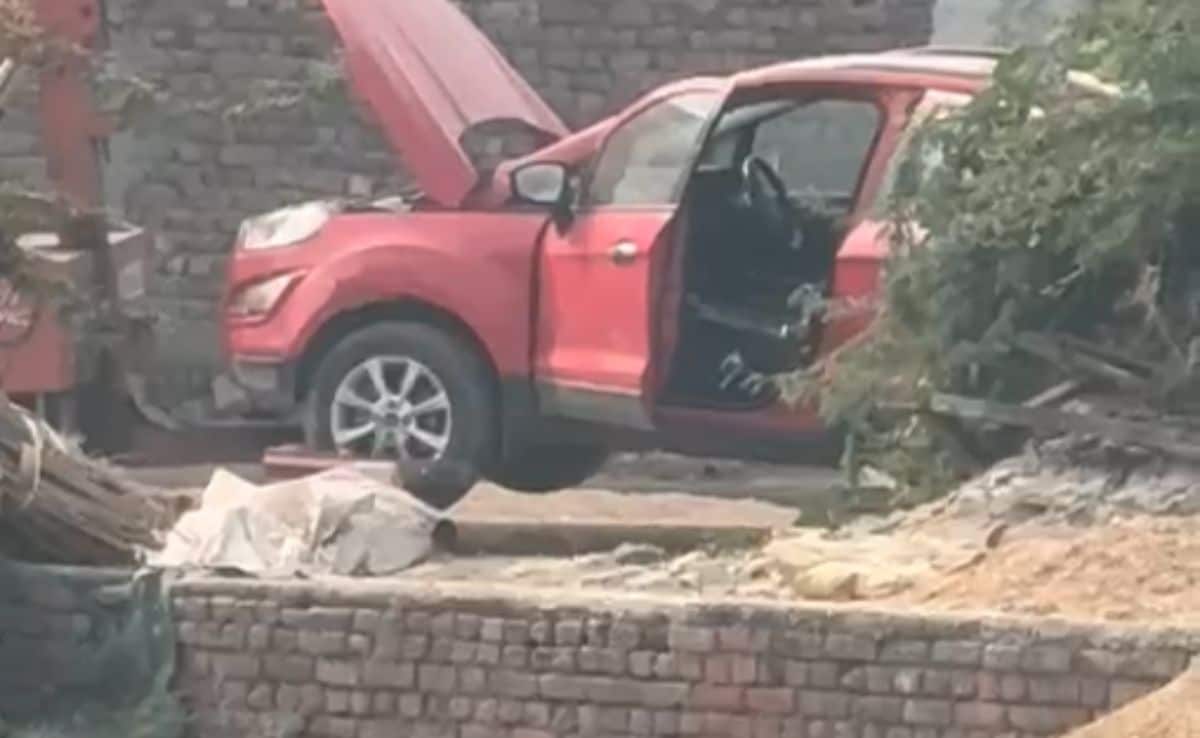
Investigators from the NIA, Delhi Police, and state intelligence units have traced four key vehicles so far—an i20, a Maruti Brezza, a Swift Dzire, and a Ford EcoSport—all purchased cheaply in the second-hand market.
Officials say the attackers intentionally chose older cars with multiple previous owners to blur ownership trails and delay police tracking.
The red Hyundai i20, which exploded Monday evening, was allegedly the first in a chain of planned blasts. DNA analysis has confirmed that Umar Mohammed, described by officials as a core member of the group, died when the device detonated prematurely at a busy traffic signal near the Red Fort's entrance.
Senior investigators shared that the i20 entered Delhi via Badarpur hours before the blast and circled the city, likely waiting for an opportunity to slip into the Red Fort parking zone. As the monument is closed on Mondays, the attacker reportedly triggered the device at the nearest crowded junction.
Faridabad Emerges as the Nerve Centre
Two of the other cars—a Maruti Brezza (HR87 U 9988) and a Ford EcoSport (DL10 CK 0458)—were recovered in Faridabad. Both were found near the Al-Falah School of Medical Sciences and Research Centre, which investigators say has become central to understanding how the terror cell operated.
A young man was found asleep inside the EcoSport when it was located late Wednesday. Authorities have detained him for questioning.
A separate Swift Dzire, seized Monday, reportedly contained an assault rifle and ammunition.
Search teams have also recovered nearly 3,000 kg of explosive chemicals and weapons from two locations linked to the network—Al-Falah Hospital in Faridabad and the Government Medical College in Anantnag, Jammu & Kashmir.
The educational institution, now at the centre of scrutiny, issued a statement stressing it had no role in the activities of the arrested individuals and stands “firmly with national security efforts.”
Terror Cell Posed as Professionals to Evade Detection
According to investigators, the conspiracy reflects a disturbing shift in terror tactics. Many members of the module allegedly posed as doctors or medical trainees to embed themselves within communities, gain trust, and avoid triggering suspicion.
An NIA official, requesting anonymity, said the group’s cover was blown only after CCTV footage showed one accused—Adil Ahmad Rather—putting up posters that praised the Pakistan-based Jaish-e-Mohammed (JeM) in Nowgam, Kashmir.
His arrest in Uttar Pradesh's Saharanpur became the thread that eventually unraveled the plot.
A Plot Driven by ‘Revenge’ Agenda, say Agencies
Preliminary assessments suggest the group intended to carry out simultaneous vehicle-bomb attacks in Delhi, with additional targets under discussion for other states. Intelligence inputs indicate the attackers discussed an earlier strike around Diwali (October 20), but the plan did not progress.
Sources within the investigation describe the intended December 6 attacks as a “revenge operation,” a narrative often pushed by Pakistan-backed terror organizations seeking symbolic dates for mass-casualty strikes.
Why This Case Matters
Security analysts say this plot underscores three major concerns:
-
Use of easily obtainable second-hand vehicles to bypass surveillance systems.
-
Deep infiltration into civilian institutions, including educational and medical facilities.
-
Adoption of multi-city, synchronized attack strategies, mirroring tactics used by transnational terror organizations.
Retired intelligence officers warn that India may need to strengthen verification norms for used-vehicle purchases and tighten oversight of precursor chemical distribution.
The Road Ahead
The NIA is now verifying ownership histories of all 32 vehicles believed to have been prepped for transportation of weapons or explosive material. Teams are also mapping financial flows, communication records, and recruitment patterns.
Officials expect more arrests as the investigation expands across Delhi, Haryana, Uttar Pradesh, and Jammu & Kashmir.