
Sea Snakes: 10 Unique Species & Where to Spot Them on Beaches
Discover ten unique sea snake species and where travelers might encounter them.
Top Summary
- What happened: A guide highlighting 10 unique sea snake species and their habitats near beaches.
- Why it matters: Provides travelers with essential knowledge about encountering these reptiles and avoiding potential harm.
- What changes for people: Educates travelers to appreciate these creatures from a distance and not attempt to touch them.
- Who is affected: Travellers to coastal regions in Australia, Southeast Asia, India, and the Pacific Islands.
Understanding Sea Snakes
Sea snakes are mysterious reptiles found in warm coastal waters, sometimes venturing onto beaches. While most aren't aggressive, knowing about them is crucial. Marine biologists advise against touching them.
These snakes inhabit diverse environments, from the Great Barrier Reef to the coasts of Southeast Asia. Encounters, while rare, provide unique wildlife viewing opportunities.
Banded Sea Krait
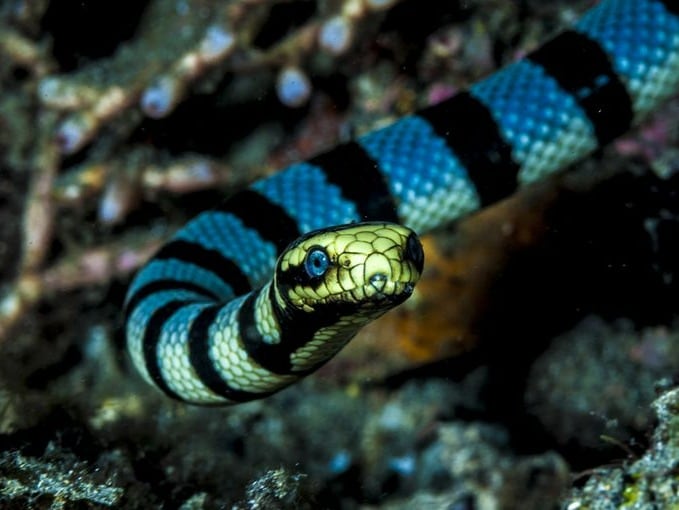
The Banded Sea Krait is common, with black-and-white rings and a yellow snout. They often come ashore to rest or lay eggs.
Found in Bali, Thailand, and the Philippines, they're venomous but generally calm and rarely bite.
Yellow-Bellied Sea Snake
The Yellow-Bellied Sea Snake is pelagic, spending its life drifting in open ocean currents. Its dark upper body contrasts with a bright yellow underside.
Sightings occur in coastal waters around Costa Rica, Mexico, Indonesia, and Australia.
Olive Sea Snake
The Olive Sea Snake, known for its smooth olive-brown color, is curious. Divers and snorkelers often encounter it in the Great Barrier Reef.
They glide through coral gardens and surface near reefs.
Beaked Sea Snake
The Beaked Sea Snake is widespread in the Indian Ocean, often found in shallow coastal waters and fishing zones. They sometimes get trapped in fishing nets.
Travellers report sightings near beaches in Goa, India.
Dubois' Sea Snake
Dubois' Sea Snake, one of the most venomous, inhabits reefs and lagoons near northern Australia and the Coral Sea.
Human encounters are rare.
Blue-Lipped Sea Krait
The Blue-Lipped Sea Krait, with bluish bands, frequents coral beaches across the South Pacific.
Travellers in Fiji, Vanuatu, and New Caledonia often report encounters.
Olive-Headed Sea Snake
The Olive-Headed Sea Snake, extremely venomous, lives in tropical waters across northern Australia.
Snorkellers near Queensland sometimes spot them.
Belcher's Sea Snake
Belcher's Sea Snake has extraordinarily toxic venom, but bites are rare. It's shy and rarely attacks humans.
Sightings occur in tropical waters around Indonesia, Malaysia, and Southeast Asia.
Turtle-Headed & Annulated Sea Snakes
The Turtle-Headed Sea Snake, found in Australia's coral reefs, eats fish eggs and has a blunt head.
Annulated Sea Snakes, with ring-like markings, inhabit mangroves and reefs across the Indo-Pacific. Sightings occur in the Andaman Islands and Southeast Asia.
What to Watch Next
Marine researchers continue to study sea snake behavior and distribution. Future reports may provide more insights into these fascinating reptiles and their interactions with coastal ecosystems.