
Russia’s Claim of Ukrainian Drone Plot Against Putin Residence Faces Deep Skepticism from Military Drone Expert
Escalating accusations by Moscow that Ukraine attempted to strike a residence used by Russian President Vladimir Putin with drones have been strongly questioned by a...
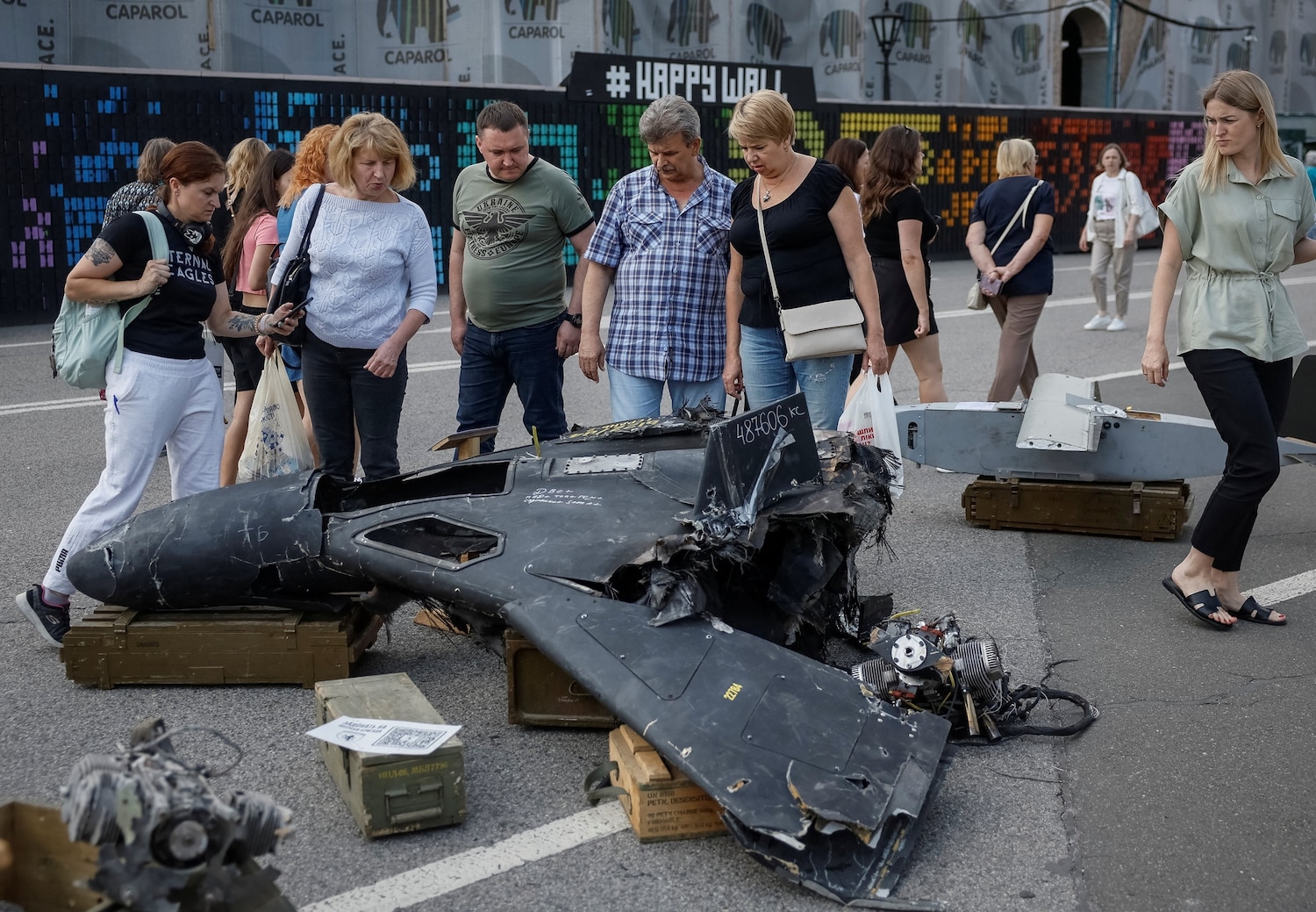
Escalating accusations by Moscow that Ukraine attempted to strike a residence used by Russian President Vladimir Putin with drones have been strongly questioned by a leading military drone expert, who described the alleged operation as both tactically implausible and inconsistent with Ukraine’s established methods of drone warfare.
The criticism comes as Russian officials intensify claims that Kyiv orchestrated a large-scale drone attack aimed at Putin’s residence near Lake Valdai in the Novgorod region—an allegation Ukraine has categorically denied. Cameron Chell, a prominent figure in the global drone industry, said the narrative put forward by the Kremlin “doesn’t add up” from either a technical or strategic standpoint.
Expert: Alleged Attack Is “Hard to Fathom”
Cameron Chell, CEO and co-founder of Draganfly, a drone manufacturer that supplies systems to the U.S. Department of Defense and allied militaries—including Ukraine—said Russia’s version of events lacks credibility and contradicts Ukraine’s known operational style.
“What really makes Ukraine very signature in its drone operations is how clever and efficient they are,” Chell told Fox News Digital. “They’re not just cost-effective, they’re tactically innovative. That’s why this claim is so hard to fathom.”
According to Chell, Ukraine typically uses drones in a way that maximizes impact while minimizing exposure and risk, often employing surprise, precise targeting, and carefully chosen objectives. A supposed high-profile strike on a heavily fortified presidential residence, he argued, would be entirely out of character.
Logistical and Tactical Improbabilities
One of the most glaring issues with Russia’s claim, Chell said, is geography. For drones to reach Putin’s residence, they would need to be launched from relatively close proximity.
“To get drones over the top of Putin’s residence, they would not have been launched from a very long distance,” Chell explained. “They’d have to be within about 10 kilometers—maybe 30 kilometers at most.”
That would imply a launch point inside Russian territory, raising serious questions about how Ukraine could covertly deploy dozens of drones so close to one of Russia’s most secure sites without detection.
Chell also emphasized that a presidential residence would be protected by layered air defenses, electronic warfare systems, and rapid-response security forces. Sending slower, lower-cost drones into such an environment would be ineffective and uncharacteristic of Ukrainian strategy.
“That facility would be incredibly secure,” he said. “To send a swarm of slower-moving, relatively inexpensive drones into that airspace would be very un-Ukrainian.”
Contradictory Russian Accounts
Further undermining Moscow’s claims are inconsistencies in official Russian statements. Russian Foreign Minister Sergey Lavrov said late Monday that 91 drones were intercepted while heading toward Putin’s residence at Lake Valdai.
However, earlier figures released by Russia’s Defense Ministry painted a different picture. Initially, the ministry reported 89 drones shot down across eight regions, including 18 over Novgorod. Later, officials added another 23 drones, and only after Lavrov’s remarks did the ministry claim that 49 drones intercepted over Bryansk, nearly 300 miles away, were also part of the alleged plot to target Valdai.
Asked about physical evidence or wreckage, Kremlin spokesman Dmitry Peskov deflected, saying it was “a matter for our military,” while dismissing Ukrainian denials and Western skepticism as “completely insane.”
Meanwhile, Russian political rhetoric escalated sharply. Peskov said Moscow’s diplomatic posture would harden, and Duma Speaker Vyacheslav Volodin warned there could be “no forgiveness” for Ukrainian President Volodymyr Zelenskyy.
Technical Barriers: Night Operations and Jamming
Chell also highlighted the technical challenges associated with such an operation, particularly if it occurred at night, as Russia claims.
“Night operations rule out a lot of advanced navigation tools,” he said. “Machine vision and AI-based mapping systems struggle in low visibility, and GPS would almost certainly be jammed.”
Russia is known for extensive electronic warfare capabilities, especially around sensitive sites. Launching dozens of drones without reliable navigation, while avoiding detection and jamming, would be extraordinarily difficult—even for a highly capable military.
“There are just a bunch of things that don’t add up,” Chell said.
Political Context Raises More Doubts
Beyond technical and tactical concerns, Chell argued that the timing makes little political sense for Ukraine. The alleged attack comes amid renewed diplomatic efforts and cautiously positive signals from Washington.
Just days earlier, U.S. President Donald Trump and President Volodymyr Zelenskyy reportedly held a constructive meeting in Florida, fueling optimism around peace discussions.
“Right in the middle of peace talks—when Ukraine needs Trump on side—it makes no sense,” Chell said. “Ukraine is politically too smart to have done that.”
Zelenskyy has flatly denied the accusation, calling it a fabrication designed to justify further Russian aggression.
Trump, Lavrov, and the Question of Retaliation
President Trump said he learned of the alleged drone attack directly from Putin and admitted he was “very angry” about it. When asked whether there was concrete evidence, Trump responded, “We’ll find out.”
Lavrov, while warning of retaliation, said Russia would continue talks with Washington, suggesting Moscow is attempting to balance escalation rhetoric with diplomatic engagement.
Satellite imagery and verified evidence supporting Russia’s claims have not been presented publicly. In contrast, independent satellite images have previously confirmed Ukrainian strikes on Russian military targets, such as air bases deep inside Russia—operations that were openly acknowledged by Kyiv and aligned with its strategic objectives.