
Rahul Gandhi Says Modi Took Manmohan Singh’s Economic Model ‘Too Far Right’, Calls for New Growth Vision
Congress leader and Leader of the Opposition Rahul Gandhi on Tuesday launched a sharp critique of Prime Minister Narendra Modi’s economic approach, arguing that the...
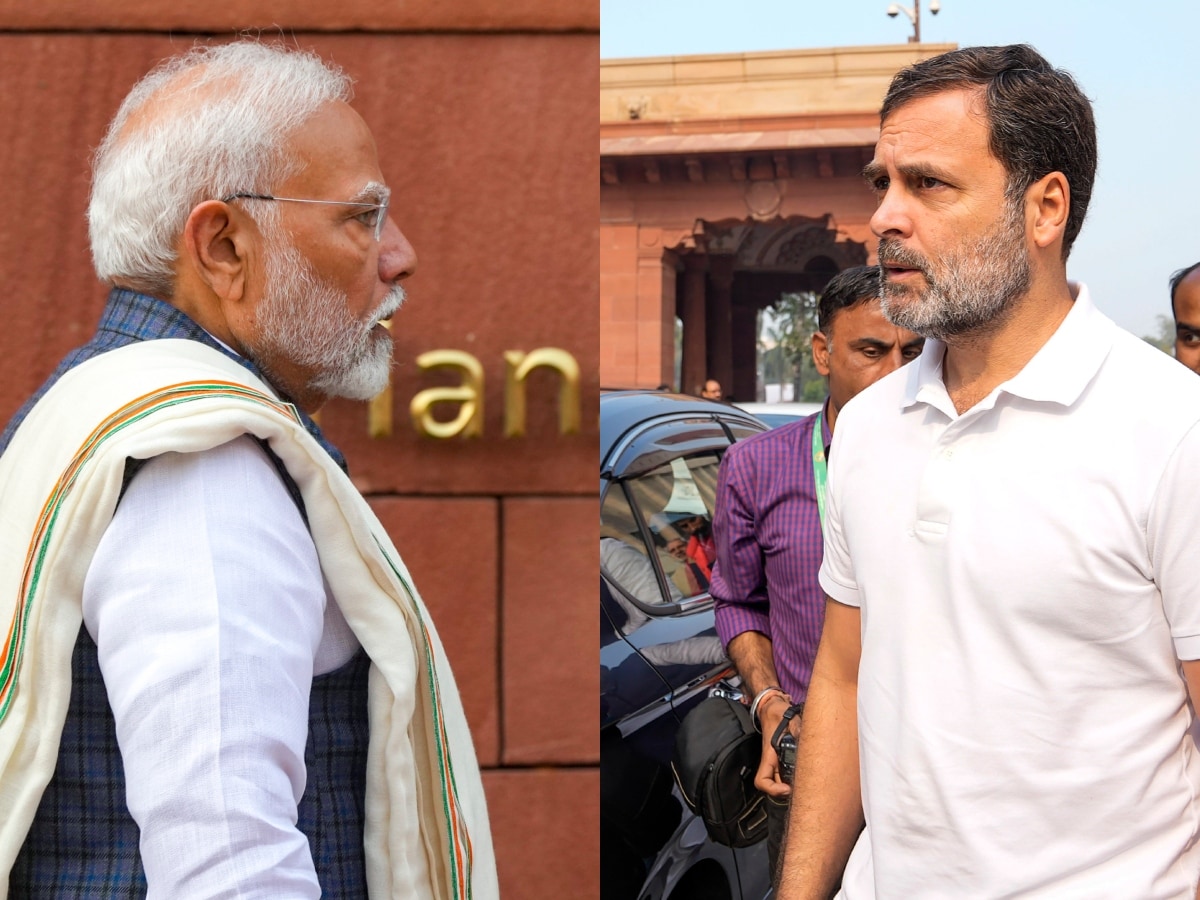
Congress leader and Leader of the Opposition Rahul Gandhi on Tuesday launched a sharp critique of Prime Minister Narendra Modi’s economic approach, arguing that the BJP-led government had pushed the liberalisation-era model introduced under former Prime Minister Manmohan Singh to an “extreme right” that has now exhausted itself.
Speaking at the Hertie School, a leading public policy and governance institution in Berlin, Gandhi said India is witnessing the collapse of an economic framework that had broadly guided growth from the early 1990s until the early 2010s, and that the country now needs to articulate a fundamentally new development model.
‘A Model That Has Reached Its Limits’
Responding to a question from an Indian student on whether there was room for optimism amid what was described as “ideological and institutional capture” by the ruling establishment, Gandhi said India’s post-1991 economic model had delivered results for over two decades but was no longer viable in its current form.
According to Gandhi, the Modi government extended the same framework without safeguards that earlier administrations had maintained. He argued that while former Prime Minister Manmohan Singh embraced market reforms, there were limits the Congress-led governments were unwilling to cross.
“What the BJP, the RSS and the Prime Minister have done is push those ideas much further than we would have allowed,” Gandhi said, adding that the debate in India today is no longer about defending the old system but about designing the next phase of growth.
Allegations of Corporate Concentration
Gandhi alleged that Prime Minister Modi no longer has the flexibility to shift course because of his close alignment with a small group of large corporate houses.
He claimed that the current economic strategy had “run out of road” around four to five years ago, and that excessive reliance on a handful of conglomerates had narrowed opportunities rather than expanded them. While not naming specific policy decisions, Gandhi reiterated his long-standing criticism that wealth creation under the present government has been concentrated among a limited number of business groups rather than spread across society.
The BJP and the companies Gandhi has previously referred to have consistently rejected such allegations, maintaining that government policies are transparent and aimed at broad-based growth.
Outlining an Alternative Vision
Gandhi said the next economic model must be rooted in democratic participation, environmental sustainability, and social inclusion, while still delivering prosperity.
He argued that growth cannot be judged solely by headline numbers if its benefits accrue to only a small segment of society. Instead, he said, production and wealth creation must take place in an environment that protects marginalised communities and addresses ecological concerns.
Describing public frustration as a symptom of systemic failure rather than hopelessness, Gandhi told students that the current moment offers an opportunity to rethink India’s development path, adding that younger generations would play a central role in shaping it.
INDIA Bloc: Unity With Tactical Differences
Addressing questions about the perceived lack of cohesion within the INDIA opposition alliance, Gandhi said its member parties are united on core ideological opposition to the Rashtriya Swayamsevak Sangh (RSS) and the BJP’s worldview, even if they compete against each other tactically in certain electoral contexts.
He stressed that unity among opposition parties is most visible in Parliament, particularly when contesting legislation they believe undermines constitutional values. According to Gandhi, the political struggle today extends beyond elections to a broader contest over India’s democratic and social foundations.
Allegations on Electoral Integrity
Gandhi also reiterated concerns about the electoral process, alleging that irregularities undermine the principle of political equality. Citing an example from Haryana, he claimed that manipulation of voting systems reflects a deeper ideological belief within the ruling establishment that not all citizens are equal.
The Election Commission and the BJP have repeatedly denied such allegations, asserting that India’s electoral system remains robust and impartial.
Position on Defence Purchases From Israel
On foreign policy and defence, Gandhi said India cannot ignore security realities in a complex geopolitical environment. While emphasising the need for greater self-reliance in defence manufacturing, he said India must continue to procure weapons from the most capable suppliers when necessary.
Responding to a question on arms imports from Israel, Gandhi clarified that he does not oppose such purchases, framing them as pragmatic decisions driven by national security requirements.