
Putin and Netanyahu Hold Detailed Call on Gaza Crisis, Iran Nuclear Concerns, and Syria Stability
Russian President Vladimir Putin and Israeli Prime Minister Benjamin Netanyahu held an extensive phone call on Saturday, reviewing a broad set of Middle East flashpoints...
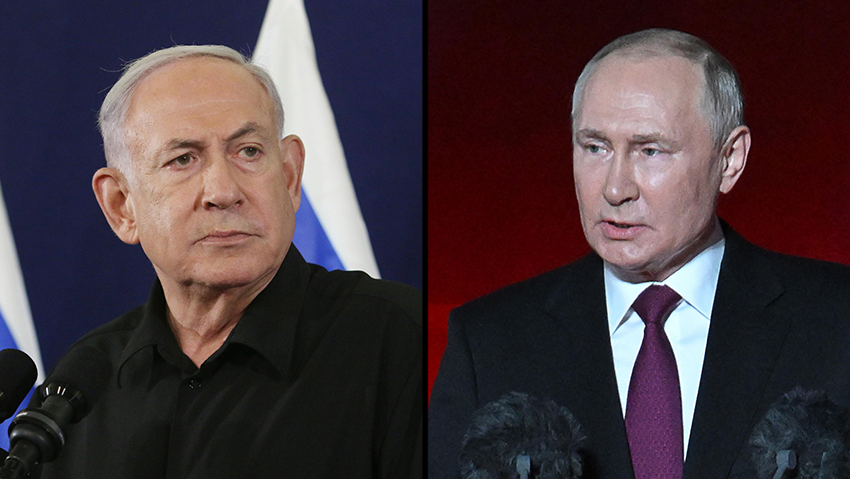
Russian President Vladimir Putin and Israeli Prime Minister Benjamin Netanyahu held an extensive phone call on Saturday, reviewing a broad set of Middle East flashpoints as diplomatic efforts accelerate around Gaza, Iran’s nuclear programme, and the military balance in Syria. The Kremlin confirmed the discussion, describing it as a “thorough exchange of views” on some of the region’s most sensitive crises.
Focus on Gaza Ceasefire and Detainee Exchange
According to a statement published by Russia’s foreign ministry, the leaders evaluated the status of the current ceasefire arrangement in Gaza, including mechanisms for exchanging detainees.
The conflict has drawn Moscow and Jerusalem into increasingly frequent conversations as both governments attempt to navigate shifting political, military, and humanitarian dynamics.
A more detailed Kremlin summary, cited by Russian news agency TASS, said the discussion concentrated on:
-
Developments inside the Gaza Strip
-
Progress and challenges in implementing the ceasefire agreement
-
The detainee and hostage exchange process
-
Ongoing security concerns involving Iran and Syria
The Israeli Prime Minister’s Office confirmed the call, noting that it was initiated by Putin and formed part of a series of ongoing regional consultations between the two leaders.
Iran’s Nuclear Programme and Syria Back on the Table
Beyond Gaza, the conversation touched on Iran’s nuclear activities, a subject both Moscow and Jerusalem view through sharply different but strategically important lenses.
Israel has consistently opposed any expansion of Iran’s nuclear capabilities, viewing them as a direct threat. Russia, meanwhile, maintains diplomatic and military ties with Tehran—even as it keeps deconfliction channels open with Israel to prevent unintended clashes over Syria.
The leaders also discussed efforts to “stabilise” Syria, where Israeli airstrikes against Iranian-linked targets remain a persistent source of tension and where Russia retains troops and influence through the Assad government.
Backdrop: Trump’s Gaza Plan Moves to the UN Security Council
The call took place amid heightened diplomatic activity at the United Nations. The United States formally asked the Security Council this week to adopt a draft resolution incorporating President Donald Trump’s 20-point Gaza plan, which outlines:
-
An immediate ceasefire between Israel and Hamas
-
A phased withdrawal of Israeli troops
-
The release of all hostages
-
A technocratic interim administration in Gaza, overseen by an international “Board of Peace”
-
Demilitarisation of the territory
-
Long-term reconstruction and governance reforms
The proposal received broad support at an October 13 summit in Sharm el-Sheikh and has been publicly endorsed by Israel. Hamas, however, has not agreed to all provisions—a key sticking point for negotiators attempting to move the plan forward.
Long-Running Putin–Netanyahu Dialogue
Saturday’s call followed a series of conversations between the two leaders over the past months, most recently in October during intense consultations surrounding the Trump initiative. Both governments have maintained close, if complex, communication channels as they manage overlapping interests in Syria and evolving security dynamics linked to Gaza and Iran.