
Prayagraj’s Magh Mela Begins with Paush Purnima Snan, AI Surveillance and Expanded Security in Place
The Cliff News - Prayagraj | January 3 The annual Magh Mela commenced in Prayagraj on Saturday with the Paush Purnima bathing ritual, marking the...
The Cliff News - Prayagraj | January 3
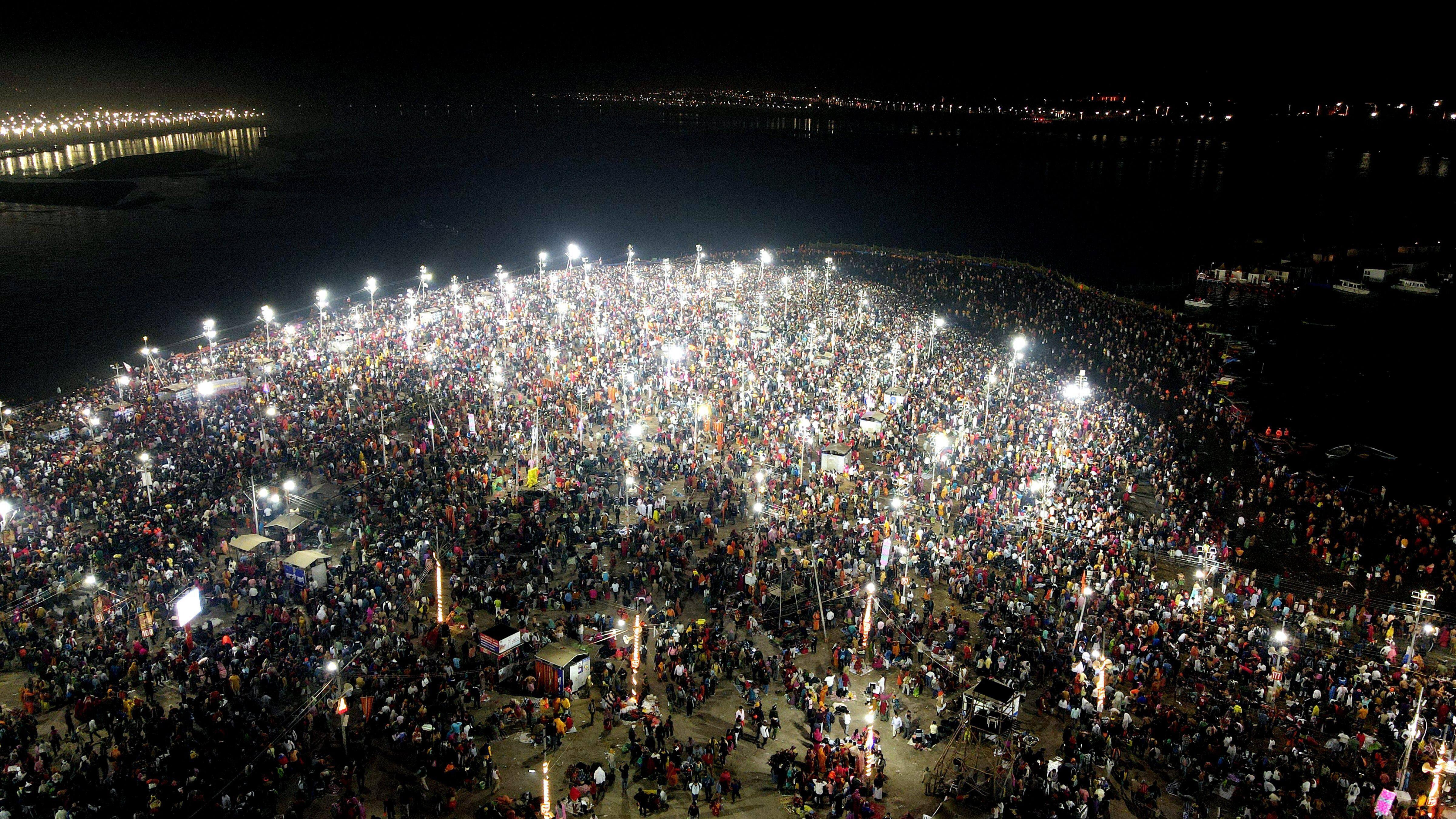
The annual Magh Mela commenced in Prayagraj on Saturday with the Paush Purnima bathing ritual, marking the formal start of one of north India’s most significant spiritual and cultural gatherings. The event will continue until February 15, with the local administration preparing for an unprecedented influx of visitors over the six-week period.
Officials estimate that up to 150 million people may arrive in the city during the course of the fair—more than double last year’s turnout. Authorities attribute this surge to the absence of the Magh Mela in 2025 due to the Mahakumbh cycle, making this year’s event especially significant.
Expanded Mela Area and Infrastructure Upgrade
According to the Prayagraj Mela Authority, the fair has been spread across nearly 800 hectares, an expansion of 32 hectares compared to 2024. A large tent city has been developed with improved amenities, better lighting, sanitation facilities, and clearer navigation routes.
Senior district officials said the focus this year is on managing scale while ensuring accessibility. Temporary bathing platforms spanning nearly eight kilometers have been constructed along the Sangam, Arail, and Daraganj riverfronts to distribute footfall and reduce congestion.
AI-Powered Monitoring and No VIP Privileges
For the first time, the administration has deployed AI-enabled surveillance cameras across the entire fairground. These systems are designed to monitor crowd density in real time, detect bottlenecks, and assist police teams in responding swiftly to emergencies.
In a notable policy shift, authorities have eliminated VIP movement protocols, a decision officials say is intended to ensure uniform access and prevent disruption during peak bathing days. The move has been widely welcomed by crowd-management experts, who note that unrestricted movement often creates security risks during mass gatherings.
Security, Traffic Control, and Policing Strategy
Police Commissioner Jogendra Kumar stated during a press briefing that the fair area has been divided into sectors and police station zones, each supervised by senior officers at the ACP level. A total of nine pontoon bridges connect different parts of the venue, with checkpoints installed at both ends.
Traffic diversions have been implemented across Prayagraj city, and heavy vehicle entry has been restricted during major bathing dates. Officials emphasized that coordination between traffic police, river safety teams, and disaster response units remains a top priority.
Transport and Visitor Facilities
To minimize long walking distances, last-mile transport options are available between parking zones and riverfront areas. Authorities have also introduced cultural spaces, illuminated fountains, and recreational attractions such as aerial viewing rides to enhance the overall experience.
On the opening bathing day alone, officials projected a turnout of 2.5 to 3 million people, a figure that will be closely monitored through digital tracking systems.
Why This Year’s Magh Mela Matters
Experts in urban planning and event security describe the 2026 Magh Mela as a test case for large-scale crowd governance, especially ahead of future national and international events. The integration of artificial intelligence, removal of hierarchical access, and expansion of public infrastructure reflect a broader shift in how Indian cities are preparing for mega gatherings.