
PM Modi Leaves for Johannesburg as Africa Hosts Its First G20 Summit
India looks to strengthen Global South agenda as South Africa leads discussions under the theme “Solidarity, Equality, Sustainability.” Prime Minister Narendra Modi departed for Johannesburg...
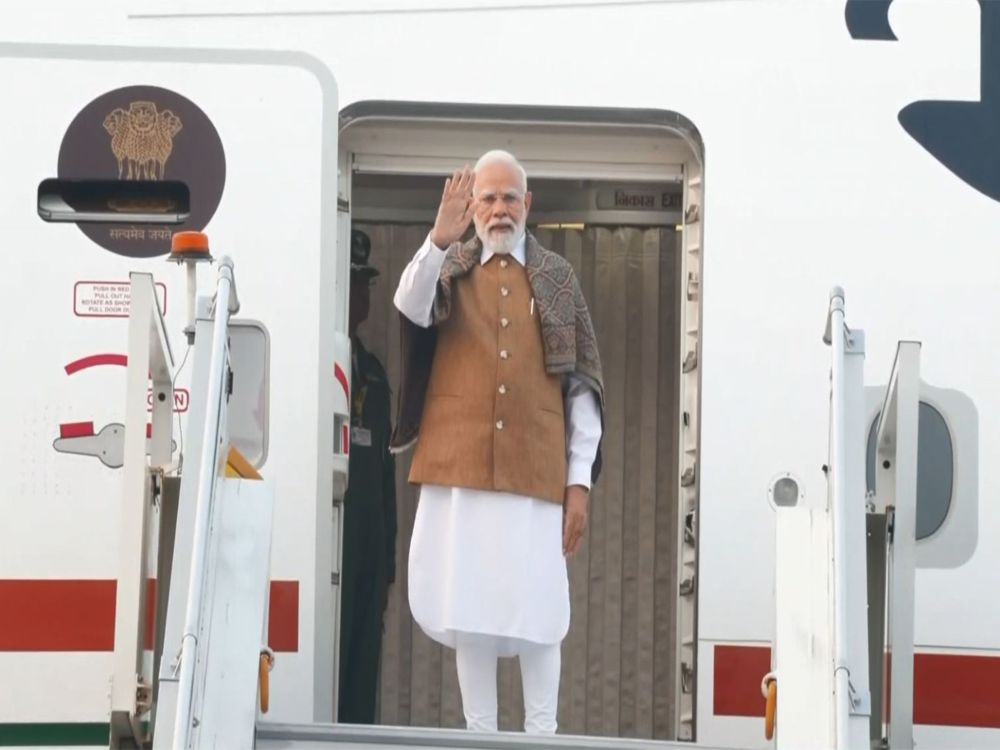
India looks to strengthen Global South agenda as South Africa leads discussions under the theme “Solidarity, Equality, Sustainability.”
Prime Minister Narendra Modi departed for Johannesburg on Friday to attend a landmark G20 Summit — the first time the high-profile gathering of the world’s major economies is being held on African soil. The three-day meeting, scheduled from November 21 to 23, is expected to place the aspirations and challenges of the Global South at its core, reflecting a growing shift in global governance dynamics.
A Historic Moment for Africa and the Global South
For the fourth consecutive year, the G20 presidency has been led by a country from the Global South: Indonesia (2022), India (2023), Brazil (2024) and now South Africa (2025). Diplomats say this sequence marks a structural rebalancing of the grouping, long dominated by industrialised economies.
Modi’s visit also underscores India’s deepening political engagement with Africa. This is his fourth official trip to South Africa, following a bilateral visit in 2016 and participation in the BRICS Summits in 2018 and 2023.
What Will Dominate the Johannesburg Agenda
South Africa has articulated its G20 priorities under the theme “Solidarity, Equality, Sustainability,” with discussions expected to span development financing, climate resilience, energy transitions, digital public infrastructure, and equitable global governance reforms.
According to Sudhakar Dalela, Secretary (Economic Relations) at the Ministry of External Affairs, the G20 continues to serve as “a critical platform where developing nations can shape consensus and push forward initiatives that genuinely reflect their needs.” He noted that Delhi is encouraged by the continuity of focus on emerging economies across the recent presidencies.
The G20 bloc represents 85% of global GDP and nearly three-quarters of world trade, making the forum’s policy direction influential far beyond its membership.
African Union to Play a Larger Role
A major development influencing this year's summit will be the enhanced role of the African Union (AU). The AU became a permanent member of the G20 under India’s presidency in 2023 — a historic expansion welcomed by many developing economies as a long-awaited acknowledgment of Africa’s demographic and economic significance.
Dalela stressed that both India and South Africa, being strong democracies with longstanding ties, view the AU’s participation as essential to shaping a more inclusive agenda.
Bilateral Diplomacy on the Sidelines
Indian officials are preparing a series of bilateral meetings for Prime Minister Modi during the summit. While details are yet to be finalised, conversations are expected to cover defence cooperation, trade, technology partnerships, and South-South development initiatives.
Strategic experts say the visit also offers an opportunity for India to reinforce its leadership role among developing nations amid ongoing geopolitical transitions, including global economic slowdown, supply-chain shifts, and renewed debates on multilateral reforms.
Why This Summit Matters
Political analysts note that hosting the G20 in Africa for the first time signals a broader recognition of the continent’s growing influence in issues ranging from climate action to energy markets and global supply chains.
For India, the summit presents a stage to advance priorities it championed during its own G20 presidency — including digital public goods, inclusive development, and reform of multilateral financial institutions.