
‘No Role’: Centre Amid Row Over No Women Journalists At Taliban Press Meet In Delhi
A major controversy erupted on Friday after women journalists were allegedly barred from attending a press conference addressed by Afghanistan’s acting Foreign Minister Amir Khan...
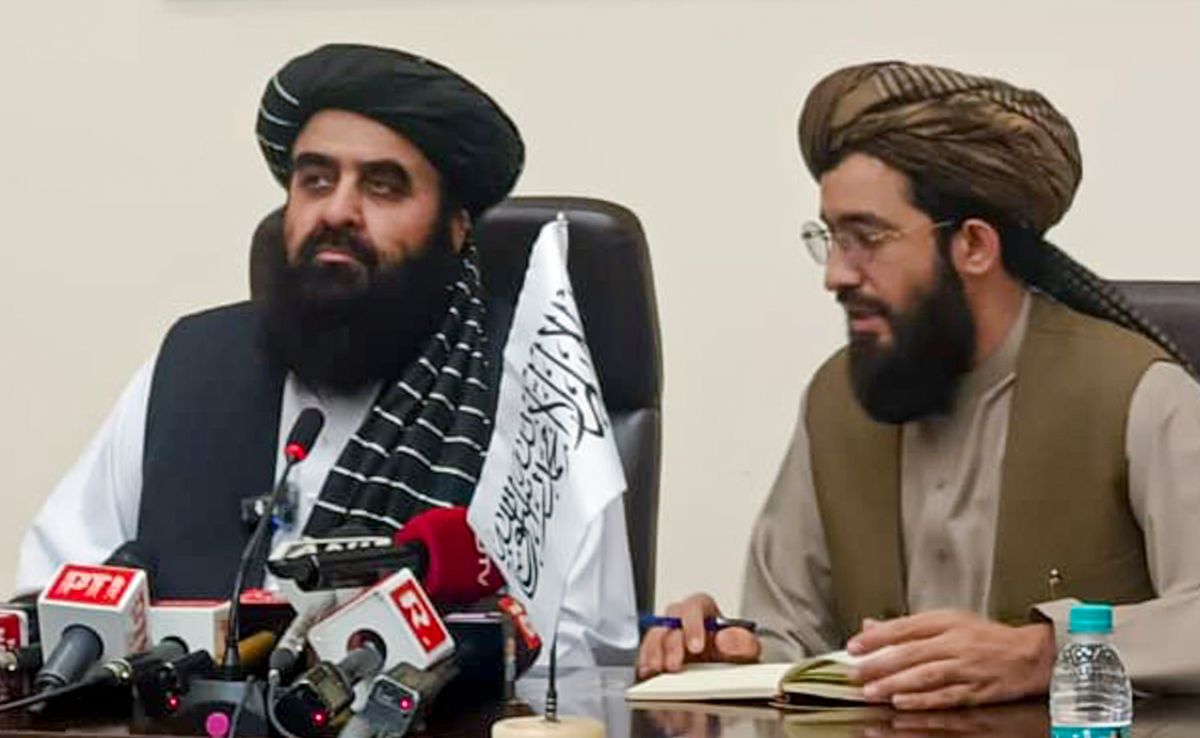)
A major controversy erupted on Friday after women journalists were allegedly barred from attending a press conference addressed by Afghanistan’s acting Foreign Minister Amir Khan Muttaqi in New Delhi. Photos and videos circulating online showed that the interaction was attended exclusively by male journalists, triggering sharp political and public criticism.
MEA Distances Itself
Responding to the uproar, the Ministry of External Affairs (MEA) on Saturday clarified that the Government of India had “no role” in organising the Taliban minister’s press briefing.
“The Government of India had no involvement in organising or conducting the press interaction. The venue and invitations were managed by the Afghan Consul General in Mumbai,” said MEA spokesperson Randhir Jaiswal in a statement.
The ministry added that the Afghan premises where the event took place do not fall under Indian jurisdiction, as they are considered diplomatic spaces. Sources also claimed that Indian officials had advised the Afghan side to ensure equal access for women journalists.
The Controversy
According to reports, multiple female correspondents from prominent news organisations were denied entry to the event despite prior registration. Some said they were told that “the organisers had restricted participation to men only.”
The move drew widespread condemnation, with several media bodies and political leaders calling it a violation of India’s principles of gender equality and press freedom.
Political Reactions
The opposition launched a fierce attack on the Centre, accusing it of being complicit by allowing the discriminatory event to take place on Indian soil.
Congress leader Rahul Gandhi posted on X (formerly Twitter):
“In India, women have equal rights — or do they only in slogans? How can the government allow an event where Indian women journalists are excluded?”
Priyanka Gandhi Vadra demanded that Prime Minister Narendra Modi break his silence on the issue, calling it “an insult to every woman journalist in the country.”
Senior Congress leader P. Chidambaram said male journalists present at the event should have “walked out in solidarity” when they learned that their women colleagues were excluded.
Media and Civil Society Reaction
Journalist associations and women’s groups called the incident deeply troubling.
“It’s alarming that a group with a documented history of suppressing women’s rights is able to impose such regressive practices here,” said a statement by the Editors Guild of India.
Social media users expressed outrage, pointing out the irony of India hosting a government that denies women’s rights in Afghanistan while barring Indian women reporters from covering their statements.
Diplomatic Sensitivity
Amir Khan Muttaqi’s visit to India comes amid renewed diplomatic engagement between New Delhi and Kabul. Muttaqi met Indian officials and participated in private discussions with policy think tanks.
Observers noted that India has so far maintained a cautious approach toward formal recognition of the Taliban regime, balancing its strategic interests in Afghanistan with its commitment to democratic values and women’s rights.
What Lies Ahead
The controversy has reignited debate over India’s diplomatic outreach to the Taliban. Analysts warn that such incidents could undermine India’s image as a champion of gender equality and free press.
For now, the MEA’s distancing itself from the event may calm the storm, but questions remain over how such a gender-exclusive event could have been held in the capital — and what it means for India’s engagement with the Taliban government.