
‘No PUC, No Fuel’ Rule Debuts in Delhi, But Patchy Enforcement Fails to Arrest Rising Pollution
Delhi’s much-publicised “No Pollution Under Control (PUC), No Fuel” directive came into effect on Thursday, accompanied by claims of strict enforcement and mass checks. Yet,...
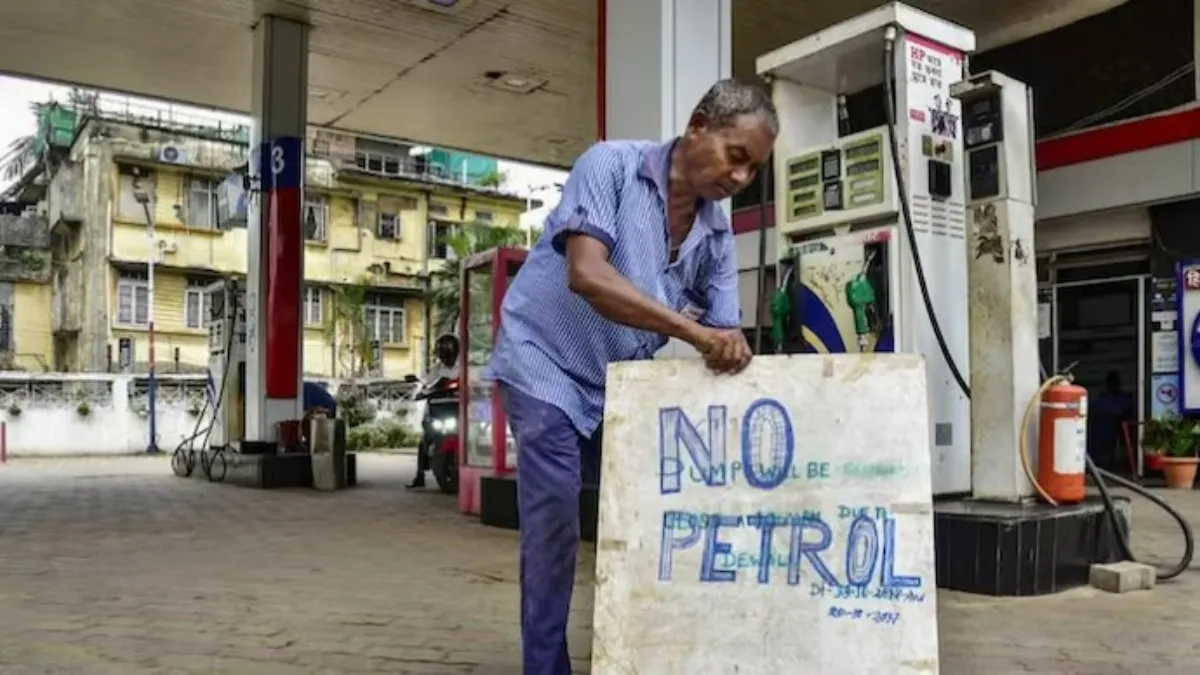
Delhi’s much-publicised “No Pollution Under Control (PUC), No Fuel” directive came into effect on Thursday, accompanied by claims of strict enforcement and mass checks. Yet, as the policy completed its first full day, ground reports suggested uneven implementation, while the city’s air quality continued to deteriorate, raising fresh questions about execution and impact.
Air Quality Worsens Despite Crackdown
According to official data, Delhi’s Air Quality Index (AQI) stood at 356 early Thursday morning and climbed to 397 by late evening—hovering dangerously close to the ‘severe’ category. This rise came despite intensified checks, challans, and inspections across the capital.
Environmental experts note that winter meteorological conditions—low wind speed, temperature inversion, and high moisture—often blunt the immediate impact of enforcement measures, even when restrictions are rolled out aggressively.
Enforcement Numbers: High Activity, Limited Impact
Government data shows that more than 61,000 Pollution Under Control Certificates (PUCCs) were issued between December 17 and 18, with nearly 32,000 certificates generated on Thursday alone. During the same period, authorities issued challans to 3,746 vehicles for not carrying valid PUC certificates.
At Delhi’s borders, joint teams from the Traffic Police and Transport Department inspected around 5,000 vehicles. Officials said 568 non-compliant vehicles were turned back, while 217 trucks without valid destinations were diverted to peripheral expressways.
Despite these actions, pollution levels showed no immediate improvement through the day.
Ground Reality: Gaps at Petrol Pumps
A ground investigation by NDTV revealed that enforcement of the “No PUC, No Fuel” rule was missing at several petrol pumps on day one. At a petrol pump near Delhi Gate, the government notification was prominently displayed, clearly informing customers that a valid PUC was mandatory for refuelling.
However, no enforcement officials were present at the site during the visit. Petrol pump staff told NDTV that officials had visited briefly in the morning but left soon after.
Pump employees also stressed that enforcement was not their responsibility. They said they were only tasked with informing customers, expressing concern that actively denying fuel could lead to disputes with commuters.
Minister Acknowledges Partial Compliance
Environment Minister Manjinder Singh Sirsa, who conducted surprise inspections at select fuel stations, admitted that implementation may not be uniform on the first day. Speaking to NDTV, he said even partial compliance would count as progress.
He added that the Transport Department was providing real-time updates on enforcement and compliance across the city, indicating close monitoring of the rollout.
Focus on Awareness Over Penalties
Addressing petrol pump staff and commuters, Sirsa emphasised that the campaign was not meant to be punitive. He urged staff to politely explain the health rationale behind the rule, calling them the “first interface” of the government’s anti-pollution drive.
The minister said every valid PUC certificate issued should be seen as a step towards cleaner air, rather than merely a statistic linked to challans.
Other Anti-Pollution Measures Under Scrutiny
Civic agencies reported parallel action against other pollution sources over the past 24 hours, including mechanised sweeping of more than 2,300 km of roads, deployment of mobile anti-smog guns across over 5,500 km, closure of illegal dumping sites, and processing of large volumes of legacy waste.
Yet, with AQI levels continuing to rise, experts caution that such measures often take time to show results, particularly during peak winter pollution.
Sirsa also flagged that several private offices were yet to fully comply with the 50% work-from-home advisory under GRAP-IV norms, warning that enforcement action could follow.
Bigger Picture: Policy vs Practice
As Delhi heads into another heavily polluted night, the first day of the “No PUC, No Fuel” rule has highlighted a familiar challenge—ambitious policy announcements, mixed enforcement on the ground, and environmental conditions that blunt immediate gains. Whether tighter implementation in the coming days can deliver tangible relief remains a critical test for the government’s winter pollution strategy.