
Myanmar’s military-run election exposes the illusion of democracy amid war and repression
Myanmar has entered a new election cycle at a moment of profound national collapse. The first phase of voting was held on December 28, 2025,...
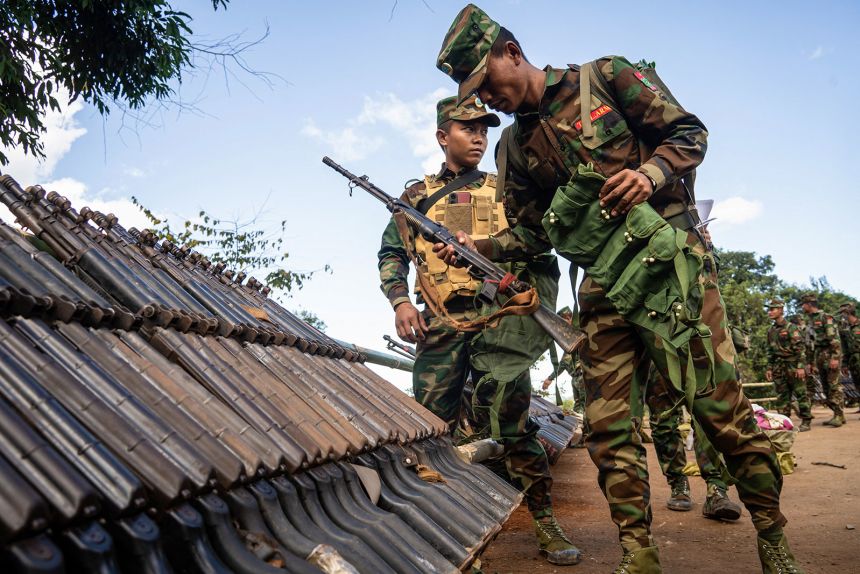
Myanmar has entered a new election cycle at a moment of profound national collapse. The first phase of voting was held on December 28, 2025, with two more rounds scheduled for January 11 and January 25, 2026. Far from marking a political transition, the exercise is unfolding amid widespread armed conflict, mass displacement and near-total breakdown of state authority across large parts of the country.
International attention has been strikingly muted. Yet the implications extend well beyond Myanmar’s borders.
A familiar pattern beneath the surface
The current moment echoes warning signs visible more than a decade ago. During the April 1, 2012 by-elections, international officials invited by the government to observe polling in and around Yangon were discreetly followed by military intelligence. What began as subtle monitoring became overt surveillance, underscoring the military’s unbroken grip even during periods portrayed as reformist.
That episode revealed a deeper truth. Myanmar, despite gestures toward civilian rule, had never dismantled its intelligence state. Fear, informants and coercion remained embedded in daily life.
Between 2010 and 2021, many inside and outside the country assumed the reform process was irreversible. In hindsight, those assumptions proved deeply flawed.
Elections without choice or reach
The current polls are the first national elections since the February 1, 2021 military coup, which overthrew the elected government led by Aung San Suu Kyi’s National League for Democracy (NLD). The junta justified the takeover by alleging fraud in the 2020 elections, claims that were never supported by credible evidence.
According to admissions by the military authorities themselves, voting is taking place in only parts of roughly 265 of Myanmar’s 330 townships. Entire regions under resistance control will see no polling at all, leaving millions of citizens without any voice.
Key democratic conditions are absent:
-
The NLD has been dissolved
-
Senior leaders, including Suu Kyi, remain imprisoned
-
Most opposition groups are banned or boycotting
The junta-aligned Union Solidarity and Development Party (USDP) faces little to no competition, making the outcome largely predetermined.
War, displacement and daily survival
The elections are occurring against the backdrop of a nationwide armed uprising. What began as peaceful protests after the coup evolved into a full-scale insurgency led by People’s Defence Forces and multiple ethnic armed organisations, many of which now control significant territory.
The human cost has been devastating.
-
Thousands have been killed
-
Millions are internally displaced or have fled abroad
-
Civilian infrastructure remains under attack
In early December, a military airstrike on a hospital in Mrauk-U, Rakhine State, killed dozens of civilians, reinforcing fears that healthcare facilities and non-combatants are no longer protected.
For displaced populations, participating in elections is not only meaningless but often dangerous.
Public skepticism and resistance warnings
Within Myanmar, public sentiment toward the polls is overwhelmingly skeptical. Pro-democracy activists describe the process as a “sham”, arguing that ballots cast under armed supervision carry no legitimacy.
The National Unity Government (NUG), formed in opposition to the junta, has declared cooperation with the elections an act of high treason. In urban centers, fear of retaliation and deep distrust have suppressed visible engagement. Any higher turnout in junta-controlled areas is widely viewed as coerced rather than voluntary.
Global response remains firm
Western governments and the United Nations have repeatedly stated that Myanmar’s elections do not meet international standards of inclusivity, transparency or fairness. Sanctions remain in force, and calls for accountability over human rights violations have intensified.
At the same time, Myanmar’s geopolitical orientation has shifted sharply.
Russia’s role and strategic isolation
Russia has emerged as one of the junta’s most important backers, supplying arms, training and diplomatic support. The relationship is transactional, rooted in shared isolation and resistance to Western pressure.
For Moscow, Myanmar offers:
-
A market for its defence industry
-
A strategic foothold in Southeast Asia
-
A partner willing to reject liberal democratic norms
This alignment marks a stark contrast to earlier years, when Myanmar’s senior generals attended defence events in Europe. Today, those ties have narrowed almost exclusively to Russia, reflecting Myanmar’s broader estrangement from the West.
Regional actors take cautious paths
Responses within Asia have been more calibrated.
-
China has cautiously framed elections as a possible mechanism for restoring order, prioritising border stability and strategic investments.
-
India has balanced its democratic rhetoric with security concerns and regional influence calculations.
ASEAN, however, has taken a firmer stance. The bloc has refused to endorse the polls or send official observers, insisting that peace and inclusive dialogue must come before elections. Senior ASEAN officials have warned that engagement with Myanmar will remain limited unless political detainees are released and genuine talks begin.
Why this election matters beyond Myanmar
The stakes extend far beyond a single vote. Myanmar has become a stark example of how democratic forms can be used to legitimise authoritarian rule. Ballots, campaigns and election dates now function as tools of control rather than accountability.
For neighboring countries, the consequences are already visible in cross-border displacement, security pressures and humanitarian strain.
A reckoning long in the making
The illusion of transition that captivated the world in the early 2010s masked deeper structural realities. Myanmar’s fractured social fabric, unresolved ethnic conflicts and militarised institutions were never addressed in full. International engagement often relied on imported democratic templates, rather than a clear-eyed understanding of the country’s history.
What was once discreet surveillance has become overt domination. What was once reformist optimism has hardened into institutionalised coercion.
What to watch next
As results and reactions unfold through January 2026, attention will turn to resistance responses, regional diplomacy and whether the junta can translate electoral theatre into real control. The deeper trajectory of Myanmar’s crisis, however, will be shaped not by ballots, but by the outcome of a conflict that shows no sign of ending.