
Metamaterials: New Study Uncovers Key Factors Influencing Instability
Research reveals how dispersion and wave amplitude affect metamaterial instability.
Top Summary
- What happened: A new study investigates how intermodal dispersion, self-steepening, higher-order dispersion, and plane wave amplitude impact modulation instability in metamaterials.
- Why it matters: Understanding these dynamics is crucial for designing and optimizing metamaterials for advanced optical applications.
- What changes for people: The research provides insights into controlling and predicting instability in metamaterials, potentially leading to new technologies.
- Who is affected: Researchers, engineers, and developers working with metamaterials and nonlinear optics.
Unlocking Metamaterial Secrets
Researchers have delved into the complex world of metamaterials, focusing on the phenomenon of modulation instability (MI). The study highlights the interplay of various factors influencing this instability.
The research specifically examines the impact of intermodal dispersion, the self-steepening effect, higher order dispersion, and plane wave amplitude.
The Generalized Nonlinear Schrödinger Equation
The team utilized the generalized nonlinear Schrödinger equation (NLSE). This equation models the propagation of a few-cycle pulse in a nonlinear metamaterial.
By numerically solving the NLSE, the scientists were able to explore the impact of intermodal dispersion and higher-order effects.
Analyzing Modulation Instability
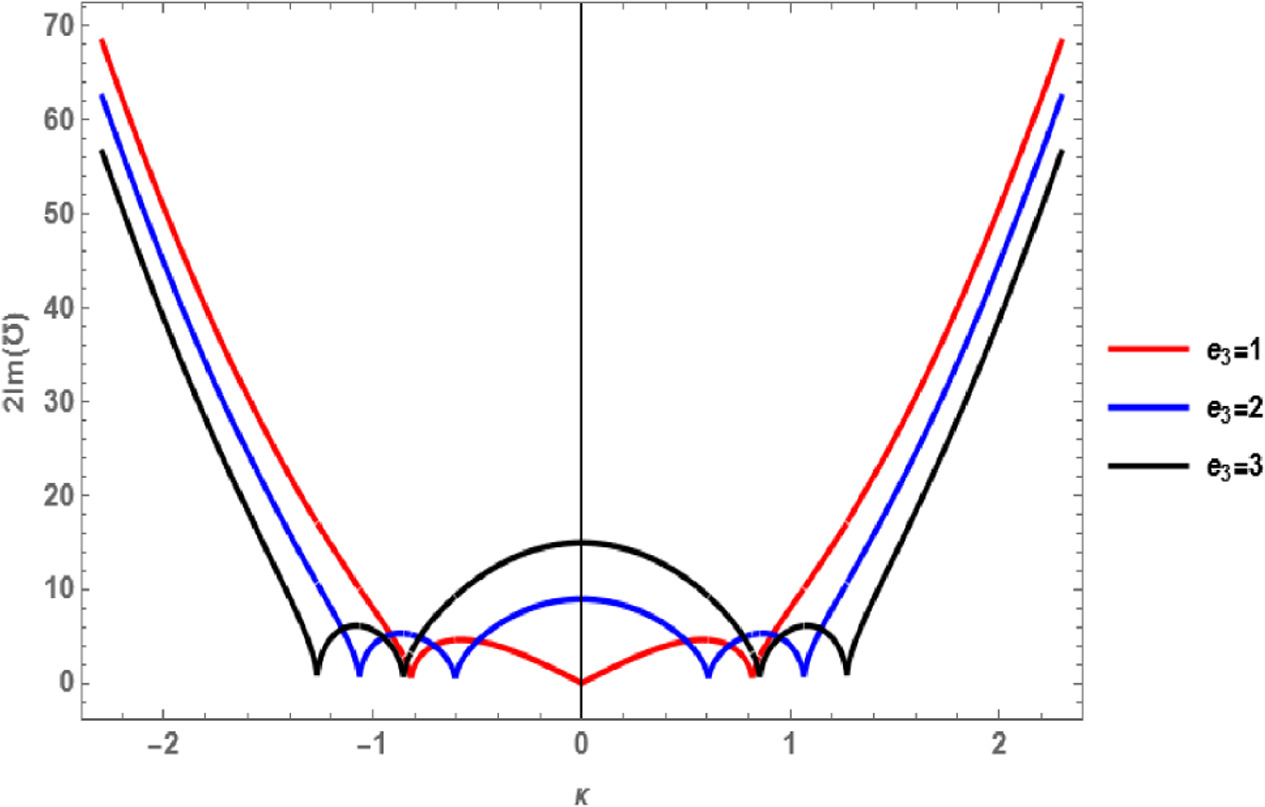
The MI analysis captures the complex dynamics introduced by these factors. The research demonstrated the spatiotemporal evolution of MI under different parameter values.
These variations significantly influence the instability's development and characteristics.
Impact of Optical Setup
The behavior of modulation instability bands is highly dependent on parameters such as self-steepening and wave amplitude.
This reliance highlights the importance of the specific characteristics of the optical setup and medium dispersion properties.
"Our modulation instability (MI) analysis captures the complex dynamics these factors introduce. We demonstrate the spatiotemporal evolution of MI under different parameter values, revealing how these variations influence the instability’s development and characteristics."
What to Watch Next
Future research will likely focus on further refining the understanding of these complex interactions. This may involve exploring new metamaterial designs and developing more accurate models to predict and control modulation instability.