
Mass Voter Roll Revisions in Tamil Nadu and Gujarat Trigger Political and Legal Scrutiny
The draft electoral rolls released on Friday in Tamil Nadu and Gujarat under Phase-2 of the Election Commission of India’s (ECI) Special Intensive Revision (SIR)...
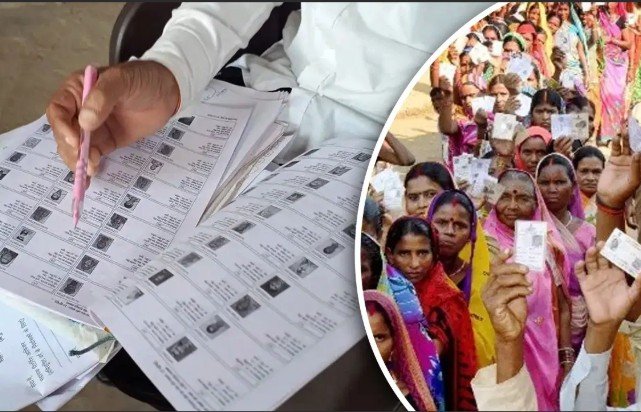
The draft electoral rolls released on Friday in Tamil Nadu and Gujarat under Phase-2 of the Election Commission of India’s (ECI) Special Intensive Revision (SIR) have revealed one of the largest voter list clean-up exercises in recent years, with a combined 1.71 crore names removed across the two states.
According to official data issued by election authorities, Tamil Nadu saw 97.3 lakh deletions, while Gujarat recorded 73.7 lakh deletions, significantly reducing the provisional size of the electorate in both states. The development has sparked a sharp political debate, with questions raised about transparency, voter inclusion, and the potential impact on future elections.
Why the SIR Exercise Matters
The Special Intensive Revision is designed to ensure the accuracy, integrity, and credibility of electoral rolls by removing duplicate, deceased, or ineligible voters. Such exercises are periodically conducted to prevent electoral fraud, improve administrative efficiency, and align voter databases with demographic realities such as migration and mortality.
However, the scale of deletions and the identification of over 2.4 crore electors across both states flagged for “logical discrepancies” has raised concerns among opposition leaders and civil society groups about potential disenfranchisement if safeguards are not strictly enforced.
Tamil Nadu: Electorate Drops by One Crore
In Tamil Nadu, the draft roll shows the electorate shrinking from approximately 6.4 crore voters in October 2025 to around 5.4 crore.
Election officials attribute the deletions to:
-
26.9 lakh electors marked as deceased
-
66.4 lakh listed as shifted or no longer residing at their registered address
-
Nearly 4 lakh found enrolled at multiple locations
Additionally, about 1.2 crore voters have been identified for further scrutiny due to data inconsistencies in their enumeration forms. These include anomalies such as unusually high numbers of children linked to a single parent, significant age mismatches between parents and children, and other logical inconsistencies in family records.
Gujarat: Draft Roll Falls Below 4.5 Crore
Gujarat’s draft electoral roll now lists around 4.3 crore voters, down from nearly 5.1 crore in October.
Officials say the deletions comprise:
-
18.1 lakh deceased voters
-
51.8 lakh voters who have shifted or could not be traced
-
3.8 lakh duplicate registrations
Similar to Tamil Nadu, over 1.2 crore enumeration forms in Gujarat have been flagged for logical discrepancies. These include cases involving mismatched parental details, implausible age differences between generations, and individuals who appear never to have enrolled despite being over 45 years of age.
Due Process and Legal Safeguards
The Election Commission has emphasized that no voter’s name can be permanently removed without due process. Under SIR guidelines:
-
Electoral Registration Officers (EROs) and Assistant EROs must issue notices before any deletion.
-
Each case requires a reasoned (“speaking”) order.
-
Affected voters have the right to appeal first to the district magistrate, and subsequently to the Chief Electoral Officer (CEO) of the state or Union Territory.
Claims and objections can be filed by voters or political party Booth Level Agents (BLAs) until January 18, even after the publication of the draft roll.
Political Reactions and Broader Implications
The scale of the exercise has drawn sharp political reactions. AIMIM president Asaduddin Owaisi, speaking in the Lok Sabha, described the SIR as a “backdoor NRC”, warning that selective application of voter verification could disproportionately affect certain communities. While election authorities have rejected any such intent, opposition parties have demanded closer parliamentary and judicial oversight.
Election law experts note that while roll purification is essential for electoral integrity, large-scale revisions require heightened transparency and communication to maintain public trust. Any perception of bias or arbitrariness, they argue, could undermine confidence in the democratic process ahead of crucial elections.
What Comes Next
The final electoral rolls will be published after the completion of the claims-and-objections process. The Election Commission has reiterated that the objective of the SIR is accuracy, not exclusion, and has urged voters to respond promptly to notices and verify their details.
As India prepares for upcoming electoral cycles, the outcome of this revision—and how grievances are addressed—will likely serve as a test case for balancing voter roll integrity with inclusive democratic participation.